
Buy or gift a digital subscription and get access to the complete digital archive of every issue for just £18.99 / $23.99 / €21.99 a year.
Buy/gift a digital subscription Login to the Digital Edition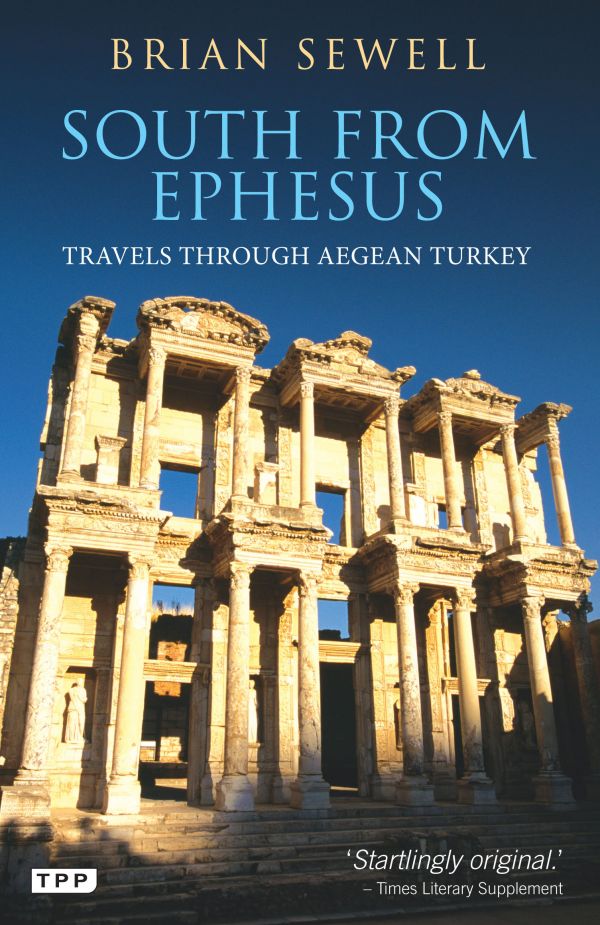
Travels Through Aegean Turkey
Brian Sewell wrote South from Ephesus less than fifteen years ago [in 1988], but it already qualifies as a classic, and not just because so much of the terrain he describes is now covered with high-rise hotels. His book, he himself admits, is a “self-indulgent narrative” that “reveals obsessions and prejudices that surprise even me”.
When he first visited Turkey in 1975, Sewell’s plan was to “escape the tyranny of Western Art”. He thought there would not be much to see there. He assumed that anything he did find would have no relevance to what he knew about art and architecture. He would, he hoped, be able to enjoy it for its own sake, and without feeling the “compulsion to stitch them into the dense fabric of my art-historical memory”. He soon found out how wrong he was. South from Ephesus is his book-length mea culpa. It weaves together his memories of several trips along the coast of western Turkey. But it is mostly about his journey from Ephesus to Side, in the middle of the winter in the middle of the Eighties, with Petter, a Norwegian skiing friend, and Ayhan, a chauffeur-cum-guide provided by the Turkish government.
Ayhan had firm views about itineraries and the proper viewing of monuments, so he and his charges were at war from the outset. This was exacerbated almost every evening, when Ayhan consoled himself with rakı. He was, as Sewell says in his preface, “the grit in the oyster, without which many of our days might have been dull – but never can a man have been more glad to see off his companions at the end of a journey, and return to the bosom of his unloved wife”. To be fair – and Sewell is forever straining to be fair – he is just as hard on himself. He admits to being obstinate, petulant, bloody-minded and one of the world’s great sulkers. His accounts of his tiffs with Ayhan are as good as anything Gerald Durrell wrote about his brother. But Sewell is at his most eloquent when railing against archaeologists.
He does try to be fair to them, too. The Library of Celsus at Ephesus, for example, is not as bad as it was. “There was a time when this resembled the work of a demented pastry cook whose wedding cake had been demolished by a misdirected bull,” he recalls, “but work on the library is now finished and the building makes sense as a Vitruvian design with a hint of Westbourne Grove about it.” It doesn’t make much sense. It is “more than slightly absurd, with tilted horizontals and wayward visuals”. He still cannot help feeling that “the whole façade has a heavily chewed look about it”. Perhaps this is no accident: the site is “full of starving dogs”.
Again by his own admission, Sewell loves dogs more than he does people. He gives full and often moving descriptions of the dogs he meets en route. We also get daily updates about plumbing and laundry and what he thought about breakfast and why it might be that he keeps dreaming about David Hockney and Haile Selassie. He is less confident about history and so goes for a frantic, scattergun approach, deferring wherever possible to Fellowes and Bean. Although he rarely goes beneath the surface, what he has to say about the surfaces is always engaging, and his uncomplicated love for Turks and Turkey is evident throughout.
1. STANDARD
Standard, untracked shipping is available worldwide. However, for high-value or heavy shipments outside the UK and Turkey, we strongly recommend option 2 or 3.
2. TRACKED SHIPPING
You can choose this option when ordering online.
3. EXPRESS SHIPPING
Contact subscriptions@cornucopia.net for a quote.
You can also order directly through subscriptions@cornucopia.net if you are worried about shipping times. We can issue a secure online invoice payable by debit or credit card for your order.

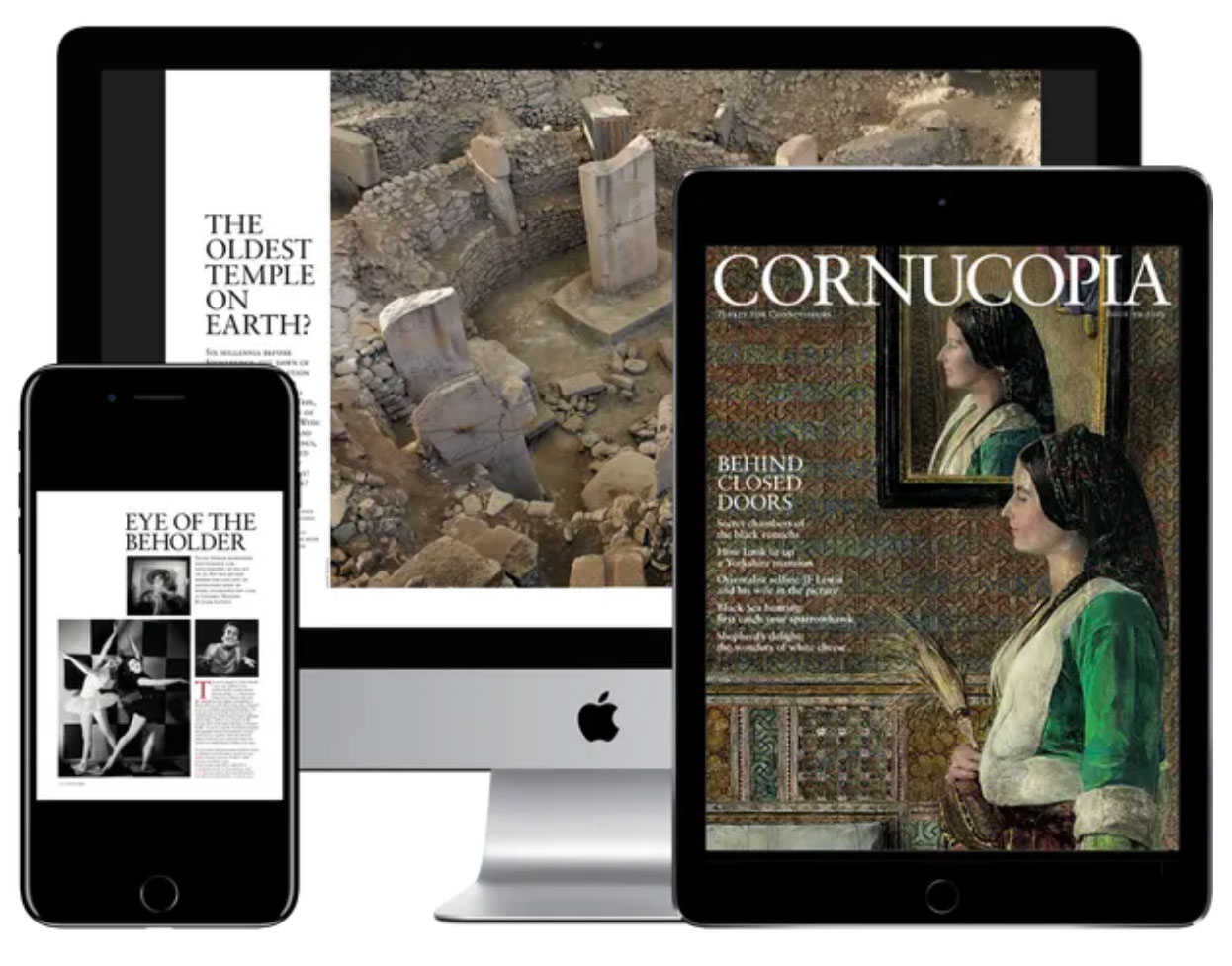
Cornucopia works in partnership with the digital publishing platform Exact Editions to offer individual and institutional subscribers unlimited access to a searchable archive of fascinating back issues and every newly published issue. The digital edition of Cornucopia is available cross-platform on web, iOS and Android and offers a comprehensive search function, allowing the title’s cultural content to be delved into at the touch of a button.
Digital Subscription: £18.99 / $23.99 (1 year)
Subscribe now