![]() | ||
![]() | ||
Exploring Bursa It is easy to find your way around Bursa, because wherever you are the mountain of Uludag is visible behind the city. The key districts are some distance apart, built as they were on different ridges by successive sultans in the 14th and 15th centuries. But getting around is easy by cab or dolmus, or by car using the small lanes above the city to avoid the traffic. | ||||
Around theYesil Mosque and Emir Sultan The place for aesthetics: if time is short, spend it at the Yesil Cami and Yesil Türbe, the mosque and tomb of Mehmed I. From here you see why Bursa was known as Green Bursa: you get the most perfect view of the hilltop mosque of Emir Sultan, surrounded by cypresses, just a ten-minute stroll away. A sleepy museum in a box-hedged garden occupies the Yesil medrese, alongside a row of prettily painted houses, now antique shops. Emir Sultan’s courtyard, with its wooden arches, has a 19th-century Caucasian feel. Bird-houses are built into all the walls; fine stones and cypresses fill the cemetery below. Itinerant sellers outside the mosques sell leather slippers and earthenware pots. Encourage them. • Not the place for a meal. Try tea with a pastry from Arzum, opposite the museum: buttery bread enriched with sesame oil (tahinli çorek), or poppy-seed pastries (hashaslı burma coregi). Yesil Timsahlar, at Namazgah Cad 34, has walnut bread (cevizli lokum) and shortbread sculpted like pears, with cloves for stalks.
Around the Ulu Cami The bustling heart of town, with the Ulu Cami (Great Mosque) and its herculean calligraphies, the bazaars brushing up against it, the Kent Muzesi (City Museum) for local arts and crafts, and loads of places to eat. Fire and quakes have taken their toll of the Covered Bazaar, but it is still choc-a-bloc with Bursa towels, loofahs, kese (massage gloves), clogs, bowls and soaps. You can still buy silk at the most famous caravansaray, Koza Han, and sip tea or lemonade (gazoz) under the plane trees. Stock up on local cheese and honey at Tahtakale, behind the Ulu Cami. Chewy Mihaliç (pronounced “mahlich”) cheese is good at Polatgil Gıda (Veziri Cad 11). • For 80 years the Iskender Kebabcısı by the State Theatre – all whitewash and gleaming sky-blue paint – has been home to the eponymous Iskender kebab, döner on pide, with tomato sauce, yoghurt and melted butter poured over. • Çiçek Izgara (by the town hall) is famous for another Bursa treat, Inegol kofte – succulent, veal-and-lamb patties, which you sprinkle with paprika and eat with piyaz, a bean and onion salad. • Omur Koftecisi, up at the Ulu Cami’s west door, is a more lively Inegol kofteci. Also does chops, good French fries and sweet, milky kadayıf. • Namlı Cigerci (behind Omur in Ertas Carsısı), hidden among the towel shops, does meltingly delicious fried liver. • For slow cooking, visit Abidin Usta in Tuzpazarı, near Cicek: stews (yahni), cabbage leaf wrapped around rice, raisins and chestnuts (kestaneli lahana dolması), and, on Fridays, liver and rice wrapped in caul (ciger sarması). • Lalezar (Unlu Cad 14, near the Kent Muzesi) also offers local home-cooked delicacies: pit-roasted lamb (kuzu tandır), lamb in puff pastry (talas kebabı) and aubergine purée (hunkar beyendi). • Bagdat Hurmacısı pastries ooze syrup. Kafkas is king of marron glacé (kestane sekeri). The Muradiye Escape the concrete in a beautiful, shady garden with loads of history. Take a book on a fine spring day. The Muradiye Camii, with its fine brickwork portico, is the last of the great early Bursa mosques. The gardens’ imperial mausoleums open during museum hours. Across the square, in the fiair Ahmetpasa Medrese, is the Esat Uluumay Museum, with its costume and jewellery collection. | Tophane This is the old citadel area. The walled city itself is built up and the walls are being (over-) restored, but get a map and take a stroll. Serious anoraks hunt here for interesting early mosques amid the concrete. Yaniçoglu has a fountain-minaret like a bell tower, Kavaklı a 500-year-old plane tree. Mystics gravitate to the sufi Uftade. Here Orhan Gazi built his palace. He and his father, Osman Gazi, founder of the Ottoman Empire, lie here in stately tombs. • Bursa Kebabçısı is perfectly placed in the square by the tombs, in an old wooden house rescued by Ibrahim Ünal Avsar, a maths teacher, who does good Iskender kebab, grilled kofte on pide and delicious puddings: milky kadayıf, dried figs stuffed with walnuts (incir tatlısı), pumpkin pudding (kabak tatlısı). Order a mix and add a dollop of cream (kaymak). The grapejuice (sıra) and coffee cannot be bettered. If the garden is full, step upstairs for an even better view.
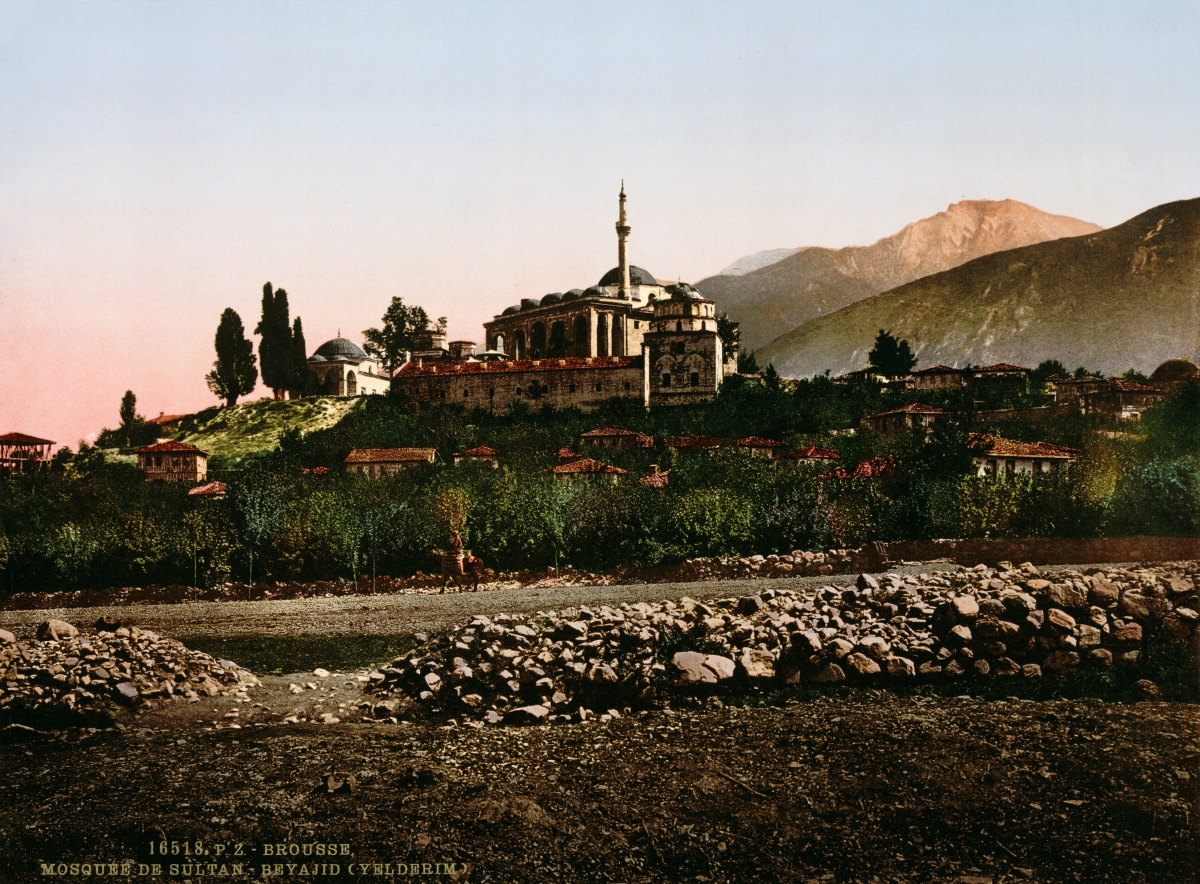
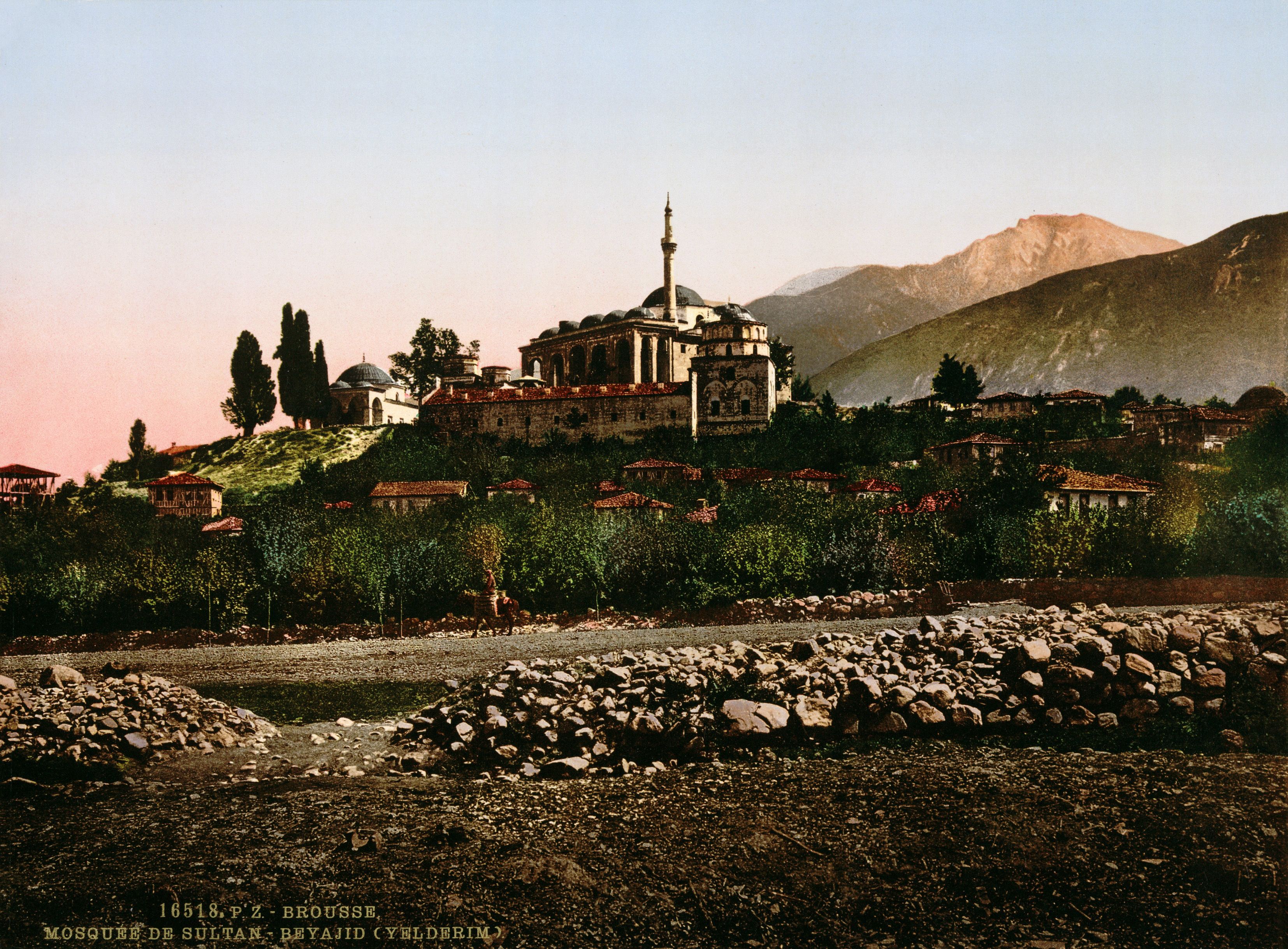
Cekirge This is bathhouse territory. Cekirge, once a distant suburb on the road to Uludag, grew up around Hudavendigar Camii and the famous hot springs. There used to be hamams of every shape and size, and a few survive. Most have a hotel attached. • Survive the noisy wedding parties at the Kervansaray Hotel, and in the morning head in your dressing gown to the Eski Kaplıca. At the Gonluferah Hotel, a revamped grande dame with the best private hamams (domed pools and lion’s heads), step into the lift. The Celik Palas has a Goldfinger pool, but the water is heated. • Cardak and its fab potato kofte are no more; smart hotels spurn Turkish food. On a fine day take the Uludag road and try an open-air kendin pisir kendin ye (“cook-yourself eat-yourself”) place. Lamb by the kilo comes to the table with a charcoal mangal. Sprinkle with oregano and order a drink.Yildirim Bayezid and the lower town Motorways and malls march across the plain with little for culture vultures except Yıldırım Bayezid Camii, 1399, model for the Yesil Cami – with the portico it lacks – and good places to eat. • Kurtulufl Cad (Yıldırım Belediyesi) has Bursa’s best offal soup (paca) shops: the immaculate Pacacı Husnu (No 219) and earthy Corbacı Salih (No 187). Like many Bursa citizens, Husnu is from the Balkans. Veal, vinegar and garlic are the ingredients of his soups, always rich but delicate: there’s tripe, finely chopped (iskembe) or chunky (tuzlama), head (kelle), tongue (dil), trotter (ayak) or brain soup, or a mix. The late Corbacı Salih served tripe soup for thirty years. Korkut, his grandson, has added pilav, beans (kuru fasulya) and malak cigeri, tender female water-buffalo liver. • The lower town has two fine lokantas: affable Selim Usta (Demirtas Paaa Hamamı, Inonu Cad 70) offers steaming broths, stews, pilav, beans, silky helva. Olive-oil dishes include artichokes and vineleaf dolma. Hayat (by the Almira Hotel) attracts factory owners and a conveyor belt of SUVs. • Iskender’s heirs now own the trademark and are busy opening emporia, including the tourist-group friendly Botanik Bahcesi – Hollywood Bursa. Hacibey is a plush place at a BP station on the Istanbul road. For the real thing, join the queue in the old Garaj spare-parts district – Uludag Kebabcısı is owned by brothers Cemal and Cemil, old Iskender hands. | |||||||
Short trips
Bithynia, as the province was called when Pliny was governor, is prosperous, fertile land, far from the tourist trail. To the north, between Yalova and Bursa, the hills are draped with olive groves and Umbria comes to mind. East, the road to Ankara leads to the sterner Anatolian plateau, softened in spring by drifts of cherry blossom. This is border country, littered with the tombs of babas and sultans, the spiritual leaders of the nomadic Turcomans, who settled here in the 12th century. They are still places of pilgrimage. Along the Marmara west of Bursa is flatter, even more fertile land – good dairy country; hence Bursa’s excellent cheeses, worth stocking up on for picnics. The sites are rarely ends in themselves, but are good excuses to roam. Behind every giant plane there’s a story (and often a café).
• Uludag: Coffee under Inkaya’s giant plane tree is the first stop, then on you drive, up through forests, first of chestnut then of fir, with places to eat, until you reach the national park. The road ends above the tree-line at the huge ski hotels. Only then do you get a view.
• East: the Ankara road. First stop Cumalıkızık, an untouched 700-year-old Turcoman village minutes from Bursa: a lovely wander (avoid weekends). Spring water rushes down the streets, cooling the air and watering orchards. A few villagers rent rooms and offer delicious snacks.
Next, Babasultan: no longer pretty, but the drive is. Baba Sultan, mounted on a deer, helped Orhan Gazi conquer Bursa and planted the tree in the citadel at Kavakli Cami before going home to this lovely spot. No politics for him. His tomb is beside another giant plane. Over the door hang antlers. On to poor, ugly, bespoiled Inegol. Beser is the home of the Inegol kofte, next to Ishak Pasha’s once-perfect mosque.
• West: Golyazı is a sleepy island village on Lake Uluabat. Further along is Issızhan caravansaray. Another 20 minutes and you are in Karacabey, famous for its horses. Visit the fair (panayir) in May, full of lively gypsies. The lamb’s the thing, borne in on a spit, eaten with your fingers – no other meat compares. One last stop in spring: Lake Manyas – where ancient Persians built a paradise garden to watch the birds.
• North: the coast road to Trilye (Zeytinbagı) winds through pretty olive groves – very slippery in the harvest season. Buy kilos of olives and eat fish by the harbour at Savarona. The road to Iznik via Yenisehir is also beautiful: soothing lake, lovely city walls, glorious sunsets.
When to go: any time but high summer. In bleak midwinter, heaven is tramping through the snow to a marrow-warming hamam.
Getting there: by vapur to Yalova, or high-speed hizli feribot to Mudanya (ido.com.tr). If driving from Istanbul, take the calming Eskihisar ferry to Yalova.
Return to Cornucopia 38 Highlights