From Cornucopia 25, January 2002 SPIRIT OF THE VINE Georgias 9,000-year love affair with the grape has produced many a spectacular wine. Here Kevin Gould continues his series on the wines of Turkey and the former dominions ofthe Ottoman Empire with a visit to the country that boasts 500 grape varieties. Photographs by Jason Lowe Georgia and Turkey are linked by a common heritage, as well as by a physical border. Saint Nino, Georgias patron saint, was from Anatolia, and Georgias modern republic continues to rely on Turkey for cross-border trade, as well as for access through the Sea of Marmara to her main port of Batumi. Those who have visited both countries will have been struck by the similarities between the southern and coastal Georgians and the Laz people of Turkeys Black Sea region from their dark hair and rich noses to a legendary reputation for business acumen and an unfailing sense of humour. Georgia is a young republic with an ancient history. Sharing frontiers with her Chechen, Dagestani and Azerbaijani neighbours, and bordered by Russia to the north and Turkey and Armenia to the south, Georgia has one foot in the East of the Silk Road and the other in the West of the busy shipping lanes of the Black Sea. Her head is crowned by the thickly wooded mass of the Caucasus Mountains, whose snow-capped peaks water the fertile valleys of her heart. And it is the rich soil of these valleys that grows the defining symbol of Georgias spirit, the grape. Georgias heart beats with a pride born of the knowledge that she is the oldest wine-making nation in the world. The roots of her viticulture stretch back to between 7000 and 5000BC, when Caucasian man discovered that wild grape juice turned into happy juice when it was left buried through the winter in a shallow pit. This knowledge was nourished by experience, and from 4000BC Georgians were cultivating grapes and burying clay vessels, kvevri, in which to store their wine ready for serving at perfect ground temperature. When it came to expressing their unique language in written form, Georgians used the shapes of the vine to provide the sinuous, flowing alphabet that remains in use today. To European ears, spoken Georgian contains very few recognisable words, with the grand exception of ghvino, or wine, whose pronunciation was disseminated from here to the rest of the world by the Phoenicians and the Greeks. This love affair with the grape was given further encouragement by the arrival of Saint Nino in the fourth century. Fleeing Roman persecution in Cappadocia, in what is now central Anatolia, and bearing a cross made of vine wood and bound with her own hair, Saint Nino was swept up in the warm embrace of the Georgians, who became early converts to Christianity. Thus cross and vine became inextricably linked, perhaps even interchangeable symbols in the Georgian psyche, and the advent of the new faith served to sanction the vinous practices of the old. Not all visitors to Georgia, however, were welcomed as warmly as Saint Nino. Among the invaders who have tested the Georgians legendary hospitality were the Ottoman sultans, who peopled their harems with shapely, pale-skinned, dark-eyed, fertile Circassian girls (thus making almost every relative of the imperial family part-Georgian). Recent history witnessed the arrival of the Soviets, whose futile attempts at systematising and controlling this free-living race must have frustrated many a Motherland functionary. The legacy of the great Soviet experiment which ended with Georgian liberation in 1992 is an appallingly messy infrastructure, although this burden has done nothing to dim the stupendously ironic Georgian sense of humour, which turns on self-deprecation and straight-faced stabs at authority figures. When it comes to wine-making, though, Georgia is blessed. Extremes of weather are unusual; summers tend to be short-sleeve sunny, and winters mild and frost-free. Natural springs abound, and the Caucasian mountain streams drain mineral-rich water into the valleys. Together with luscious tomatoes, the sweetest white and red cherries, and any amount of wild mulberries, the Kakheti region in the east, which is one of Georgias five main wine regions, also produces what must be among the finest grapes in the world. Although there are nearly 500 varieties of grape to choose from, only thirty-eight are officially grown for commercial viticulture in Georgia. Like most of his neighbours in the Napareuli area of Kakheti, Andrea Bakradzhe, a wise seventy-six-year-old of compassionate blue eyes and grey moustache, grows Rkatsiteli grapes for white wine and Saperavi for red, all of it destined for the winery of the Georgian Wine and Spirit Company (GWS), located further up the Alazani valley. While Georgia was producing three-quarters of all the wine drunk in the Soviet Union, some twenty-five decilitres a year of indifferent plonk were churned out to service a guaranteed, subsidised market intent on taking a mental holiday from communism by way of some heavy drinking. Today, with some sensitive investment from the French drinks company Pernod Ricard, the sure hand of GWSs chief wine-maker, Tamaz Kandelaki, and the youthful energy of the flying Australian wizard David Nelson are converting Bakradzhes grapes into astonishing limited-edition red and white wines of unusual character. Wines such as Old Tbilisi, and the rich, honey-coloured Tamada, both made with Rkatsiteli grapes, marry the tradition of the old world with the verve of the new. The reds tend towards the tobacco or spice styles so beloved by the Californians the well-balanced Saperavi deserving particular praise. Most impressive, perhaps, are the semi-sweet wines. These shapely beauties, such as the red Pirosmani and the white Tvishi, made with Tolikauri grapes, manage to avoid the sticky oiliness of many a dessert wine, delivering instead an enchanting mouthful of complex, developing flavours. Pirosmani straddles a meal with ease, being equally at home as a chilled aperitif as it is with a dessert of fresh cherries and apricots. Some of the wine made from Bakradzhes grapes will be ceremoniously returned to the ground. Just like his forefathers, Andrea has a consecrated place, a marani, dug out under his house, where he buries clay kvevris, and the wine matures courtesy of the cooling properties of underground streams. When filled with the juice of the harvest, the kvevris are topped with a wooden lid and then covered and sealed with earth. Some may remain entombed for up to fifty years. Gathering his closest family around him, and wearing a black felt helmet, the family patriarch presides over the emotional moment when a kvevris lid is removed. Intoning a toast of thanks and praise, he scoops a shallow earthenware bowl into the surprised liquid, and with the salutation Galmajous! drinks it down in one. As more bowls are filled, the menfolk chant the powerfully plangent song Mravalzhamier, Many Years of Life, in millennia-old polyphonic harmonies. Wiping away unembarrassed tears, the men then fill late twentieth-century plastic jerrycans by siphon to be borne triumphantly to the feast. If Georgias spirit is her grape, her body is the feast, where all life is celebrated and thanks are offered to Saint Nino and to all Natures spirits. Georgians feast regularly and seriously, and Andreas ancestors have been feasting in the same secluded glade since the sixth century, when a priest named Abraham built a stone chapel in the forest to shelter his flock from the invading Persians. A long wooden table for thirty, set next to a rushing river, groans under the weight of the banquet. Aubergines with walnuts and wild garlic sit next to piles of purple basil, green tarragon and flushed pink radishes. Salty cheeses and salads of wild mushrooms with dill-heavy green beans complement tasty misshapen loaves. Platters of fat sausages and bowls of corn-yellow chicken legs are passed around, and a fire of crackling vine cuttings is on the go. Chunks of seasoned lamb and marinated suckling pig are kebabed onto sharpened branches of green beech, and Andrea is elected tamada, or toastmaster. All over Georgia, the tamada is respected for his ability to drink deeply and to propose the most touching, expressive toasts. The tamadas guests listen respectfully and nod with sage delight as he heaps praise on the mothers of Georgia, or the cultures of all nations. Glasses are emphatically drained in one, as if drinkers are imbibing the very soul of the earth, and are refilled by the tamadas assistant, the ever-sober merikipe. (The most famous merikipe was an on-the-make Joe Stalin the secrets he gleaned while revellers were in their cups hoisted him to the top of the political pole). Baskets of cherries and plums are brought out, and the tamada hums the first few bars of a melody. Hearts full of the Georgian grape, the feasters fill their lungs and link arms. Looking into each others eyes, they raise their voices to harmonise and praise the moment where breath mingles with spirit and life is lived to the full. Galmajous! Georgian wines can be viewed on http//duggy2.sanet.ge/wine/ -------------------------- From Cornucopia 24, October 2001 RAISE A GLASS TO GALLIPOLI In the first of a series on the great wines of Turkey and its ancient dominions, Kevin Gould visits Gallipoli. A land of heroes from Homeric times to the First World War, the peninsula has also for 3,000 years prided itself on its wines. Now Sarafin, a new Turkish label, is proving itself a worthy successor
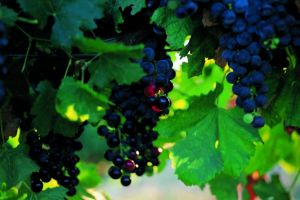
-------------------------- The story of Gallipoli is bound up in Turkish history and in the consciousness of Britain, New Zealand and Australia. It plays its part in the Greek myths. Gallipoli is where Xerxes crossed his army into Europe on a bridge of boats, and where Leander swam the Dardanelles to meet Hero in Sestos. It is also where, for nine months in 1915, a campaign was fought that claimed the lives of hundreds of thousands of brave young men, among them the flower of Turkish youth, the most promising Australians and the cream of the Kiwis, as well as countless young men from the British Isles and France. This finger of Turkey, now properly called Gelibolu, is defined by the Aegean on one side and the Dardanelles on the other - one European, the other Asian, yet it feels neither Christian nor Muslim. At Kilitbahir, the Narrows bring Europe to within 700 metres of Çanakkale, which makes it perhaps the most tantalising stretch of water in the world; whoever commanded the Dardanelles held the key to Europe, Asia, Constantinople and the Black Sea. The geography of this spit makes Gelibolu an international land with a cosmopolitan history. Homer portrayed these waters as a wine-dark sea. His allusion to the grape would have been easily understood by his contemporaries, for the area produced some of the greatest wines of the known world Odysseus toasted Athena with splendid Callipolis wine at nearby Philadelphi, having won victory over the Thracians. Callipolis wine was drunk in Troy and in Marathon and, later, wherever the civilised cadres of the Ottoman Empire were posted. The peninsula had been cultivating grapes of character and quality since 3000 BC, but by the end of the nineteenth century, winemaking in Gelibolu was in decline. The last Ottoman emperors cultivated European tastes that favoured French and Italian fashions; wines from those lands, no matter how poorly they travelled, were considered superior to those that were home-grown. There is an irony in an ancient society toasting its sunset years with what would then have been thought of as New World wines. Early in the First World War, Winston Churchill asserted that taking charge of the Dardanelles would cause Istanbul to fall like a house of cards, resulting in the removal of Turkey (an ally of the Prussians) from the war, and affording the Russians a vital ice-free sea supply route. Commonwealth states, in particular Australia, New Zealand and Canada, heeded Kitcheners call to arms, and were proud to volunteer their most able young men, acts which signalled their coming of nationhood. The Gallipoli campaign made the reputation of Mustafa Kemal Atatürk, who exposed the shortcomings of the Allied commanders, and whose charisma and drive were to engineer and inspire the modern Turkish state. The international Lausanne Agreement of 1919 ensured that the Gelibolu peninsula would become and remain a national park dedicated to the memory of the men whose remains rest there. With infinite care, the Commonwealth Graves Commission maintains numerous beautiful cemeteries, each of them sensitively designed by Sir John Burnet. The French have their own glorious memorial, and at Abide the Turks have built a stunning arched structure to commemorate their fallen. The atmosphere on the peninsula, however, is not morbid. The songbirds sing (oh, how they sing!), and the ground is fertile, yielding grapes, olives, cotton and delicious sweet almonds. A cemetery surrounded by fields of yellow sunflowers, their heads turning towards the heavens, makes it easy to believe that its inhabitants did not die in vain. A memorial at Anzac Cove glorifies the deeds of a brave generation and bears Atatürks words of respect and reconciliation: Those heroes that shed their blood and lost their livesÉ you are now lying in the soil of a friendly country, therefore rest in peace. There is no difference between the Johnnies and the Mehmets to us where they lie side by side here in this country of oursÉ To the mothers who sent their sons from faraway countries, wipe away your tears: your sons are now lying in our bosom and are at peace. After having lost their lives on this land, they have become our sons as well. The intention enshrined in the Lausanne Agreement was to forbid desecration of the historic land. But this discouraged inward investment. The result is a region that, while retaining its due dignity, has also suffered acute population decline, not to mention the loss of local crafts, in particular the winemaking so spurned by the last sultans. Onto the set of Gelibolus recent history step two men: Güven Nil and Ahmet Kutman. In 1926, Kutmans father, Nihat Bey, was requested by Atatürk himself to revive viniculture around the Dardanelles. Atatürks plan, and Nihat Kutmans work, was to create positive links between the thrusting new state and its vinous traditions, and was a calculated move away from a Muslim orthodoxy that frowned on wine and intoxication. Nihat Bey rejuvenated the ancient vineyards in the area around Mürefte, whose fruits had been extolled in a previous age by Darius the Mede (passing on his way through to fight the Athenians). Kutman set up the Doluca company, whose name today is synonymous with Turkish wine. Ahmet Kutman, a graduate of Istanbuls Robert College, returned to Turkey in 1967, having studied oenology and viticulture at the University of California, and set about the modernisation and marketing of Doluca wines. The company now produces 10 million bottles of wine each year. Kutmans room-mate at Robert College was Güven Nil. This basketball-loving, go-getting dynamo was to become Turkeys pre-eminent private banker. He was that rare combination: hard businessman and gentle romantic. His business success fuelled an interest in wines that was informed by visits to France and the Napa Valley, a deep appreciation of fine quality, and a love of good living. Nil was never afraid of thinking big his lasting legacy, he decided, was to be the founding of a wine label of international renown, a project that would be difficult, expensive and time-consuming: in essence, his perfect challenge. In the late 1980s, Nil approached his old room-mate with a plan of his dream, which chimed with Kutmans desire to venture out of the mass market. The Sarafin label was born. Nil would establish the vineyards and Kutman would assume responsibility for the winemaking. Güven Nil was deeply attracted to the atmosphere of the Dardanelles: it was a place where great men had gathered to perform important deeds. His business mind was drawn to the possibilities of finding affordable land and a willing, underemployed work force, while his emotions sought to re-energise and redeem the land where once great wines had been made and where, later, men had been sacrificed. Ever the enthusiast, he bought up parcels of land and planted nearly 80 hectares of Old and New World rootstock, as well as 7,000 Ayvalik olive trees and 10,000 sweet almond trees. The Kutman factory at Mürefte was extended and updated to include a boutique winery for Sarafin; in pride of place was a cellar of French Limousin oak barrels. Nil planted cabernet and merlot, shiraz and cabernet franc, and chardonnay and sauvignon blanc grapes. What he or Kutman could not have expected was the fact that their wines, produced close to where the Gallipoli campaign had been most hard-fought, would not only redeem the land, but also assume a character that is uncannily Antipodean. Those familiar with, say, the award-winning wines of Michael Seresin in Marlborough, New Zealand, will recognise the same nose-note of mimosa and the same long melon finish as in Sarafins Sauvignon Blanc. (Seresin has recently planted Tuscan olive trees on his land, which produce the same round fruit and oil with the same depth of flavour as that pressed from Nils Ayvalik trees.) It took a certain peacetime bravery for Güven Nil and Ahmet Kutman to commit time, energy and $10 million to a project with an unknown future and a strong possibility of failure, especially in an economic climate that rewards short-term investment but often penalises long-sighted projects. Their endeavour has achieved its ambition, and in Sarafin, for the first time in living memory, Turkey has a wine label worthy of international recognition. Güven Nil died on February 18 this year at the age of 56 while playing his weekly game of basketball. A man of great enthusiasm, dynamism and compassion, he loved to bring people together and did so with charm and panache. As his lasting memorial, Sarafin wine shares with him the qualities of catalyst par excellence. Sarafin wines can be ordered at www.sarafin.com -------------------------- From Cornucopia 11, Summer 1996 VINTNERS OF TOKAT The bunch of Narince grapes Ali Riza Diren is holding in his Anatolian vineyard (illustrated in this vintage issue of Cornucopia) is the raw material of a well kept secret. Tokats is an ancient wine, and its production was revived by Ali Rizas father, to the delight of ambassadors and the approval of a Sothebys connoisseur. Photographs by Simon Upton Serena Sutcliffe, head of the wine department of Sothebys and doyenne of London wine experts, was asked by Cornucopia to sample two bottles of wine from Tokat. One was a white 1990 Vadi, the other a red 1993 Karmen. Her verdict on the demi-sec Vadi was: Nice fresh nose, a lot of sweetness. Sweetness balanced by a lot of fruit. Very well-made when you consider it is now six years old. Sweet by our standards. Of the red Karmen she said: Fragrant, cherryish nose. Soft, easy and palatable to drink. Attractive. Could possibly have had a bit more concentration - were the yields very high? Very pleasant, fruity and attractive. Tokat, home to some of Turkeys best wine, has been the closely guarded secret of both Turkish and foreign diplomats. The wine is rarely seen in even the best Istanbul delicatessens, yet it appears in many a Republic Day celebration in Turkish embassies around the world, as well as on ambassadors tables in Ankara. It was Vasfi Diren, the father of the present owners of the Dimes food group, who revived the ancient art of wine making in Tokat in 1958. The wine was produced at home with a single hand-press. Direns eight children, together with their neighbours, helped out and there was only one full-time workman. While wine production generates only a fraction of the food groups annual turnover of more than $10 million, it has nevertheless reached 1.2 million litres a year. Vasfi Diren died in a car accident in 1985, but wine making is continued by his children. Orhan, who studied in Dijon for four years, is a qualified taster of the Institut Technique du Vin, Ali Riza is a German-trained beverage technologist and Erol is the administrator. They have inherited their fathers spectacular determination and inventiveness. Turkey has the worlds fifth largest land area under vine but most of it is used to supply table grapes and sultanas. Weaning growers off what one expert describes as atavistic habits is an essential task. The Narince grapes used in the two white wines, the naturally sweet Vadi and the dry Dörtnal, are grown locally in vineyards overlooking the town, and the Direns are able to keep close control. The red Karmen is made with a blend of Öküzgözü and Bo€azkere grapes, less easy to inspect as they grow best in the valleys of Elazð€, 400 kilometres to the south, though great care is taken that the journey is made in the cool of the night. For stockists, contact Dimes, Tokat. Tel (0356) 214 9160, fax (0356) 214 0531 ©Cornucopia Magazine 2001 |  | WINE NOTES -------------------------- Why the wine world is talking about Sarafin By Kevin Gould From Cornucopia 24 WHITES
Chardonnay 1999 With hints of resin and sun-warmed peaches on the nose, this chardonnay hums a melody of oak, but as a subtle background to the wines clean apple palate and pleasing depth of flavour. If this were a car, it would be a silver Audi with pale beige upholstery, a Bach cantata playing on the CD. A wine with a refreshing lack of astringency, to be drunk young as a foil to full-flavoured fish dishes and complex cheeses. Sauvignon Blanc 1999 Imagine a perfect summers day, the scents of canteloupe melon and mimosa tickling the nose, and a suggestion of sherbet to tickle your fancy. On the tongue, this sauvignon blanc introduces itself sweetly with macerated cherries, before revealing hidden depths of lingering wood-smoke, and a herbal finish spiked with vanilla. This is a wine whose strength is in its ability to meld with many foods and social situations, while always retaining its own character and integrity. Like a De Sede sofa, it is made with great craft, and is both stylish and welcoming it pleases all the senses and should age well. A Turkish classic for the twenty-first century, and one that should improve with further ageing. REDS Cabernet Sauvignon 1998 This wine presents the unmistakable smell of ripe, squashy plums. On the tongue, it develops long, dark flavours of tobacco and bitter chocolate, before finishing with a tantalising note of sweet raspberry. Well-balanced, thus unlikely to overwhelm other flavours, this cabernet sauvignon wine would be as at home with long-cooked meat dishes as it is with hunks of bread and cheese or with delicate vegetable dishes. Merlot 1999 Imagine the comforting, masculine smell of polished leather with overtones of cassia (cinnamon bark). This merlot then offers a surprising mouthful of young fruit, yet with balanced tannins and a disarming coda of bitter almonds. Its complexity provides an excellent match for simple grilled lamb, yet this is no nervy, thoroughbred specialist product of centuries of inbreeding. It is a pleased-to-meet-you wine, easy-going-yet with depth, whose winning personality, while excellent for drinking now, should also develop further with laying down. All these wines exhibit a deft touch, both in the grape-growing and the winemaking. The varieties grown may be fashionable throughout Europe and the New World, but Sarafin wines have their own unmistakable character. Refrigerated as soon as they are picked, Sarafin grapes then undergo cold crush at Mürefte, and exhibit the same controlled fermentation and new oak characteristics as the New Wave Greek wines from, say, Halkidiki. ©Kevin Gould / Cornucopia Magazine 2001 Special offer for subscribers to Cornucopia in the United Kingdom. Sarafin's distributors, Harrison Vintners, are offering a six-bottle case (3 Merlot, 3 Sauvignon Blanc) for £50, including VAT and free delivery within the UK, a saving of £14.95 on the full price of £64.95). Order now |