
Buy or gift a digital subscription and get access to the complete digital archive of every issue for just £18.99 / $23.99 / €21.99 a year.
Buy/gift a digital subscription Login to the Digital EditionTim Stanley delves into an exhibition about a vanished treasure once believed to have been owned by Henry VIII
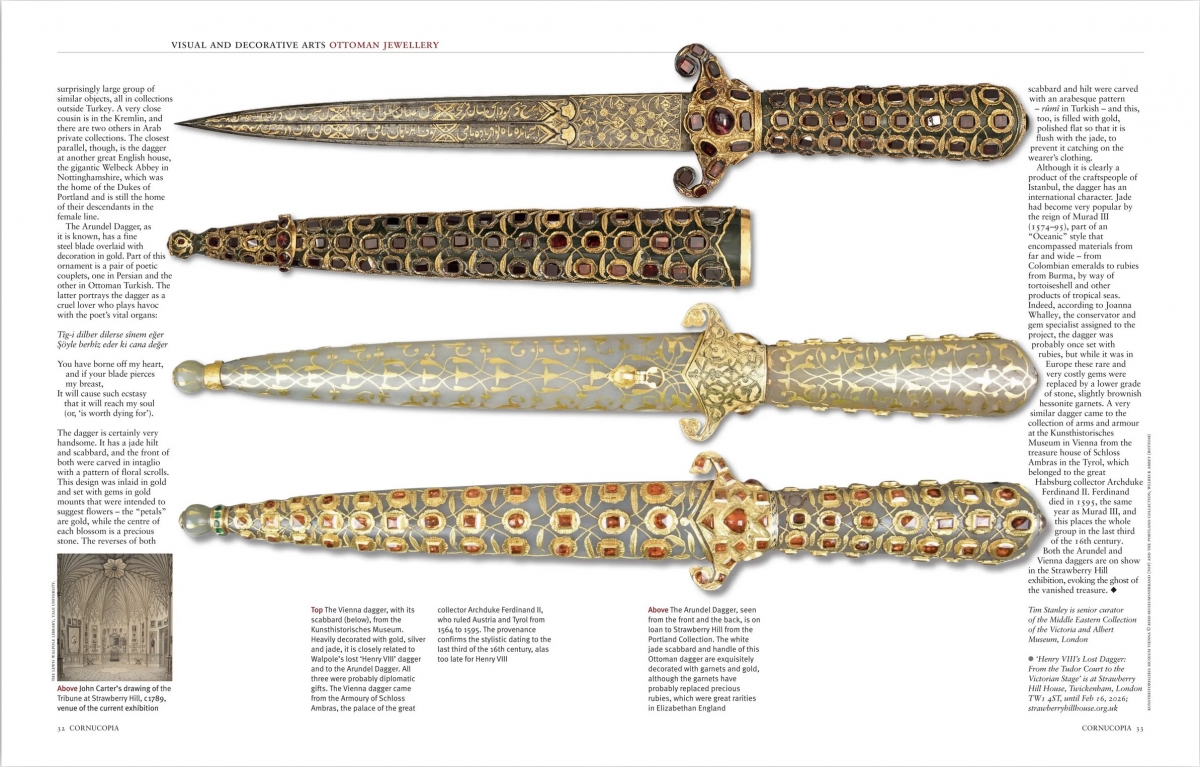
Let’s have an exhibition about an object no one has seen for 80 years! Not an obvious recipe for success, you might say. But as this small show demonstrates, there can be a great deal of mileage in the history of a single vanished treasure. For a start, the mystery is made deeper by a misattribution: before it was stolen, the object was known for hundreds of years as the dagger of King Henry VIII. Its origins lie much further east.
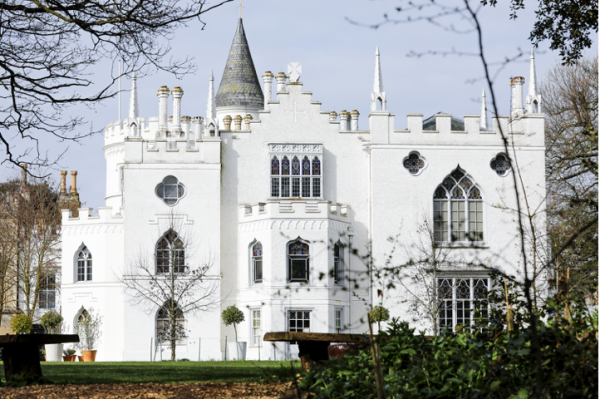
The putative Tudor connection was important for the weapon’s last known owners, the Astors of Hever Castle in Kent, southeast of London. In the early 16th century, their castle had been the home of the Boleyns, who are most famous for supplying Henry VIII with the second of his six wives, Anne, executed for alleged adultery in 1536. It was from Hever Castle that the dagger was stolen on the night of April 21, 1946, never to be seen again, at least in public. The belief that the dagger belonged to Henry VIII was just as important for a 19th-century owner, Charles Kean, the great Irish-born actor. Kean, who died in 1868, sought authenticity in his productions of Shakespeare, and collecting objects from the dramatist’s own period allowed him to create historically appropriate props for his productions. Kean bought the dagger in 1842, at the sale of the contents of Strawberry Hill House in southwest London, the venue for the exhibition. The house was built between 1749 and 1776 by Horace Walpole, one of the most important tastemakers in 18th-century London. It is the first example of a Gothic Revival house built from scratch, and its interior was designed to be the spooky setting for Walpole’s collection of paintings and antiquities, of which he was exceptionally proud.
These days Walpole’s family are less famous than the Boleyns, but they were certainly more important. Horace was the younger son of Robert Walpole, the man who engineered the union of the English and Scottish parliaments in 1707 and thereby created the United Kingdom. The elder Walpole is generally regarded as the new country’s first prime minister, and he originated the custom of residing at 10 Downing Street, where Horace also lived for a time. Robert Walpole’s political career helped to make him rich – what a surprise! He was a very important art collector, too, but his grandson, Horace’s nephew, was not good with money, and he sold Robert’s magnificent collection of paintings to Catherine the Great; they are now in the State Hermitage in St Petersburg. Horace’s collection, too, was eventually auctioned off by his heirs. This was in 1842, when the “dagger of Henry VIII” passed to Kean.
Yet the connection with Henry VIII is impossible. The king died in 1547, and the richly jewelled weapon cannot have been made before Sultan Selim II came to the Ottoman throne in 1566. Selim II? Yes, the dagger was obviously Ottoman. Obviously? How do we know what the dagger looked like? True, there are no photographs, but a very accurate drawing was made for Horace Walpole in the 1780s. This has allowed the curators at Strawberry Hill to link the vanished dagger with a surprisingly large group of similar objects, all in collections outside Turkey. A very close cousin is in the Kremlin, and there are two others in Arab private collections. The closest parallel, though, is the dagger at another great English house, the gigantic Welbeck Abbey in Nottinghamshire, which was the home of the Dukes of Portland and is still the home of their descendants in the female line.
The Arundel Dagger, as it is known, has a fine steel blade overlaid with decoration in gold. Part of this ornament is a pair of poetic couplets, one in Persian and the other in Ottoman Turkish. The latter portrays the dagger as a cruel lover who plays havoc with the poet’s vital organs: Tîg-i dilber dilerse sînem eğer Şöyle berhîz eder ki cana değer You have borne off my heart, and if your blade pierces my breast,
It will cause such ecstasy that it will reach my soul (or, ‘is worth dying for’).
The dagger is certainly very handsome. It has a jade hilt and scabbard, and the front of both were carved in intaglio with a pattern of floral scrolls. This design was inlaid in gold and set with gems in gold mounts that were intended to suggest flowers – the “petals” are gold, while the centre of each blossom is a precious stone. The reverses of both scabbard and hilt were carved with an arabesque pattern – rûmî in Turkish – and this, too, is filled with gold, polished flat so that it is flush with the jade, to prevent it catching on the wearer’s clothing.
Although it is clearly a product of the craftspeople of Istanbul, the dagger has an international character. Jade had become very popular by the reign of Murad III (1574–95), part of an “Oceanic” style that encompassed materials from far and wide – from Colombian emeralds to rubies from Burma, by way of tortoiseshell and other products of tropical seas. Indeed, according to Joanna Whalley, the conservator and gem specialist assigned to the project, the dagger was
probably once set with
rubies, but while it was in
Europe these rare and
very costly gems were
replaced by a lower grade
of stone, slightly brownish
hessonite garnets. A very similar dagger came to the collection of arms and armour at the Kunsthistorisches Museum in Vienna from the treasure house of Schloss Ambras in the Tyrol, which belonged to the great Habsburg collector Archduke Ferdinand II. Ferdinand died in 1595, the same year as Murad III, and this places the whole group in the last third of the 16th century. Both the Arundel and Vienna daggers are on show in the Strawberry Hill exhibition, evoking the ghost of the vanished treasure. u
Tim Stanley is senior curator of the Middle Eastern Collection of the Victoria and Albert Museum, London
● ‘Henry VIII’s Lost Dagger: From the Tudor Court to the Victorian Stage’ is at Strawberry Hill House, Twickenham, London TW1 4ST, until Feb 16, 2026; strawberryhillhouse.org.uk


The Istanbul Research Institute celebrates the life and work of Arif Hikmet Koyunoğlu

The wondrous cornelian cherry, by Berrin Torolsan

The ceramic secrets of a 16th-century bath house

When two exiled Ottoman princesses married into the family of the richest man in the world, the match made headlines around the globe. Cosmo Brockway describes the opulence that awaited them in Hyderabad. Palace photographs by Monica Fritz




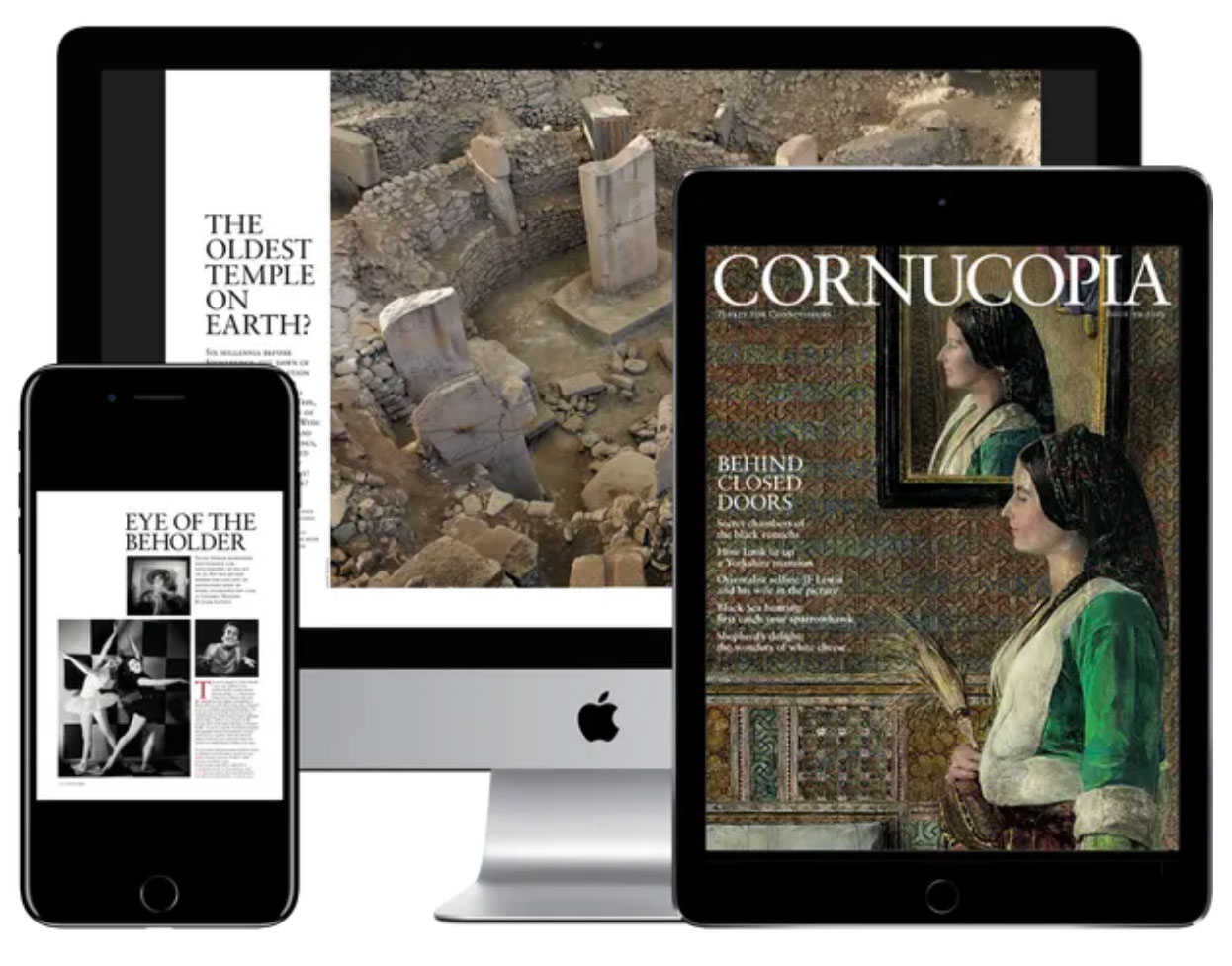
Cornucopia works in partnership with the digital publishing platform Exact Editions to offer individual and institutional subscribers unlimited access to a searchable archive of fascinating back issues and every newly published issue. The digital edition of Cornucopia is available cross-platform on web, iOS and Android and offers a comprehensive search function, allowing the title’s cultural content to be delved into at the touch of a button.
Digital Subscription: £18.99 / $23.99 (1 year)
Subscribe now