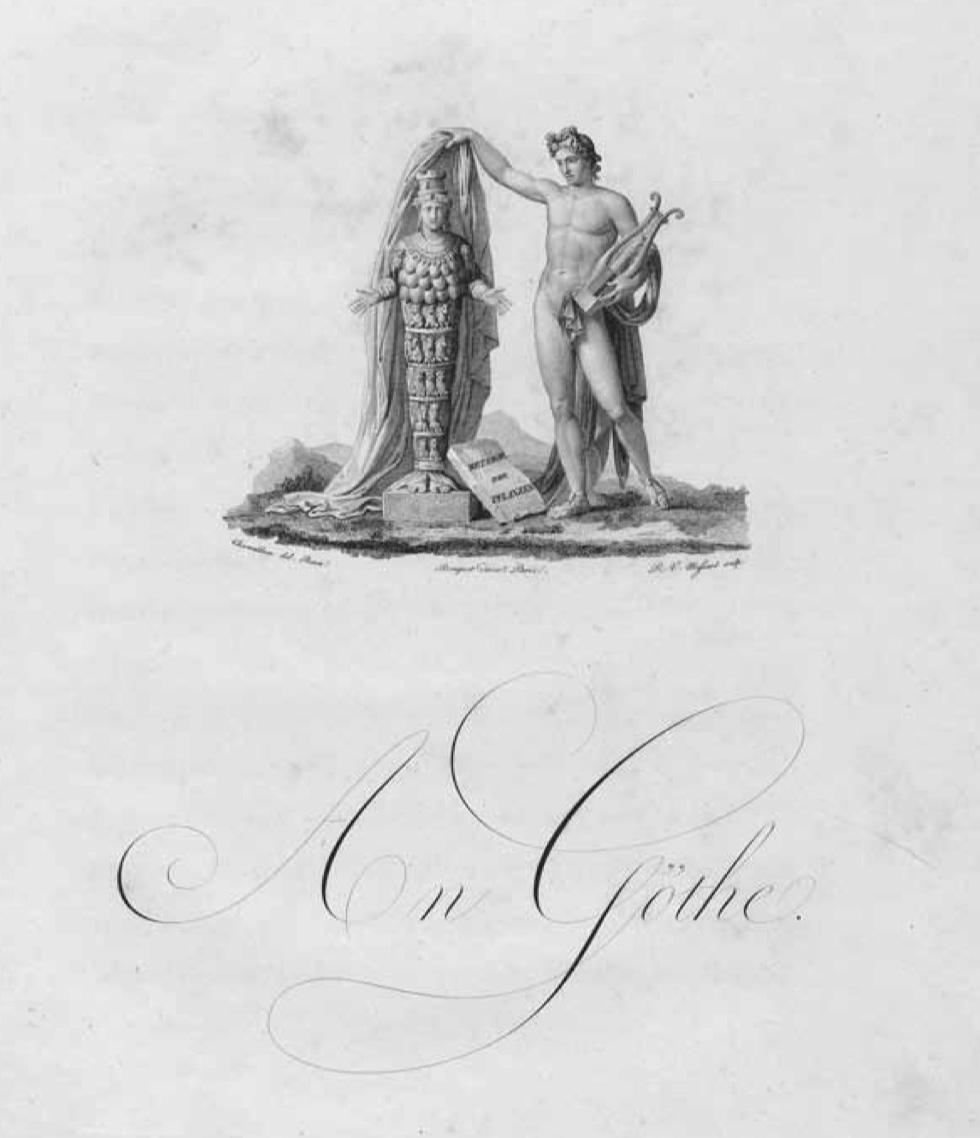
Frontispiece to the German translation of Alexander von Humboldt’s *Ideen zu einer Geographie der Pflanzen nebst ein Naturgemälde der Tropenlander* (1807), after a drawing by Bertel Thorvaldsen. It shows a statue of Artemis of Ephesus being unveiled by Apollo. (Yale Collection of German Literature, Beinecke Rare Book and Manuscript Library, Yale University.). From Frederika Tevebring's paper Unveiling the Goddess: Artemis of Ephesus as a symbol of nature at the turn of the nineteenth century
The second in a series of Tuesday lectures at the Swedish Research Institute of Istanbul. Frederiuka Tevebring lists as her chief interests Greek mythology and its reception, especially in 19th-century Germany, and ancient heritage and national identity, the politics of display and collecting. Unveiling the Goddess: Artemis of Ephesus as a symbol of nature at the turn of the nineteenth century is an excellent introduction to her work.
Frontispiece to the German translation of Alexander von Humboldt’s *Ideen zu einer Geographie der Pflanzen nebst ein Naturgemälde der Tropenlander* (1807), after a drawing by Bertel Thorvaldsen. It shows a statue of Artemis of Ephesus being unveiled by Apollo. (Yale Collection of German Literature, Beinecke Rare Book and Manuscript Library, Yale University.). From Frederika Tevebring's paper Unveiling the Goddess: Artemis of Ephesus as a symbol of nature at the turn of the nineteenth century