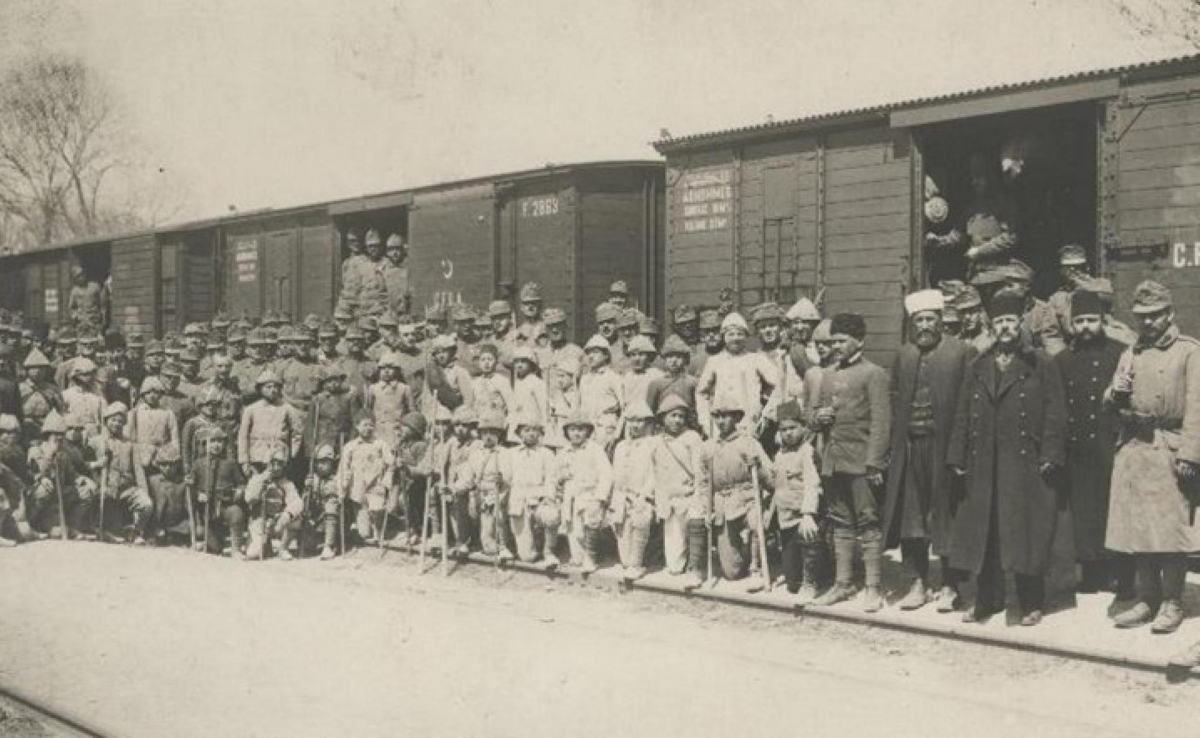
The Istanbul Liszt Institute – the Hungarian Cultural Centre in Kağıthane, Istanbul – has opened an exhibition entitled Askerî Yoldaşlık Anıları: Budapeşte Askerî Tarih Müzesi Eserlerinden Türkiye Seçkisi (‘Memories of Military Alliance: A Selection for Türkiye from the Collections of the Budapest Military History Museum’). The exhibition, which opened on 17 September, consists of items on loan from the Budapest Military History Museum that document Turkish-Hungarian relations from the time of the Crimean War to that of the First World War.
Military co-operation between the two countries goes back a long way: some Hungarians who fled their country after the 1848-49 Hungarian Revolution and War of Independence later fought in the Ottoman army, and the two countries were allies, and on some occasions fought side by side, during the First World War – the best-known example of this co-operation being the Galicia front, where the Ottoman 15th Corps was deployed to fight under Austro-Hungarian command against Russian forces.
There were other theatres in which co-operation took place, however, two examples being the Gallipoli front, where Austro-Hungarian artillery units (such as howitzer and mortar batteries) were sent to support Ottoman defences against Allied naval and land attacks, and the Sinai-Palestine front, where Austro-Hungarian mountain gun and artillery divisions operated alongside Turkish troops against British forces.
Liszt Institute (Hungarian Cultural Centre)
Gürsel Mah., İmrahor Cad. No: 23 B Blok, Kağıthane, Istanbul
Tel: +90 212 314 21 42