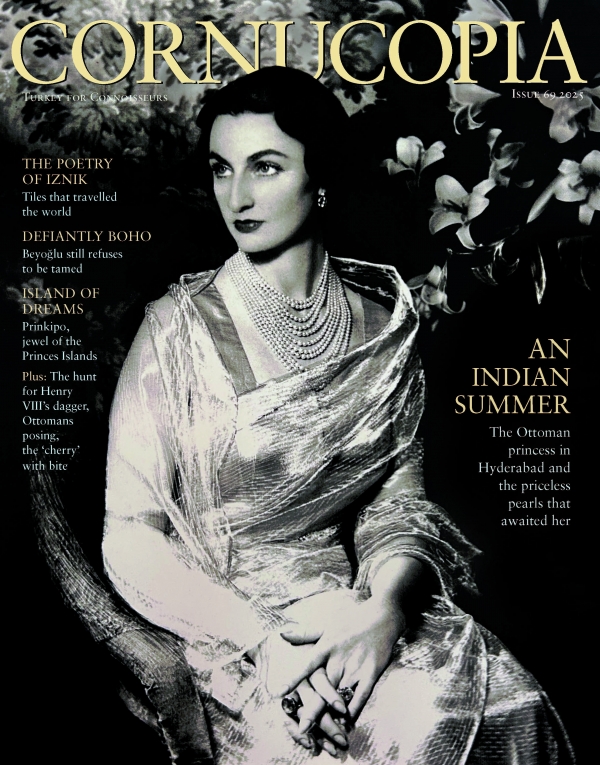
Buy or gift a digital subscription and get access to the complete digital archive of every issue for just £18.99 / $23.99 / €21.99 a year.
Buy/gift a digital subscription Login to the Digital EditionOne fruitful dynasty became a driving force in the development of Turkish modern art. Ayla Jean Yackley enjoys the dazzling work of the Şakir Pasha family
Before Turkey had a modern art scene, the Şakir Pasha family was sketching its outlines. From the pioneering paintings of Fahrelnissa Zeid to the neo- mythic literature of Cevat Şakir Kabaagaçh, the creative dynasty that emerged during the Ottoman Empire’s twilight and the dawn of the Republic helped to define the contours of modern Turkish art and intellectual life.
The exhibition The Five Wonders of the Şakir Pasha Family, and its richly illustrated companion catalogue, unite the work of the family’s most eminent members, who included Kabaagaçh and Zeid’s sister Aliye Berger, Turkey’s first prominent woman engraver; their niece Füreya Koral, a trailblazer in modern ceramics; and Zeid’s son Nejad Devrim, whose abstract canvases earned him international recognition. “If we were to list the first IO names of Turkish contemporary art, nearly half would come from this one family,” says art historian Ömer Faruk Serifoğlu, who curated The Five Wonders and saw the exhibition and catalogue as “an opportunity to tell a more complete story about their legacy and how their interactions were an essential part of their art”.
Like many people in Turkey, Şerifoğlu first became acquainted with the family’s story through the 1994 memoir A Turkish Tapestry, written by Zeid’s daughter Shirin Devrim, an actress who was the first woman to stage a play at the Istanbul City Theatres. Fans of Turkish soap operas discovered the Şakirs last year in Portrait of a Scandalous Family, a Downton Abbey-like period drama about a world poised between grandeur and decline.
Their story unfolds in the catalogue through the art, photographs and archival material, much of it loaned by descendants, featured in the exhibition at the Atatürk Cultural Centre in Istanbul (until December 14). The story begins with a family tree with roots in the top echelons of Ottoman society. The patriarch Şakir Pasha served as a military officer and diplomat, while his brother Ahmed Cevad Pasha was grand vizier under Abdülhamid II. Şakir Pasha eventually retreated from politics to the island of Büyükada, off the Istanbul coast, where he and his wife, Ismet, raised their seven children with the assistance of English governesses and French tutors.
Tragedy struck in 1914 when Şakir Pasha was killed by his 24-year-old son in mysterious circumstances. Cevat Şakir had rebelled against his father’s plans for him to study law and become a statesman, by dropping out of Oxford University to attend art school in Rome. Despite their tumultuous relationship, Kabaagaçh always maintained his innocence and that an accidental discharge of a hunting rifle had caused his father’s death.
The Five Wonders includes Kabaagaçli’s sketches and magazine illustrations, as well as Seafarers, a series of works using wax resist with ink that mirrors the portrayals of fishermen in his sea-soaked writing. But his dreams of becoming a renowned painter were left to his youngest sisters to realise. While his father’s death ruptured the family, “Fahrelnissa and Aliye did not question their brother,” says Şerifoğlu. “He was a role model for them, and he essentially bestowed onto them his unfulfilled aspirations.”
It was Zeid who would enjoy international critical acclaim for her synthesis of Eastern tradition and European modernism - including the first solo show by a woman at the Institute of Contemporary Arts in London in 1954. More recently, major retrospectives in London, Berlin and Istanbul have repositioned her as one of the most significant female artists of the Middle East in the 20th century.
Zeid’s psychologically charged portraits and signature fractal abstractions, like Five Fishermen Siblings, are included in the accompanying volume, but the works that trace her changing fortunes are the most revelatory.
She left an unhappy marriage to Shirin and Nejat’s father when she fell in love with Prince Zeid bin Hussein, the younger brother of King Faisal of Iraq. When the Hashemite royal family was assassinated in Baghdad in a 1958 coup, she and her husband were evicted from the London Embassy, forcing the princess to learn to cook in a rented flat, and her domesticity inspired her strange polyester-resin panels with chicken bones.
Şerifoğlu also includes two spontaneous paintings created by Zeid during a 1977 visit to the home of Istanbul friends, in which their son surreptitiously recorded her conversation about the sharp criticism from an instructor at a Paris academy that had humbled her “as a spoiled society lady to bring out the artist”.
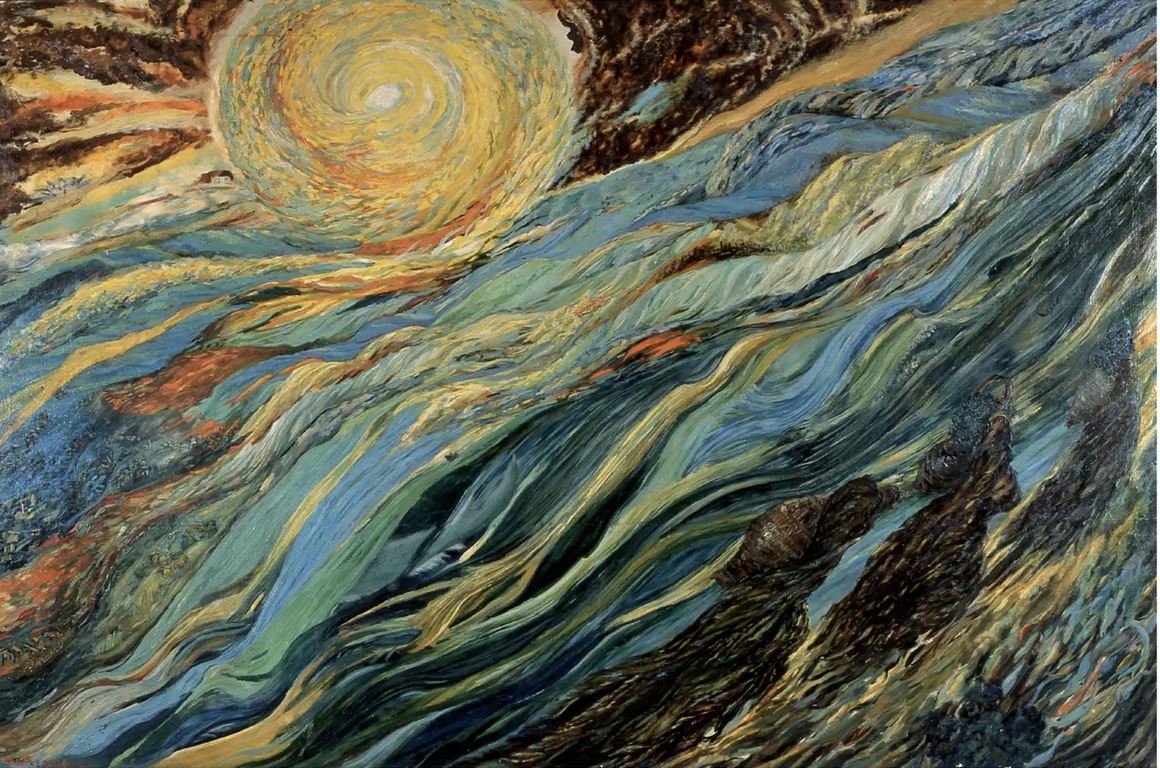
Pride of place in The Five Wonders belongs to Aliye Berger’s monumental Sun Rising, which won her the top prize in a major Istanbul painting contest in 1954. Dawn erupts to scatter waves of colour across the canvas, bathing villages and the sea in a symphony of light. Yet it was the technical, physical and artistic challenges of engraving that provided Berger with solace after the sudden death of her husband, the Hungarian violinist Karl Berger. ” As I worked, I felt I was being reattached to life,” Berger told her niece Shirin Devrim.
At the show, Berger’s prints mingled with Füreya Koral’s ceramics, which merged Anatolian motifs with modernist abstraction to transform the craft into an art form in Turkey. Born just seven years apart, their work was often in dialogue, such as when Berger’s vibrant Gecekondular depicting shanty towns stood behind Koral’s series of Ceramic Houses.
Nejad Devrim’s lyrical abstractions include the vivid Uzbekistan from his wanderings across the Soviet Union, and the sparse Silk Road ruins convey a loneliness that his self-imposed exile from the family may have stirred. Part of the Nouvelle École de Paris, Nejad enjoyed early critical attention in France, but his mother’s arrival in Europe would cast a pall over his success. “He felt that Zeid should only appear on the scene as his mother and forbade her from talking about her own art,” Şerifoğlu says. As Zeid surpassed her son in fame and institutional presence, the two became estranged, failing to make peace before their deaths in the 1990s, according to Şerifoğlu. A decade later, they were reunited in a posthumous joint exhibition at Istanbul Modern that Shirin helped to organise.
DIGITAL SUBSCRIBERS CAN READ THE ILLUSTRATED ARTICLE ONLINE HERE

The Istanbul Research Institute celebrates the life and work of Arif Hikmet Koyunoğlu

The wondrous cornelian cherry, by Berrin Torolsan

The ceramic secrets of a 16th-century bath house
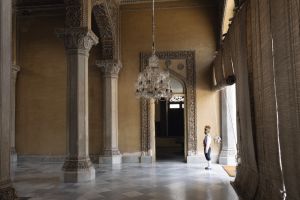
When two exiled Ottoman princesses married into the family of the richest man in the world, the match made headlines around the globe. Cosmo Brockway describes the opulence that awaited them in Hyderabad. Palace photographs by Monica Fritz

Tim Stanley delves into an exhibition about a vanished treasure once believed to have been owned by Henry VIII
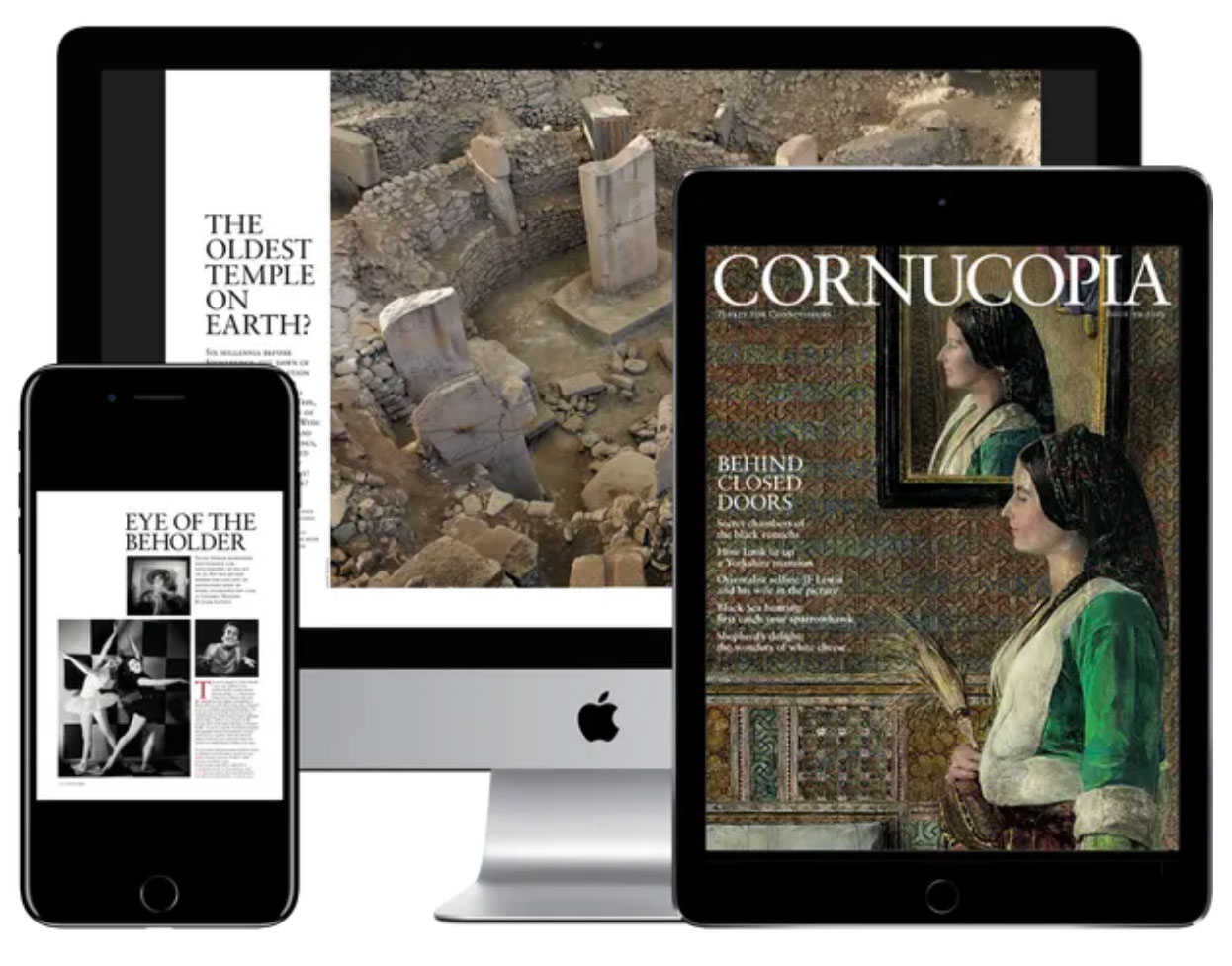
Cornucopia works in partnership with the digital publishing platform Exact Editions to offer individual and institutional subscribers unlimited access to a searchable archive of fascinating back issues and every newly published issue. The digital edition of Cornucopia is available cross-platform on web, iOS and Android and offers a comprehensive search function, allowing the title’s cultural content to be delved into at the touch of a button.
Digital Subscription: £18.99 / $23.99 (1 year)
Subscribe now