Buy or gift a digital subscription and get access to the complete digital archive of every issue for just £18.99 / $23.99 / €21.99 a year.
Buy/gift a digital subscription Login to the Digital EditionLucien de Guise admires the Met’s calm reclaiming of the term ‘Orientalist’ for its new show exploring European and Ottoman views of Islamic art
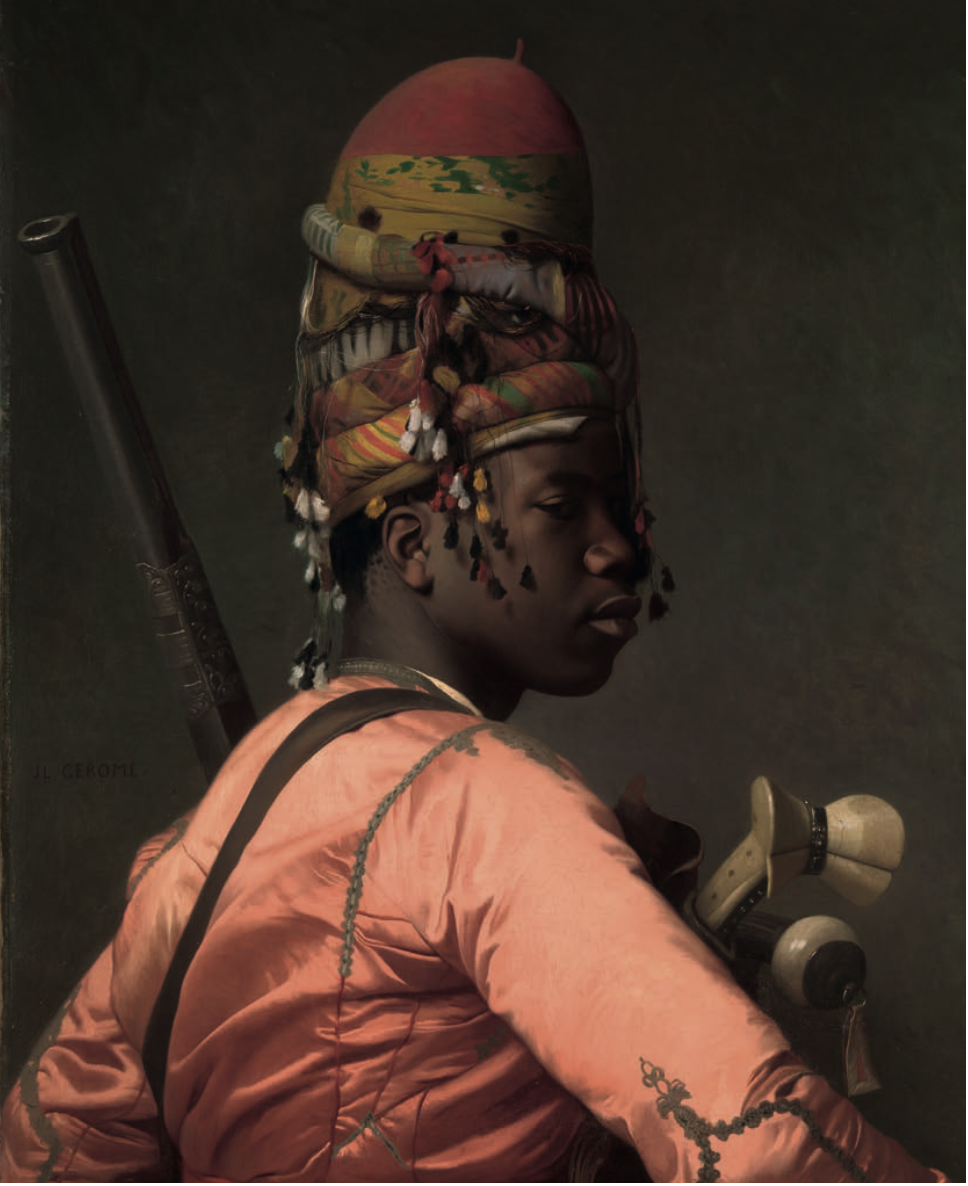
As with Rudyard Kipling’s much-quoted ballad, this exhibition breaks down borders and barriers.
Oh, East is East, and West is West, and never the twain shall meet.
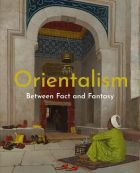
The cover of the Metropolitan Museum’s latest exhibition catalogue sets the tone for the next 250-plus pages. At the Mosque Door is a portal into another realm by Osman Hamdi Bey, an Ottoman artist who almost steals the show. Orientalism: Between Fact and Fantasy takes us on a colourful tour of a far more complex world than might be imagined by those brought up on the thinking of Edward Said and Linda Nochlin.
The authors of the catalogue are too polite to use the word “hijacking” for what happened to the once-useful term “Orientalist art”. Turned into a weapon of postcolonial theory almost half a century ago, it has only recently regained some of its former neutral status. Instead of breaking the truce in the war over the “Orientalist” word, the Met curators tread a calm and conciliatory path: “A fresh look at the ways nineteenth-century European and Ottoman artists portrayed and promoted the Middle East through interpretations and emulations of Islamic art and design.”
Making their mission statement really fresh is the curators’ emphasis on the Ottoman. The direction of other recent exhibitions has been “West meets East”, even when much of the “East” is actually south. The Met instead brings together “Europe” and “Ottoman”. Geographically, this is a fine line; during the 19th century, the Ottomans were losing hundreds of thousands of hard-won square miles in Europe. They were also running much of the Islamic world when the “European” (and many American) artists were packing their paintboxes for the adventure of their lives. The destinations were those domains that either the painters or their patrons yearned for, which meant North Africa as much as the Middle East. The patrons themselves were not only European and American industrialists; the Ottoman court was also an active buyer, especially of Jean-Léon Gérôme’s work.
The book’s 197 illustrations open up the liveliest travel compendium of the 19th century. This was the birth of tourism. Instead of pre-dawn raids on swimming-pool sun loungers, the quest was for the picturesque, the romantic and, occasionally, the grotesque. There’s not much of the ugly side of life in the Islamic world on view here, mainly because so few artists were in pursuit of the sort of disparaging imagery that 20th-century observers were convinced was part of the plan. A warning for those hoping to witness the “Eastern” version of the Victorian underbelly: it’s not there. Nor should it be. There is not a single decapitation, as favoured by Henri Regnault. His Summary Execution was scandalously unusual one-and-a-half centuries ago, and it remains so today, safely tucked away in the Musée d’Orsay.
For a modern audience, the most distressing images in this publication are likely to involve nudity. In Britain, the Gérôme painting of The Snake Charmer could have “paedo”-hunters en route to Fifth Avenue to do some daubing on the Met’s walls. It’s no wonder Edward Said chose this work for the cover of Orientalism (the book) in 1978. The image of a boy clothed in nothing but a python turned an extremely long academic essay into a bestseller.
The setting is the Sublime Porte, and the audience has been interpreted as a potpourri of depraved types from around the Muslim world. The Met exhibition ranges more widely than the Ottoman Empire. There is, for example, a chapter on “Persomania”. The 19th century saw the elevation of Persian culture into a synonym for Islamic art. The art-historical wisdom of the time was to label anything worthwhile as being Persian rather than Turkish or Arab.
A particular strength of the Met book is that it goes beyond the two-dimensional. The decorative arts are resplendent here. Now that “makers” are in vogue again, there’s a chance that the old-time appeal of glass, ceramics and metalwork will find an audience again. The book has pages of comparative photos showing the original wares from the Islamic world alongside the Western reinterpretations. Any modern collector who has run out of wall space for supersized canvases should look at the Islamic art of turning the mundane into the magnificent. There is a 13th-century Syrian enamelled-glass tazza in the exhibition, given to the Met in 1891, described at the time as “the gem of the collection”. It’s hard to imagine that level of enthusiasm in New York nowadays.
There is also a profusion of attention given to women artists. The supposed subjects of that sinister “male gaze” (courtesy of Nochlin and followers) are doing the gazing – and the painting. Another heroine of true Orientalism was a writer rather than a painter, but she has not been excluded. The matchless Lady Mary Wortley Montagu did more than introduce smallpox innoculation from the Ottoman Empire long before Jenner: she also wrote the truth about the harem. The reality of that lifestyle was dull, despite her finding the women to be veritable goddesses.
Lady Mary’s account might have inspired the most lascivious of all the painters of supposed Ottoman bathhouses. Fortunately, Ingres was no more an Orientalist than he was a fearless traveller. His vision of Le bain turc is inclined to make viewers queasy, just as it did in 1862 when the round painting was described as resembling “a cake full of maggots”. It is used mercifully small in the book; for the exhibition it didn’t leave its home at the Louvre. Offering a female insider’s view of the world of Ottoman women, there is Henriette Browne. This French artist was the painterly equivalent of the literary Lady Mary, with no hint of the salacious. She also enjoyed travel.
Turkey’s geography was more widely understood then than it is now. In fact, almost everything about that era was more about bringing people together than the present era of putting borders on every available bit of land or sea. Nobody exemplified this better than the de facto hero of the exhibition, who happens to have been an Ottoman. In the introductory essay, curator Deniz Beyazıt shows why Hamdi Bey was such a distinctive bringer together of “East” and “West”. He married two French women – consecutively – and greatly admired the other hero of the show: Gérôme. Both have received more attention in the past few years than they did for many decades before that.
Lenders to this exhibition are as diverse as the material on display, ranging from Abu Dhabi to Massachusetts and Malaysia. Surprisingly, none from Turkey seem to be credited. The Ottoman Empire may have been the sick man of Europe at the time of this great flourishing of exchange, but its cultural influence had never been greater.
Thanks to those Orientalist artists, Western audiences were, at last, getting the picture. Among all those noble Bedouins were some highly developed urban cultures. At one end of the Mediterranean was the long-gone civilisation of Al-Andalus, and at the other the eternal sophistication of Constantinople.
Lucien de Guise is head curator of the Islamic Art Museum Malaysia, Kuala Lumpur
‘Orientalism: Between Fact and Fantasy’ is at the Metropolitan Museum of Art, New York, until Feb 28, 2027
The Turkish modernist painter Fahrelnissa Zeid’s style was constantly evolving, but through it all ran the sadness of a turbulent life

Thomas Roueché loses himself in cabinets of delight at Istanbul’s Meşher
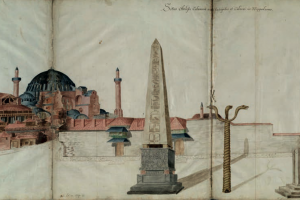
Tim Stanley, curator of ‘Constantinople to Istanbul: One City, Two Empires’ at the V&A, ponders elusive links between the two imperial capitals and relishes the chance to exhibit surprising treasures that show the role this great city has played in fashioning our idea of how to live

Cornucopia works in partnership with the digital publishing platform Exact Editions to offer individual and institutional subscribers unlimited access to a searchable archive of fascinating back issues and every newly published issue. The digital edition of Cornucopia is available cross-platform on web, iOS and Android and offers a comprehensive search function, allowing the title’s cultural content to be delved into at the touch of a button.
Digital Subscription: £18.99 / $23.99 (1 year)
Subscribe now