Buy or gift a digital subscription and get access to the complete digital archive of every issue for just £18.99 / $23.99 / €21.99 a year.
Buy/gift a digital subscription Login to the Digital EditionThomas Roueché loses himself in cabinets of delight at Istanbul’s Meşher
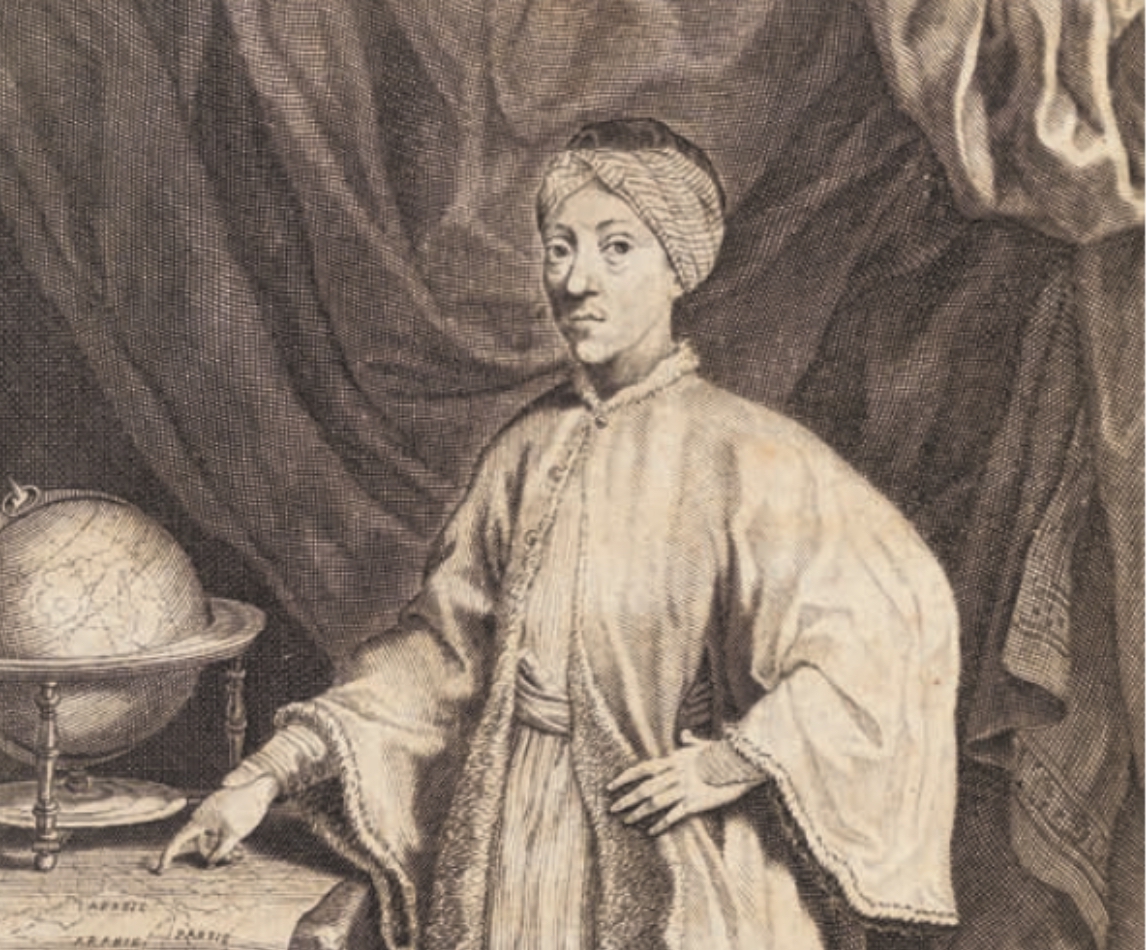
The French proto-surrealist writer Raymond Roussel had a unique attitude to travel. An eccentric dandy, born into vast wealth at the end of the 19th century, Roussel’s travels were an endless literary pilgrimage, often in the footsteps of his hero Pierre Loti. When he reached Istanbul, for example, it was to leave a rose at the grave of the princess Aziyadé, rather than engage with the reality of the city itself. Roussel’s passion for the fictive over the real, and his commitment to his writing, led him to develop a vehicle he called the maison roulante – quite literally a house on wheels, complete with office and bed. There, he could roll down the blinds and make his way across Europe uninterrupted by the landscapes through which he passed; as his biographer comments, he could “travel without travelling”.
Roussel’s eccentricity is quite mundane to us today. The maison roulante is utterly recognisable as a mobile home; in our era of globalisation, travel is effected through sitting in some sort of room while the world speeds past, whether in a car, a train or a plane. One liminal space gives way to another, collapsing distance and knitting the world together into an ever-increasing sense of sameness. Were one to look out of the window, the aesthetic language of coffee shops, small-plates restaurants and cocktail bars would make the landscapes we saw utterly familiar. The “fast lane” lifestyle, where businesspeople hop from airport lounge to airport lounge, has made travel deeply superficial; “advice” doled out by influencers tears at the urban fabric of cities, which collapse under the weight of overtourism.
The result is that our modern digital nomads move seamlessly through a global fiction. For better or worse, today’s traveller to Istanbul is as likely to drink a flat white in a Scandinavian-inspired café with aluminium counters as they are to eat in an esnaf lokantası.
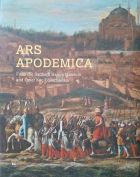
The current exhibition Ars Apodemica, at Meşher in Istanbul, reminds us that it was not ever thus. Through a series of objects presented in dark, almost theatrical settings, the show tells the story of how, from the early modern period onwards, travel began to emerge as a practice and an art, and how the works of travellers themselves began to influence and transform arts and culture. As a term, “Ars Apodemica” refers to the growing genre of advice to travellers which began to emerge from the 16th century onwards. As an interest in travel grew, so did the wider literature around it – telling those setting out on journeys how to do it and what to expect.
These works sought to describe both how and why to travel – in particular to the East – and helped develop a deeper appreciation for travel itself as part of the formation of the cultured individual. It’s from these texts, paintings and objects that the idea of the Grand Tour began to emerge and Enlightenment ideas of universality slowly developed.
The encounters that this growing interaction created came to form the basis of a rich and evolving culture, transforming knowledge in the West as much as in the Ottoman Empire itself.
European travellers to the East have, of course, tended to be criticised for cultural myopia, colonial aspirations and orientalism, but what emerges from Meşher’s carefully curated exhibition is a far more human picture.
The exhibition is divided into sections which deal with different types of travel – the motivating principles of travellers in the East, whether trade, war, natural science, diplomacy, antiquarianism or pilgrimage. It thus manages to distance its subjects from the foppish Grand Tourists of the West, heading out on their proto-gap years, and to fold in the complexities of the Ottoman Sultan’s sponsorship of the hajj, or the documentation of new forms of nature, early archaeological exploration and diplomatic postings.
These thematic sections are themselves arranged in towering cabinets that evoke libraries or cabinets of curiosity. It’s a framing that helps to pose the question of how these travels shaped the travellers who undertook them, how it helped them to see and understand the world more deeply. One is constantly aware of a rich sense of humanism – of the profound reality that for early travellers, the journey to the East was marked by interactions between individuals, by hospitality, by strangeness and familiarity that was fundamentally lived in dialogue with others met along the way.
This comes to life in many of the most beautiful works in the exhibition, not least the tiny but deeply affecting engraving by Albrecht Dürer of a Turkish family – a couple with a small baby. In Dürer’s incomparable etching, these three come to life in a full and deep humanity. This delicate intimacy is just as evident in his famous and profoundly familiar work, A Rhinoceros, which, installed here, steps out of a sense of a generic depiction of a rare animal and instead feels specific and unique. Even in archaeological drawings, such as the sketch of the ruins of Didyma in John Covel’s diaries, we are reminded of the individual rather than the generalised perspective, the sense of a person on their travels encountering something new.
The crux of the exhibition includes a number of paintings and a portolan chart generously donated to the Sadberk Hanım Museum by Mrs Çiğdem Simavi, and many works from the Ömer Koç Collection that will be familiar to Cornucopia readers, such as a gorgeous Iznik tankard with hares and gazelles, Edward Lear’s electric Constantinople from the Sea of Marmara, Jacopo Ligozzi’s Two Solak Archers with a Dog (the dog in question with an unforgettably charming and true-to-life expression) and Pieter Coecke van Aelst’s extraordinary Les moeurs et fachons de faire de turcz (see Cornucopia 56)
Yet each object feels elevated by its context, able both to stand on its own merit and to be elegantly folded into the exhibition’s thoughtful thesis, which allows the curators to bring together such a broad swathe of material culture and artworks. What Merve Uca, Hülya Bilgi and the teams at Meşher and the Sadberk Hanım Museum have achieved here is nothing short of magisterial, choosing an exquisite selection of object from the collections of museums and private individuals that are already encyclopaedic in their scope.
The inclusion of Ottoman objects related to the many meanings of travel alongside many familiar Orientalist pieces does much to lend richness to the show. The vast and extraordinary Janissary ladle, for example, is included in a more sobering section on war.
Even the Ottoman wallet embroidered with the name of “Elizabeth Wall”, which formed part of the Sadberk Hanım’s recent exhibition of wallets and letter holders, comes into a different sort of focus here, one that again and again asks the visitor to or documentary, these not only give a sense of Istanbul’s diplomatic life in the mid-19th century, but also represent a community creating its own ways of being.
The exhibition reaches its culmination, or perhaps its denouement, in examples of travel literature from the late 19th and early 20th century that are not dissimilar to the guidebooks of today. The emergence of the “tourist” can arguably be seen as the conclusion of this long and rich history of the ars apodemica, as long-distance travel was made ever easier by technological revolutions. As the first Western hotels began to emerge in Istanbul and beyond, with their French chefs and mores, a process of cultural flattening began, the conclusion of a journey from caravanserai to Soho House franchises in every major city. It’s strange to think that the homogenisation of our globalised world began with the pilgrimages and trading missions of the early modern era, and to think of this history as part of a steady process of diminution.
In contrast to Roussel’s very modern form of travel, Ars Apodemica brings to mind the approach of Bruce Chatwin’s Songlines, in his preoccupation with how travel is so deeply interwoven with all forms of cultural expression. For Chatwin, the songlines of Australian aboriginal culture formed part of their very ways of existing. In exploring the world through the eyes of the many artists, craftsmen and travellers showcased in Ars Apodemica, one sees how true this was for generation after generation of individuals, each making their way east in search of knowledge.
‘Ars Apodemica: From the Sadberk Hanım Museum and Ömer Koç Collections’ is at Meşher, İstiklâl Cad 211, Istanbul, until May 23, 2027
The Turkish modernist painter Fahrelnissa Zeid’s style was constantly evolving, but through it all ran the sadness of a turbulent life
Lucien de Guise admires the Met’s calm reclaiming of the term ‘Orientalist’ for its new show exploring European and Ottoman views of Islamic art
Tim Stanley, curator of ‘Constantinople to Istanbul: One City, Two Empires’ at the V&A, ponders elusive links between the two imperial capitals and relishes the chance to exhibit surprising treasures that show the role this great city has played in fashioning our idea of how to live


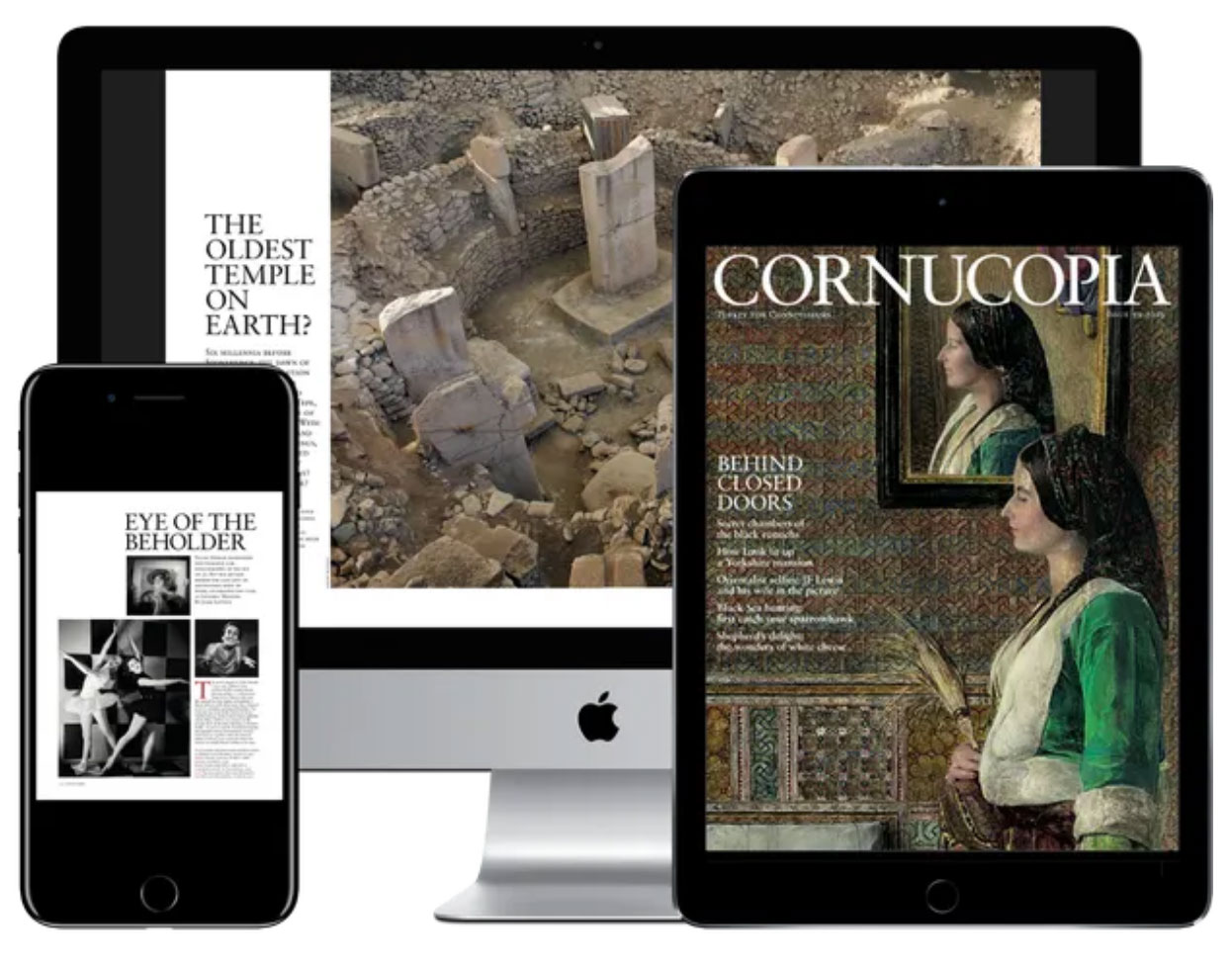
Cornucopia works in partnership with the digital publishing platform Exact Editions to offer individual and institutional subscribers unlimited access to a searchable archive of fascinating back issues and every newly published issue. The digital edition of Cornucopia is available cross-platform on web, iOS and Android and offers a comprehensive search function, allowing the title’s cultural content to be delved into at the touch of a button.
Digital Subscription: £18.99 / $23.99 (1 year)
Subscribe now