
Buy or gift a digital subscription and get access to the complete digital archive of every issue for just £18.99 / $23.99 / €21.99 a year.
Buy/gift a digital subscription Login to the Digital Edition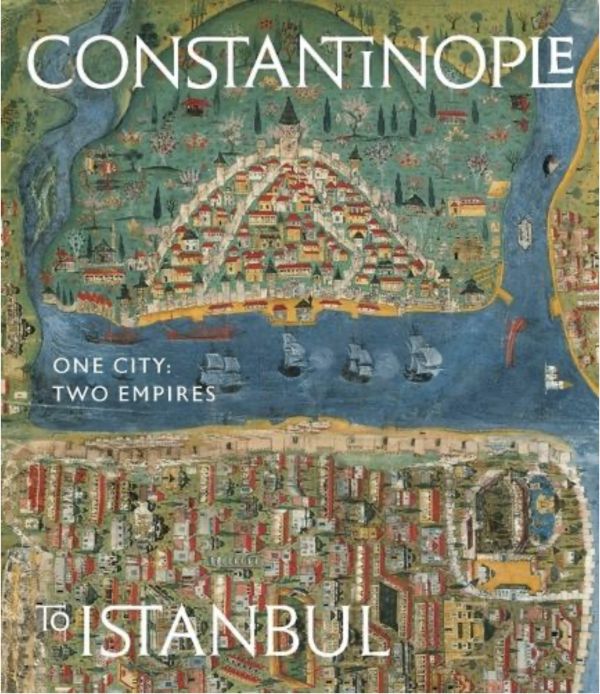
One City, Two Empires
The catalogue to the V&A exhibition
On receiving the commission for the new exhibition Constantinople to Istanbul at the Victoria and Albert Museum (V&A) in London, I took a trip down to Fort Nelson near Portsmouth, on the south coast of England. There, in the Royal Armouries artillery museum, is the Dardanelles Gun, an oversized bronze bombard cast at the orders of Mehmed the Conqueror in 1464 for one of the fortresses on the Dardanelles. It is the most magnificent piece of military hardware and it exemplifies the huge guns cast for the Conqueror that made it possible to blast holes in the land walls of Constantinople in 1453. You can understand why I wanted it for the show. But there was an enormous catch: the gun weighs just over 17 tonnes. There is no floor in the museum strong enough to support it, nor could it even sit on the pavement outside.
This disappointment was balanced by all the magnificent objects we were able to borrow from generous lenders in Turkey, Greece and across Europe. Some of them are small but nonetheless very significant. Byzantine depictions of the streets of Constantinople are rare, and so we are delighted that Trier Cathedral in Germany has lent us the Trier adventus, an ivory panel that shows relics of Saint Stephen arriving in the city in 421 in a scene that includes a depiction of the Chalke Gate of the Great Palace, as well as a colonnaded façade full of spectators. The emperor and empress wait outside the church where the relics will be placed, which is so new that there are still men working on the roof.
The V&A has a great collection of late Roman and Byzantine ivories, and the star piece is the 10th-century Veroli casket, which is decorated with scenes from Greek and Roman mythology. The style of depiction, dynamic and realistic, is quite different from the pious, reflective and often static religious art of the period and shows the survival of Classical modes over a very long period. After all, the casket was produced at a time when chariot racing could still be viewed in the Hippodrome in Constantinople.
The Veroli casket and many other superb examples of Byzantine production are usually displayed with other European art in the Medieval and Renaissance galleries at the V&A, just as the equally impressive, and much larger, collection of Ottoman art is shown in the Islamic Middle East gallery. Constantinople to Istanbul has given us the opportunity to stir up this mix and give both of these submerged traditions their day as part of an international loan exhibition. We can do this for the two traditions at once because, of course, they were both largely formed in one place, the great city on the Bosphorus that was once Constantinople and is now Istanbul.
Istanbul is the largest city in Europe by far, but, as it lies on the edge of the continent, with a large part of its population living in the suburbs on the Asian side of the strait, it is regularly excluded from consideration. This marginal position often prevents other Europeans from appreciating Istanbul’s contemporary importance, and the same is true historically speaking. For very long periods, Constantinople-then-Istanbul was the mightiest city in Europe, and it generated ideas, fashions and formulae that were fundamental to the way of life elsewhere on the Continent. But simply saying that may surprise a lot of our visitors.
My first trip to Istanbul was in 1972, when the Arasta Bazaar behind the Mosque of Sultan Ahmed I (the Blue Mosque) had not yet been rebuilt, and you could walk on wooden boards across the mosaics of the Great Palace, which were still in situ. It was an inspiring experience for a sixth-former from a school in Essex. Amazingly, the Mosaic Museum is lending us two fragments from the mosaics once walked on by the Emperor Justinian in gold-embroidered purple buskins, with no need for wooden boards. “Fragments” is an inadequate term for these mighty slabs, which, like the Veroli casket, are part of the secular heritage of the Byzantine world.
In 1808–10, when he was first secretary at the British embassy in Istanbul, the diplomat Stratford Canning commissioned an anonymous Greek painter to make him a record of the city and his visit to it. The result was an album of 128 watercolours that include many unusual scenes, such as the beşik alayı – the “cradle procession” of male palace servants that took a cradle from the sultan’s mother for each new female member of the Ottoman dynasty who had just given birth. Another shows Istanbul in antiquarian detail. Finally, after 131 years in the V&A collection, this album has come into its own.
A big question faced by the curators of the exhibition was whether continuities can be found between the Byzantine and Ottoman periods. There are indeed continuities, such as the Ottomans’ continued use and expansion of the water supply system installed at the command of the first emperors. Most, though, are structural rather than explicit. In other words, you have to look deeper. A sakkos, the main vestment worn by an Orthodox bishop during church services, provides an example.
The sakkos on loan from the Benaki Museum in Athens was made for a Greek bishop of İzmit in the 17th century. The cloth used is Ottoman seraser, the most expensive type of textile woven for the court, and it seems very likely that an Orthodox subject of the sultan received the textile as a “robe of honour”, placed over his shoulders during an audience with the sultan. But the form of the sakkos relates to a much older relationship between Orthodox bishops and their rulers. This garment originated as part of the costume worn by Byzantine emperors and was later adopted by bishops as a sign of their elevated status. The links between Byzantine and Ottoman practice are there, even if they are slippery to define.
*Tim Stanley is Senior Curator for the Middle Eastern collection at the V&A
‘Constantinople to Istanbul: One City, Two Empires’ is at the V&A South Kensington, Nov 7, 2026 – May 9, 2027.*

1. STANDARD
Standard, untracked shipping is available worldwide. However, for high-value or heavy shipments outside the UK and Turkey, we strongly recommend option 2 or 3.
2. TRACKED SHIPPING
You can choose this option when ordering online.
3. EXPRESS SHIPPING
Contact subscriptions@cornucopia.net for a quote.
You can also order directly through subscriptions@cornucopia.net if you are worried about shipping times. We can issue a secure online invoice payable by debit or credit card for your order.
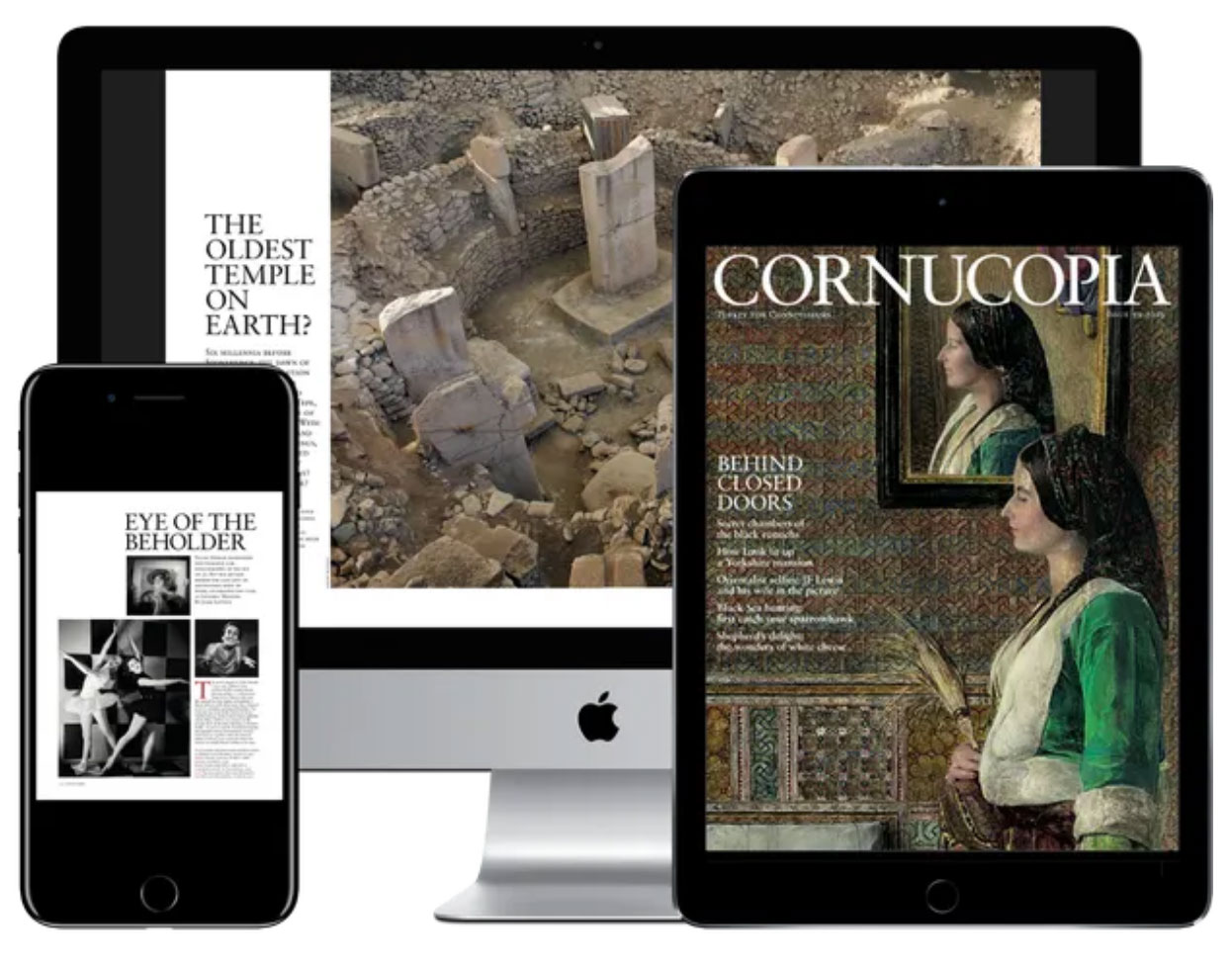
Cornucopia works in partnership with the digital publishing platform Exact Editions to offer individual and institutional subscribers unlimited access to a searchable archive of fascinating back issues and every newly published issue. The digital edition of Cornucopia is available cross-platform on web, iOS and Android and offers a comprehensive search function, allowing the title’s cultural content to be delved into at the touch of a button.
Digital Subscription: £18.99 / $23.99 (1 year)
Subscribe now