
Buy or gift a digital subscription and get access to the complete digital archive of every issue for just £18.99 / $23.99 / €21.99 a year.
Buy/gift a digital subscription Login to the Digital Edition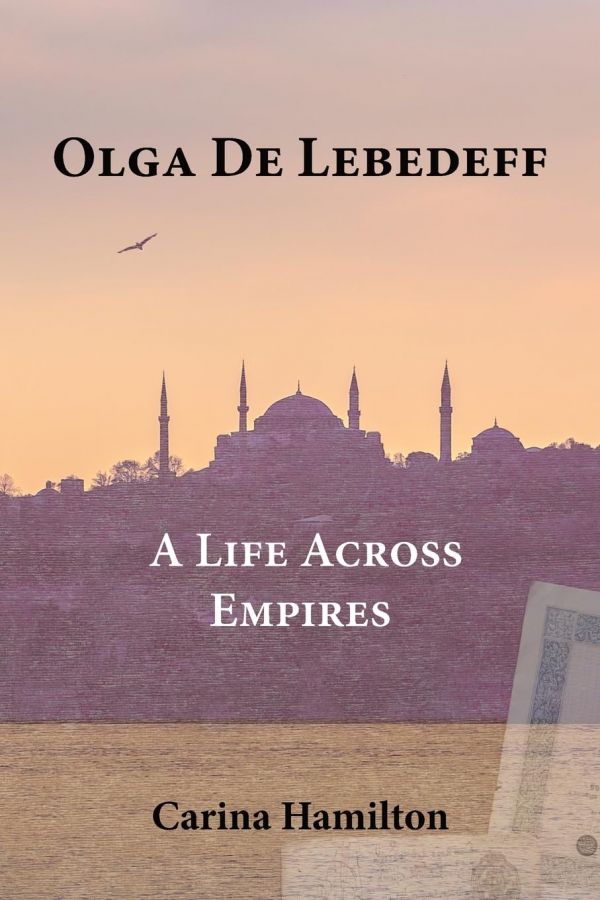
A Life Across Empires: A Scholar’s Quest from Tsarist Russia to the Bosphorus and Beyond
The sweeping, epic story of Olga de Lebedeff immerses the reader in a rarely seen multicultural world in the late Imperial period, when many Russian intellectuals were more integrated into European society. Olga’s activities as scholar and activist shed light on the intersection between the Russian sphere of influence rooted in Orthodoxy and the Islamic world.
Goddaughter to Tsar Alexander II, Olga was born in St Petersburg in 1852. She married the Mayor of Kazan, a Chamberlain of the Tsar, and for many years studied languages in Kazan with Jadid scholars, in Constantinople with high-ranking Ottomans and in Cairo with a sheikh at the al Azhar university.
With access to both men and women intellectuals in Europe as well as in those cities, she reflected on cultural differences and commonality, promoting cultural exchange and progressive education. As well as being a scholar of Turkic and Arabic languages, Olga was an advocate for women. Her inspiration led her to found the Society of Oriental Studies in St Petersburg in 1900.
Divided into two main sections, Book One describes Olga’s family background in St Petersburg, her early marriage and family life followed by her life’s work. Book Two contains first-time translations into English of several of her works including The Emancipation of Muslim Women from the French, and her account of the life and works of the famous Russian poet Alexander Pushkin, entitled The Poet Pushkin originally written in Ottoman Turkish.
This account preserves the memory and legacy of a tenacious and engaging personality, whose curiosity and interest in other cultures opened many previously closed doors.
A biography by first-time author Carina Hamilton of her great-great-grandmother, Olga de Lebedeff.
Marilyn Booth is a renowned translator, author and university lecturer: Professor Emerita, Khalid bin Abdullah Al Saud Chair for the Study of the Contemporary Arab World, Faculty of Asian and Middle Eastern Studies; Professorial Fellow, Magdalen College, Oxford 2014-23. This volume includes Professor Booth’s translation of an Arabic biography of Olga de Lebedeff dated 1907, and an Appreciation of Olga’s translation work from Arabic into French.
‘Carina Hamilton has dug deep into family archives to discover the inspirational story of her great-great grandmother, Olga de Lebedeff (1852-1933). A remarkable woman and goddaughter to Tsar Alexander II, Olga was fluent in Russian, Ottoman Turkish and Tartar and travelled widely. As well as engaging family photographs, letters and anecdotes, this unique book contains more scholarly sections alongside first-ever translations of works by Olga, such as a short appreciation of the life of famous Russian author Alexander Pushkin with synopses of his major works, first published in 1891 in Istanbul with a foreword by the remarkable Ottoman publisher Ahmed Midhat translated by Şehnaz & Aykut Gürçağlar.
Like her intrepid relative, Carina Hamilton has spread her wings here, translating passages from Russian, French, Italian, German, and even Tartar, to embark on her own adventure across empires, through time and space. Olga de Lebedeff - A Life Across Empire is an enthralling story, so relevant to the world we find ourselves in now, and Carina has struck a perfect balance between the academic and the anecdotal.’ Carol Ermakova
Olga de Lebedeff: A Life across Empires A Scholar’s Quest from Tsarist Russia to the Bosphorus and Beyond Carina Hamilton Pomegranate Star Publishing, £28
Olga de Lebedeff was a proto-feminist, a social reformer, a linguist who introduced Turkish readers to Russia’s literary greats, publishing under the pseudonym Madame Gülnar. She was hailed as an outstanding Orientalist in her time, yet today there are few mentions of her in the history of Orientalism, perhaps because she lived through the turbulent years of the First World War and the Russian Revolution, when much documentary material was destroyed.
More recently, she has emerged from obscurity in a stirring poem by the Tatar poet Gazinur Murat in 2011 and a well-researched thesis written in 2017 by Türkan Olcay. However, what may resonate more widely is this book published in 2024, written by her great- great-granddaughter, Carina Hamilton.
Hamilton was 13 when an uncle visiting from Argentina revealed that her maternal family had Russian roots, having emigrated to Latin America after the fall of the Tsar. The young Carina’s mother, born in Asunción, Paraguay, had never spoken to her about Russia or discussed that branch of her family. Inspired to find out more, Hamilton began to learn Russian. Eventually, a relative in Argentina sent her a trove of documents and photographs, which fed her desire to explore her ancestry. From these sources, Hamilton learnt that her mother was descended from several aristocratic Russian families, some of whom had had notable careers. One in particular attracted her attention: her great-great-grandmother Olga de Lebedeff (née Bortschoff). Hamilton’s book is essentially the story of Olga’s life, which began in 1852 in St Petersburg and ended in 1933 on the French Riviera. Writing it was a labour of love, and a labour-intensive one, involving deep research into the Russian and Ottoman Empires, and extensive world travel.
Only two of the documents in the family archive were in English. It was one of these – a handwritten note by Carina’s grandmother, affixed to the back of a portrait photograph of Olga, explaining how she acquired the name Lebedeff – that first piqued her interest in her great-great-grandmother. Hamilton spent ten years acquiring and trawling through registers of births, deaths and marriages, hotel registers, land registers, and personal and formal correspondence stored in various countries. The material she unearthed, including Olga’s own writings, was in several languages. Documents in Arabic or Ottoman Turkish were in Arabic script, which needed specialist transliteration and translation. Much of this documentation was scarcely legible, worn and torn, using archaic vocabulary and irregular spelling.
The challenge of such fact-finding is evident from the more than six pages of listed sources. One source researched by an independent scholar was a file in the KGB archives. Hamilton discovered from this that Olga’s son Alexander Lebedeff had stayed in Russia after the Revolution. Accused of spying, he had been executed without trial. A confiscated letter to him revealed that Olga had died in Menton, a fact Hamilton had been unable to establish.
A Life across Empires comprises two sections: the first, rich with insights into aristocratic life in Tsarist Russia and enhanced by photographs, tells Olga’s story; and the second features translations of several of Olga’s works, among them The Poet Pushkin, originally written in Ottoman Turkish, and The Emancipation of Muslim Women, originally in French. The author starts by relating the history of Olga’s family, and includes Professor Marilyn Booth’s translation of a 1907 Arabic article about Olga de Lebedeff published in Cairo in the journal Famous Women. However, the book aims to relate more than just the family history. Hamilton says her motive in writing it was also “to pay tribute to Olga’s contribution to a better understanding of the Orient”.
Olga de Lebedeff was always destined to be different. Her baptismal godfather was the Tsarevich Alexander (later Tsar), a traditional honour for the first-born child of officers in an Imperial regiment. Together with her family background, this gave her entry into the highest ranks of Russian society.
From a young age, she was interested in language. It was the custom for the wealthy elite to spend their summers away from Russia, and as a child she travelled with her mother and aunts, spending the summer months in hotel suites at European resorts. Already fluent in French, the lingua franca of the Russian elite, as well as in Russian, Olga aimed at learning the language of every country she visited. She learnt English from her beloved English governess, who travelled with them, and believed that fluency in other tongues and an appreciation of other cultures would promote harmony throughout the world.
Olga’s command of more than eight languages enabled her to read widely and fuelled an interest in the situation of women, especially that of Muslim women, whom she regarded as living in a state of slavery. A Muslim wife was not, for instance, allowed to leave the house or access formal education without the husband’s permission. And yet, Olga read, under the first caliphs Islam had not been so restrictive, and women had had much the same status as men; some even became rulers. As Hamilton writes, “The emancipation of Muslim women was becoming an important topic amongst men and women of letters in the Ottoman world, though ideas of reform were strongly resisted by clerics and traditionalists.” A later friend of Olga’s, the author Fatma Aliye, often acclaimed as the first woman in the Ottoman Empire to write about women’s problems, was to publish a book on Muslim women and family life in Turkey.
There were also male Muslim academics who found the position of women unfair. Some wrote in protest, citing passages from the Koran that contradicted the myth that women were inferior because they had smaller brains than men. Still, old prejudices die hard. Even Olga’s compatriot Pushkin wrote scathingly: “Am I to fear women? There are no women who read on Russian soil, and there never will be.” In translating his The Blizzard and Queen of Spades, Olga magnificently refuted this.
Olga’s interest in the Muslim way of life had first been kindled on discovering one of her ancestors, an Ottoman subject and a Muslim, had been captured by the Russians in 1770 at the Siege of Bender during the Russo-Turkish War. Born in Kutaisi, Georgia, where it is believed his father was governor, the boy, aged around 13, was presented to Catherine the Great as a slave. After having him baptised under the name Ivan Paul Kutaisov, Catherine gave him to her son, Grand Duke Paul, as an attendant and companion. Ivan Kutaisov grew up to be a handsome youth and a great favourite with Paul. When Paul became Tsar, Kutaisov received many honours, including the title of count, and was granted estates near Moscow. He married the daughter of a wealthy merchant and had five children. His grandson Hippolyte furthered the status of the family by marrying a Tatar princess. These were Olga’s grandparents, and it was in part this connection inspired her interest in Tatars and the Tatar language, which she had heard spoken by workers on the family estate.
This interest became stronger when her first husband, the lawyer Vladimir Dlotovsky, was transferred to Kazan, capital of the Russian province of Tatarstan. Married at 16 and mother of three by the age of 22, Olga was not allowed to continue her formal studies; further education was considered neither necessary nor becoming for a woman in her position. In Booth’s translation from the Arabic of Olga’s 1907 biography, this marriage is described as “replete with discord and woe”. Ten years of such unhappiness led to divorce just after the birth of a fourth child (only three would survive).
After separating from Dlotovsky and marrying the mayor of Kazan, Alexander de Lebedeff, Olga became an expert on Islamic culture, as well as studying Turkish, Arabic and Persian at Kazan University. She could publicly advocate the establishment of schools for Tatar children, with classes in both Tatar and Russian, to integrate the largely Muslim population of the province more closely into the Russian Empire. Her Brief History of Kazan was one of the first works to address the Russian conquest of this region under Ivan the Terrible in 1552. Olga was determined to change the attitude that regarded the Tatars as second-class Russian citizens, left in ignorance of the wider world, with scant literature of their own and largely unable to read or write Russian script. For true integration to take place, it was imperative that both Russian and Tatar be taught in Tatar schools. The government, if not against this, was indifferent.
When she met him, de Lebedeff was a wealthy bachelor who had had a succession of mistresses and at least three illegitimate sons. Perhaps she knew nothing of this when she married him, but, in spite of her mother’s concern for propriety, Olga must have been aware of the disregard for moral standards among some sections of Russian society, so maybe she considered de Lebedeff’s affairs normal for a bachelor and trusted that, once married, he would give up his former way of life. Olga’s marriage seemed happy at first and three children were born in quick succession. Later, relations became strained, though there was no divorce. As she now had six surviving children, Olga’s activities were mainly in the home or close to it. When her father died and left her in possession of independent means, she was able to fulfil her long-time ambitions. Already known for her charitable work in St Petersburg, Kovno and Kazan, she aspired to be of use in the wider world, eager to promote the idea of education and emancipation for women, especially Muslim women. She had written a great deal about this subject, but she wished to broaden her knowledge through experience of other cultures where women were enslaved by custom or religion.
Financial independence gave Olga the freedom to travel, and her husband’s infidelities gave her the excuse to leave him without a qualm. Her first journey was to Constantinople to request publication of her translations of classic literature from Russian into Turkish and vice versa. She was bitterly disappointed when the Turkish authorities, suspicious of her intentions, rejected her request.
In 1889, she travelled to Stockholm to take part in the International Congress of Orientalists. This congress, the first of many she attended, proved a turning point. Hamilton describes how Olga introduced herself to Ahmed Midhad, the delegate from the Ottoman Empire, a prolific author and chief publisher to Abdülhamid II.
Outgoing by nature, Olga came up to him, announcing that her name was Gülnar (Turkish for pomegranate flower). Ahmed Midhad was undoubtedly surprised, if not shocked, to find himself being addressed not only in Turkish but also so directly by a woman, and a foreigner at that. Nevertheless, he politely replied, “That is indeed a pretty name.” Olga then told Ahmed Midhad her real name and proceeded to captivate him with her vivacity and erudition. Hamilton suggests that each learnt from the other the similarities as well as the differences between their societies. One thing Ahmed Midhad learnt was that, when introduced to a lady, even one younger than himself, he was expected to kiss her hand. This would certainly have surprised a man of his position who, in his own country, would expect it to be his hand that was kissed by young men as well as young ladies. In return, Olga learnt how to conduct herself in polite Ottoman society.
Following the congress, Olga travelled to various cities in Europe with a group that included Ahmed Midhad, and the two became firm friends. She informed him of her aim to have her translations from Russian published in Turkish and of her wish that, through her work, she might correct the false impressions Europeans had of the Turkish people. In October 1890, at his urging, she arrived in Constantinople, where she stayed for seven months, winning recognition for her respect for and knowledge of Islam.
Through Ahmed Midhad’s connections, Olga was granted permission to have her translations published in Turkey. At last she was able to realise her dream of the intercultural exchange of concepts and customs through translated writings. Among these was her article on the life and works of Pushkin, with an introduction by Ahmed Midhad. The article itself concentrates on Pushkin’s works rather than on his rather dissolute life and reformist attitude, which might have offended the more conservative Muslims. This exposition of several of Pushkin’s works includes the poetic novel Eugene Onegin, of which an English translation appears in the second section of Hamilton’s book.
As well as introducing Pushkin to a wider audience, Olga was instrumental in making Tolstoy and Lermontov works available to Turkish readers, although she had to be careful in her choice of what to publish. In a letter to Tolstoy she told him of this censorship but pointed out that his novella Family Happiness had been praised and even translated into Arabic and published in a Beirut newspaper. The pair also discussed the fact that Christianity and Islam had much in common. Olga’s quest for emancipation and world peace included a desire for a universal religion in which all beliefs would be accommodated and shared. This would later lead her to study the Baha’i faith, Sufism and Theosophy.
On her first stay in Constantinople, thanks to Ahmed Midhad, Olga got to meet leading female writers at weekly salons and became good friends with Nigâr Hanım and Fatma Aliye, both of whom were well known although, as women, their works had to be published under pseudonyms. Olga, who spent several winters in Constantinople, encouraged women authors to publish under their own names, as Fatma Aliye did in 1892. In turn, as the daughter of a high-ranking civil servant, Fatma Aliye was able to facilitate Olga’s access to specific harems and even receptions at the Palace.
Olga continued to correspond with these friends even after leaving Turkey under a cloud. Her frequent visits to Ahmed Midhad’s estate in Beykoz on the Bosphorus had aroused malicious gossip. In fact, Ahmed Midhad had recently taken as his second wife a 17-year-old former prostitute. Later he used her story to condemn prostitution in a revealing novel. He lived a harmonious life with his two wives, paying equal attention to both.
Earlier in their friendship, Ahmed Midhad had told Olga of his ideal of a “new woman” suited to their contemporary way of life – a woman who was intelligent, energetic, empathetic and guided by a strong moral compass. When he met Olga, he thought he had found the embodiment of that woman, before finding a more suitable Turkish role model in Fatma Aliye. An unexplained rift between Olga and Ahmed Midhad in 1893 healed, but their former close friendship was not resumed. The reader is not told why
Olga lost her position as “the New Woman” or why she and Ahmed Midhad fell out. Hamilton bases her book on verifiable facts and does not speculate as to Olga’s feelings.
There was, anyway, a more serious reason for Olga to leave Constantinople: although she had received a medal from the Sultan for her charitable works, her prolonged visits had aroused suspicions that she was a spy. As she wrote, “Everyone is observed. Those occupying high-ranking positions must be extremely careful in choosing whom to befriend.” When Ahmed Midhad was obliged to tell her that she was no longer welcome at his house, Olga turned her attention to another, more liberal area of the Muslim world.
Arriving in Cairo in 1898, she was introduced to Princess Nazlı Fazıl, an acquaintance of Fatma Aliye’s. The princess was active in the campaign for women’s rights, as was the noted Egyptian writer Zaynab Fawwaz. Friendship with the Russian and English ambassadors also made it easy for Olga to become part of both Egyptian and expatriate social circles. In Cairo, Olga found a tutor in Arabic who shared her belief in the right of women to be free to study and to improve themselves. In the appendix, Hamilton includes two of Olga’s addresses to the Congress of Orientalists. The first, written in 1899, entitled “Muslim Women at the Time of the Caliphs”, sets out to demonstrate that, under the first caliphs, nothing in Islam prevented women from taking their place as equals with men. In it she quotes Ibn Battuta, who wrote in the 14th century that at the court of the Uzbek Khan, “The faces of the Türkmen women were not covered. They were accorded much honour, and the Khan’s wives played a key role in government affairs.”
Hamilton’s book shows clearly the influence Olga’s views had on other Orientalists. In 1901, the journalist Edmond Groult wrote in the newspaper La Dépêche Tunisienne: “With finesse and tact being a speciality of a female author, Madame de Lebedeff introduces us to the Golden Age of Islam, which is quite different from the current situation.” Groult’s article lists all the ways in which Muslim women were restricted from entering society or accessing formal education. In the preface to a privately printed work in French, Groult’s wife wrote, “to enable women of all nations to care about ideas, to teach them moral truths and the eternal rights of conscience, will always be the worthy task of a great mind”. Other mentions in newspapers from India to the United States suggest that Olga’s influence spread far beyond Europe and the Middle East. Her network extended into Asia and particularly India, where readers had begun to take an interest in the plight of women. Writing about Sufism and the works of prominent Arabist scholars had also gained Olga notice in the wider Islamic world. The last Congress of Orientalists she attended was in 1912 in Athens, where she presented her translation of a Sufi text.
At the beginning of the 20th century, two events profoundly affected Olga’s life. The first was the death of her mother, from whom she inherited a villa in South Tyrol where she would find refuge in 1918 after the Russian Revolution. The second was the granting of a charter in 1900 to Olga’s foundation in St Petersburg, the Russian Society of Oriental Studies. This was the fruit of many years of labour. Its aim was to introduce Muslim culture to the Russians and to teach the languages of the Orient, and Olga became its honorary chair, a “prestigious position that gave her more authority to speak about the rights of Muslim women”. In 1909 the Tsarina Alexandrovna took over as patron, and the title was changed to the Imperial Society of Oriental Studies. The Society expanded its teaching to include Asian languages, and many students went on to become well known in Orientalist circles. Sadly, it ceased to exist independently following the brutal murder of Tsarina Alexandrovna and the ruling Romanov family in 1918.
In Cairo, Dr Abdullah Cevdet, a member of the Young Turks movement, a free thinker and ideologist, supported Olga’s belief that the education of women was vital for a healthy society. Mustafa Kemal Atatürk’s sweeping reforms of Turkish society after 1923, based on the idea of the equality of the sexes, were much influenced by Dr Cevdet’s opinions.
In 1910, Alexander Lebedeff died but, despite Olga’s frequent absences, Kazan was still her home. She was evidently there in 1915 when the First World War was raging. All that is known about the end of her life is that in 1918 she went to live in the house she had inherited from her mother at Arco in Trentino. It seems that in 1928 she moved to Menton, where she would die five years later, but Hamilton was unable to gather any further information or to locate her grave.
In her fight to free women from subjection, Olga de Lebedeff succeeded in breaking the traditional social norms, even those imposed on women of her elite class in Tsarist Russia. Much of what she wrote about is still relevant today. Her great-great-granddaughter, in her turn, has succeeded in writing a story that reveals the background to the many phases of Olga’s life. She has done her proud.
1. STANDARD
Standard, untracked shipping is available worldwide. However, for high-value or heavy shipments outside the UK and Turkey, we strongly recommend option 2 or 3.
2. TRACKED SHIPPING
You can choose this option when ordering online.
3. EXPRESS SHIPPING
Contact subscriptions@cornucopia.net for a quote.
You can also order directly through subscriptions@cornucopia.net if you are worried about shipping times. We can issue a secure online invoice payable by debit or credit card for your order.

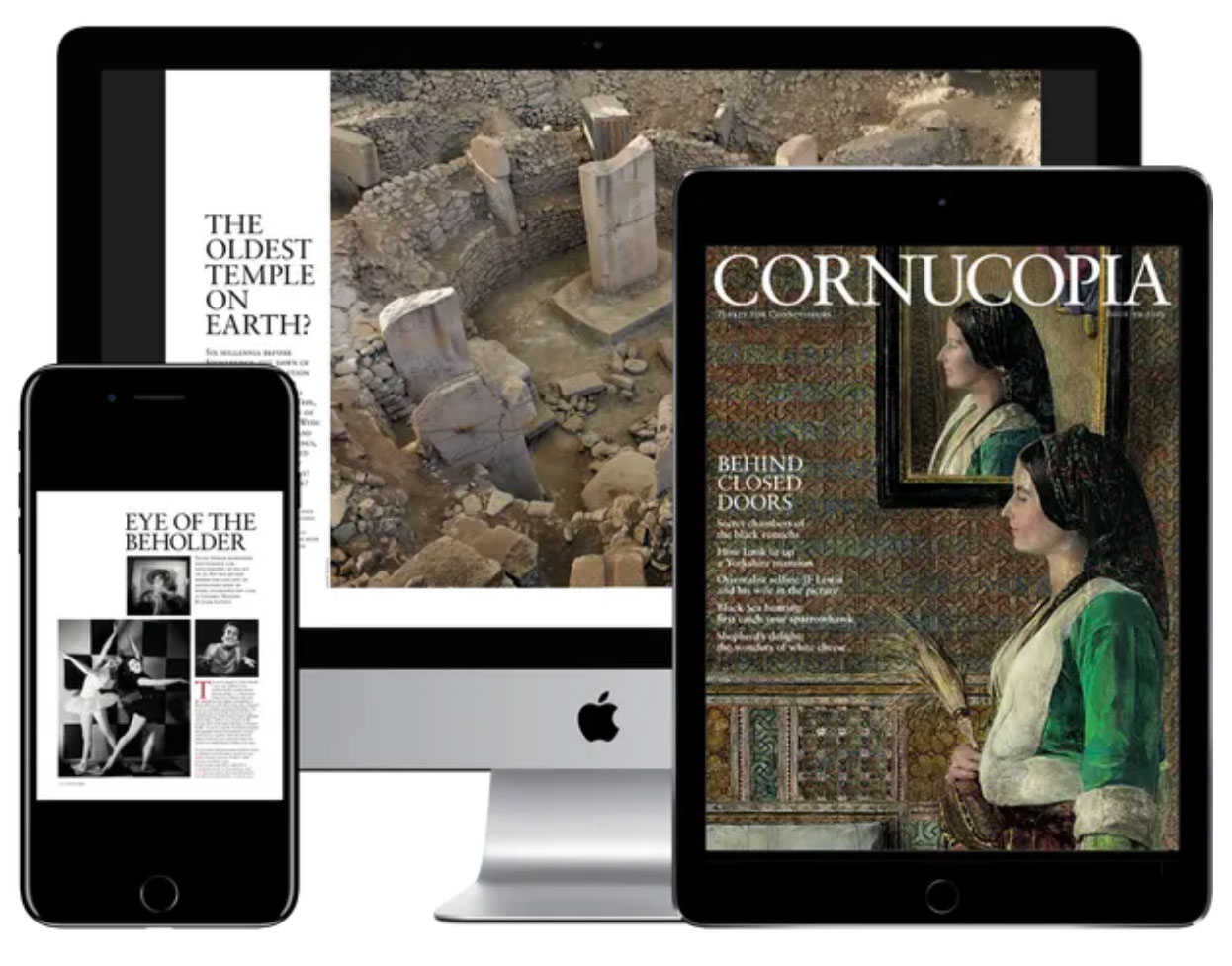
Cornucopia works in partnership with the digital publishing platform Exact Editions to offer individual and institutional subscribers unlimited access to a searchable archive of fascinating back issues and every newly published issue. The digital edition of Cornucopia is available cross-platform on web, iOS and Android and offers a comprehensive search function, allowing the title’s cultural content to be delved into at the touch of a button.
Digital Subscription: £18.99 / $23.99 (1 year)
Subscribe now