
Buy or gift a digital subscription and get access to the complete digital archive of every issue for just £18.99 / $23.99 / €21.99 a year.
Buy/gift a digital subscription Login to the Digital Edition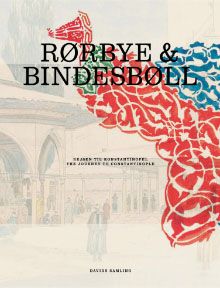
The Journey to Constantinople
In December 1835, the steamship Levant cuts through cold winter winds as two Danish artists stand on deck, gazing toward the horizon. Ahead lies Constantinople: the great metropolis situated between East and West. For the painter Martinus Rørbye (1803–48) and the architect Gottlieb Bindesbøll (1800–56), their encounter with the city would mark a decisive turning point.
Rørbye and Bindesbøll crossed paths in Italy in the mid-1830s during their prolonged study tours abroad. After a stay in Naples, they decided to continue travelling together to Greece, which had recently gained independence from Ottoman control. From there, they were unexpectedly given the opportunity to travel on to Constantinople in the Ottoman Empire – an unusual destination for two Danish artists at the time.
They arrived in Constantinople (today Istanbul) in December 1835 and stayed for six weeks, producing a remarkable number of sketches. Rørbye focused on the life of the city: coffee houses, public fountains, and the crowds around the great mosques. Bindesbøll, by contrast, concentrated on architecture – its ornamentation, colours and structures – often depicted in precise details rather than monumental overviews. On 1 February 1836, they left the city.
The journey to Constantinople proved transformative. Rørbye returned home and created a series of Orientalist paintings that quickly gained him recognition. For Bindesbøll, the impact of the journey was subtler, yet deeply embedded in his architectural work. His encounter with Ottoman ornamentation and polychromy played a significant role in shaping his highly personal style, most notably in Thorvaldsen’s Museum.
The exhibition at the David Collection in Copenhagen offers a rare opportunity to see works that have never been shown in combination, including several of Bindesbøll’s sketches that are exhibited for the first time. Exhibition dates: 5 February – 23 August 2026
The 19th century began inauspiciously for Denmark. After Nelson’s ruthless assault on Copenhagen in 1807 and his seizure of the Danish navy, the country went bankrupt in 1813, was deprived of Norway in 1814 (although it retained the previously Norwegian territory of Greenland) and was ruled by an absolute monarchy disinclined to reform. Yet the subsequent five decades are regarded as a Golden Age for Danish art. Bertel Thorvaldsen, who worked in Rome for 40 years, was internationally esteemed for his sculpture in his own time. Nowadays it is above all the painters who are admired: CW Eckersberg, Marstrand, Bendz, Lundbye, the sublime Købke, Martinus Rørbye and others.
Despite the disasters proceeding from the Napoleonic alliance, the Royal Danish Academy of Fine Arts provided grants to scholars, architects and artists to travel abroad. All those named above went to Rome and painted there under Thorvaldsen’s wing. Meanwhile, encouraged by the Crown Prince, who was interested in antiquity (and in gathering souvenirs), a number of scholars and architects travelled to Greece. After the Greek War of Independence, Christian Tuxen Falbe (my great-great-grandfather) was briefly transferred as consul from Tunis to Greece, where part of his remit was to look after visiting Danes. Among them was the artist Constantin Hansen.
It was against this backdrop that Rørbye and Gottlieb Bindesbøll travelled to Rome and then to Athens. They stayed for only a month before going on to Smyrna (Izmir), whence they departed on December 17, 1835, for Constantinople. They found the city covered in snow: it was so cold that they stayed in bed to keep warm. They were back in Athens in early February, Rome in June. Rørbye returned to Copenhagen in November 1837, Bindesbøll in August 1838.
Copenhagen’s David Collection has several remarkable aspects, of which its Islamic collection is perhaps the most celebrated. Rørbye and Bindesbøll’s Journey to Constantinople is the subject of its current exhibition and of this beautifully produced companion catalogue. Considering how little time the two artists spent there, it may be wondered that there’s enough substantial material to make an exhibition, but the excellent introduction by the museum’s curator, along with five short essays, establishes a historical and artistic context that shows a surprising value to their trip, the more authentic for not being overstated.
There are no claims to masterpieces, nor improbable assertions of influence. Instead, in the reproductions of Rørbye’s watercolours and of Bindesbøll’s deft studies of decorative and architectural details, we see the two travellers endeavouring to record and register what was deeply unfamiliar to them. Among the watercolours are a scene outside Ayasofya, a square in Üsküdar looking across to Galata, interiors in a café and in a hamam. They are more charming for being unfinished: there is a breathlessness to them, as likewise to Bindesbøll’s studies, which at times are little more than doodles.
Finished pictures include Rørbye’s fine Scene of Public Life in the Orient, which earned his appointment as a member of the Academy, and a couple of other later ones from the 1840s. A curious feature of his A Party of Chess Players outside a Turkish Coffeehouse and Barbershop (1845) is that the faces seem European – they could be the same fellows as those in his Men of Skagen on a Summer Evening in Good Weather (1848). Meanwhile, elements of what Bindesbøll observed are visible in his designs for the Thorvaldsen Museum. Although modern tourists to Copenhagen are not all devotees, the museum’s imposing presence indicates its importance for contemporaries.
Rørbye and Bindesbøll were certainly influenced by their travels and remain significant figures in Danish art and architecture. However, the most overt influence of their journey to Constantinople on the domestic world of Danish art, where Orientalism was never significant, is apparent in the catalogue’s central picture, which is by Constantin Hansen and is one of the most familiar images of Danish art. It is his Group of Danish Artists in Rome (1837). The figure reclining on a pile of rugs in the foreground, wielding a long pipe à la Turque and adorned with a fez (his own trophy from the Kapalıçarşı), is in fact Bindesbøll. Beside him is Rørbye, gazing into his coffee grounds as if lost in thought.
There is a delightful sense of the two men regaling their brethren with tales from their travels. And the catalogue reflects this, with its pleasure in anecdote and image, its discursive text and the delicious frippery of the acetate cover.
1. STANDARD
Standard, untracked shipping is available worldwide. However, for high-value or heavy shipments outside the UK and Turkey, we strongly recommend option 2 or 3.
2. TRACKED SHIPPING
You can choose this option when ordering online.
3. EXPRESS SHIPPING
Contact subscriptions@cornucopia.net for a quote.
You can also order directly through subscriptions@cornucopia.net if you are worried about shipping times. We can issue a secure online invoice payable by debit or credit card for your order.
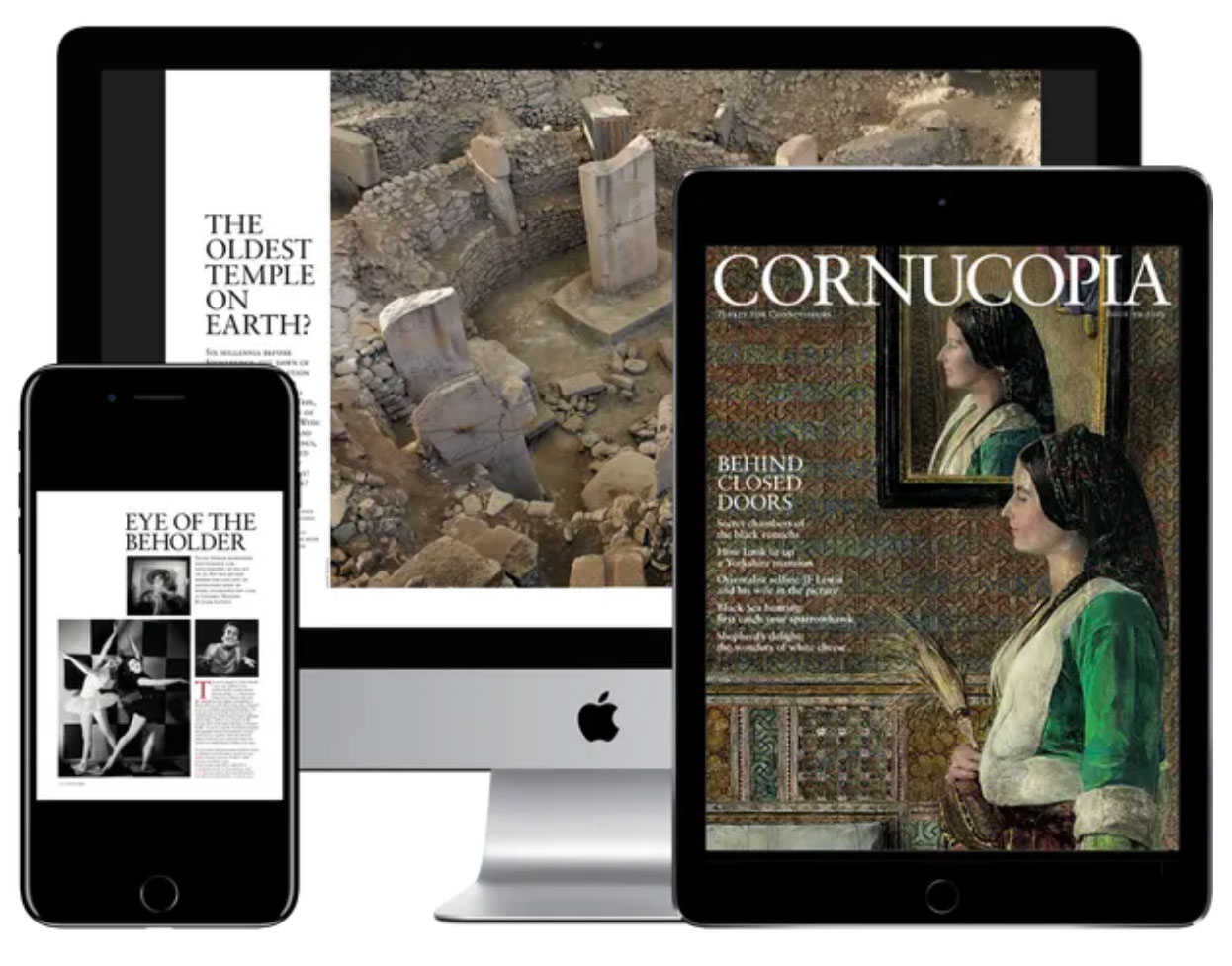
Cornucopia works in partnership with the digital publishing platform Exact Editions to offer individual and institutional subscribers unlimited access to a searchable archive of fascinating back issues and every newly published issue. The digital edition of Cornucopia is available cross-platform on web, iOS and Android and offers a comprehensive search function, allowing the title’s cultural content to be delved into at the touch of a button.
Digital Subscription: £18.99 / $23.99 (1 year)
Subscribe now