
Buy or gift a digital subscription and get access to the complete digital archive of every issue for just £18.99 / $23.99 / €21.99 a year.
Buy/gift a digital subscription Login to the Digital Edition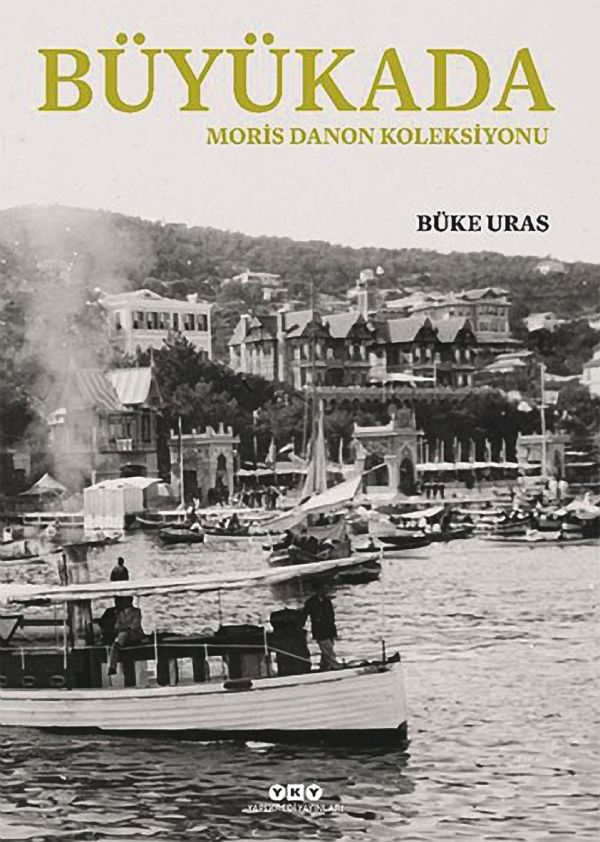
The Giacomo was one of three grand hotels on Büyükada (formerly Prinkipo) in the late 19th century. Once a private mansion belonging to the family of the same name, it sat on a prominent bluff then known as the Hungarian Cliffs, just above the current pier. Early writings suggest that its lush gardens were filled with exotic plants, palm trees, stone vases and statues brought from Paris. Among them were marble figures of Demeter and Persephone that were moved to the Hotel Splendid after a fire consumed the Giacomo in 1909. There they still stand at the base of a marble staircase. Marked though they are by a century of changing seasons, they remind us that the old Büyükada is still with us, if only in spirit.
In Büyükada: The Moris Danon Collection, we are treated to a gorgeous compendium of rare photographs that attest to that spirit: elegant ladies on the back of donkeys, sweeping views of the once-popular regatta boat races. “The spectators were as much a part of the event as the spectacle.” Curious shots of the stars and constellations were taken at the island’s observatory by the astronomer Antoniadis.
Here, too, are rare letters penned by diplomats, lovers, soldiers and none other than Leon Trotsky, who lived on the island for several years (in one picture he proudly holds a sea bass nearly half his size, his catch of the day). Finely dressed lovers are dancing at the Prinkipo Yacht Club. A Greek Orthodox procession wanders past an old wooden house. A stern-faced crowd watches the traditional sacrifice of a lamb at the ceremonial opening of the quay in 1925. A saint and a cross are carried before a priest at a congregation of the Aya Yorgi monastery.
In perhaps one of the most startling photographs of the collection (overleaf), Father Dionysius Pakykopoulos of the same monastery sits proudly on the back of a white donkey, his black beard falling over his long black robe, while a young boy wearing a fez, his baggy trousers pulled up over his waist, stands off to one side, consternation on both their faces as they look into the camera, undoubtedly wondering what might be becoming of the world.
The accompanying text by the historian Büke Uras follows the history of an island that after centuries of existing humbly as an inward-looking monastic community would eventually become a spirited cosmopolitan hub. It tracks the island’s rise in the late 19th century and early 20th century, even as the Ottoman Empire declined and eventually dissolved. Interestingly, it shies away from the usual perception of the island as a place of loss and trauma and chooses to celebrate the people who contributed to its ever-changing – but curiously constant – ethos: the banished princesses and princes, the poets and entrepreneurs, the madcap speculators and dream-drunk captains, the scientists, the scholars, the deadbeats, the lost souls, the fevered revolutionaries.
In his own brief introduction, Moris Danon remembers his youth on the island. “Büyükada suggested the possibility of living our freedom to the fullest, away from the chains of Istanbul.” It was a place of abandon, freedom, contemplation and joy. And the photographs seem to say just that: open the book and after a few pages you will be met with a beautiful group of men and women lined up on a thin wooden pier in Yorguli Bay, perhaps the most popular cove on the island. It must be the early 1900s. One man wears a fez, the other a white-brimmed hat, the young women have pulled up their baggy skirts, a young man has rolled up his trousers, and they are smiling, delighted in the presence of a camera.
It’s not possible to spend too much time in this book without thinking we might have lived a happier life in the past, and that despite all the hardships of a life lived a hundred years ago we would have felt a deeper affinity for our community, a stronger commitment to our differences. Another kind of freedom from our cell phones and our complaints, from our grudges and our grievances, as well as those chains of the city.
Naturally an island makes for the perfect setting – it is both a place of exile and a place of forgetfulness, a place of industriousness, where the mind is given the chance to roam. Here the imagination is set alight, and suddenly almost everything seems possible.
Even those of us well acquainted with the less beautiful aspects of this island’s troubled history will see in these remarkable photographs a world that – on the grainy surface – feels untethered from earthly cares, a place where one is free to dream and work and revel, a suspended reality that ebbs and flows far from the harsh edges of a city and its chaotic swirl.
Two of the most arresting images sit at opposite ends of the collection. In the first photograph (see far right), a middle-aged woman sits alone under two pines on the ridge above Dil Burnu, the island’s most prominent cape. She is lost in thought, only a shadow of a doubt playing on her godly face, happy in the state of things, knowing of the future, her hands on her knees, a light cane on the ground beside her. In the second photograph (see below), which brings the collection to a close, a young woman is standing near the shore, her hands behind her back, her eyes closed, her lips parted as she breathes in the salted air, beautiful in her white summer dress, her white stockings, her white pointed shoes, her dark turban, as she contemplates the spirit of the island, the coming of spring.
Mother and daughter are in quiet communion with one another on their chosen corners of an island whose spirit has been lit up on these pages.
‘Büyükada: The Moris Danon Collection’ is available in paperback in English (£90). A hardback edition in Turkish is forthcoming
1. STANDARD
Standard, untracked shipping is available worldwide. However, for high-value or heavy shipments outside the UK and Turkey, we strongly recommend option 2 or 3.
2. TRACKED SHIPPING
You can choose this option when ordering online.
3. EXPRESS SHIPPING
Contact subscriptions@cornucopia.net for a quote.
You can also order directly through subscriptions@cornucopia.net if you are worried about shipping times. We can issue a secure online invoice payable by debit or credit card for your order.
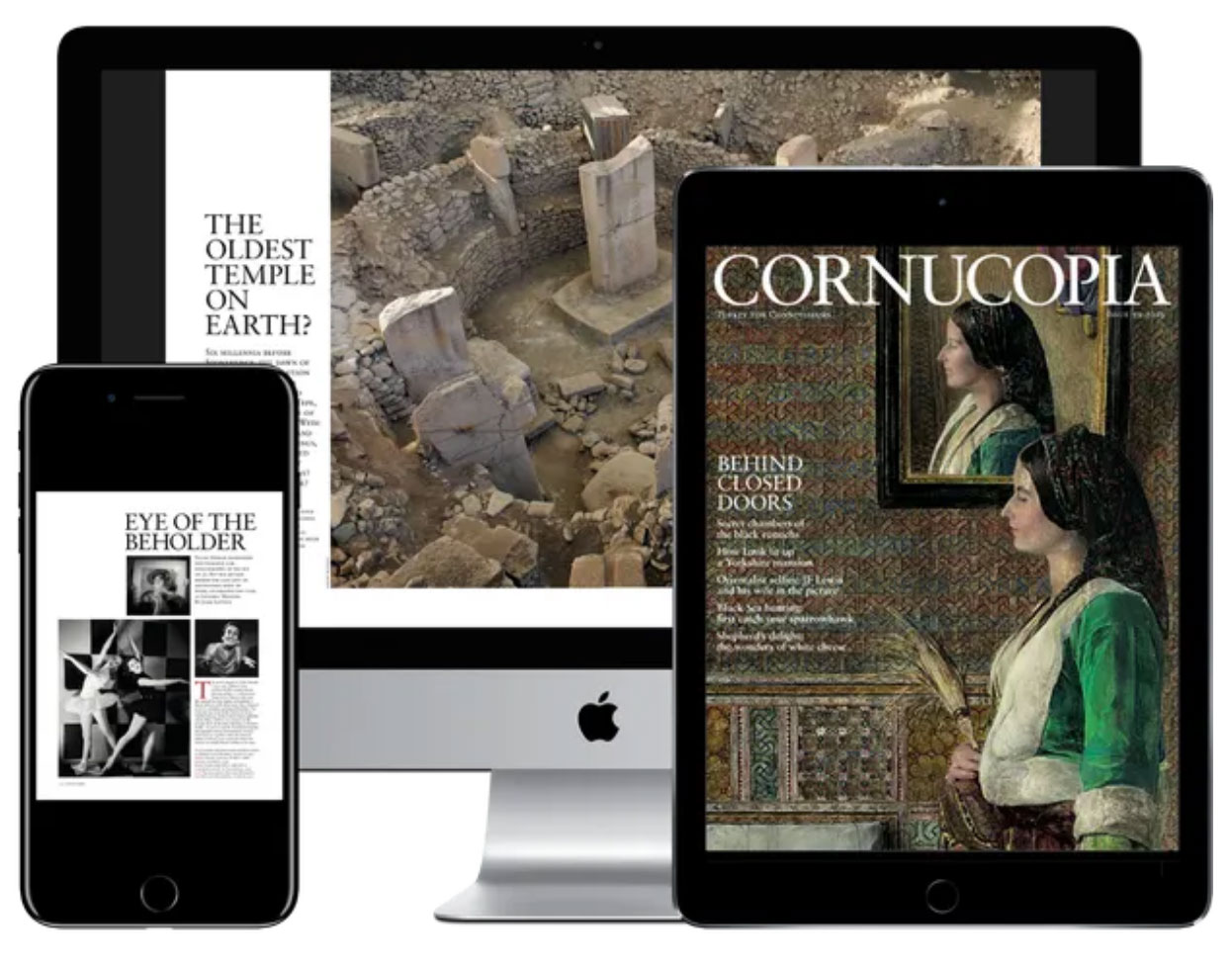
Cornucopia works in partnership with the digital publishing platform Exact Editions to offer individual and institutional subscribers unlimited access to a searchable archive of fascinating back issues and every newly published issue. The digital edition of Cornucopia is available cross-platform on web, iOS and Android and offers a comprehensive search function, allowing the title’s cultural content to be delved into at the touch of a button.
Digital Subscription: £18.99 / $23.99 (1 year)
Subscribe now