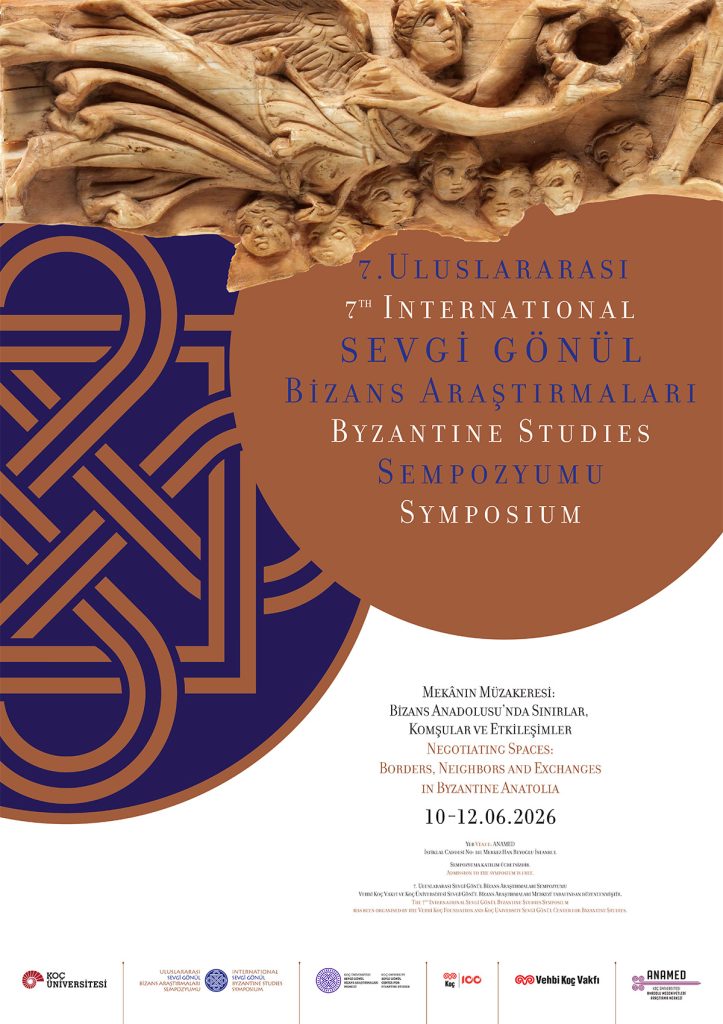
NEGOTIATING SPACES: BORDERS, NEIGHBOURS AND EXCHANGES IN BYZANTINE ANATOLIA
The Fourth International Sevgi Gönül Byzantine Studies Symposium (2016) examined Byzantium’s encounter with the geographically, ethnically and politically “Other.” A decade later, the Seventh International Sevgi Gönül Byzantine Studies Symposium takes a different vantage point. It explores how neighbouring cultures—whether co-existing, mobile or connected through maritime or land routes—shared space within Byzantine lands, with a particular focus on Anatolia. Spanning Late Antiquity to the Early Modern period, the symposium brings together historians, archaeologists, and art and architectural historians to integrate complex textual, material, and visual evidence.
The symposium approaches the Byzantine Empire as a dynamic polity whose shifting territories and frontiers, over time and across regions, were impacting society and culture. By foregrounding neighbourly perspectives, the Seventh International Sevgi Gönül Byzantine Studies Symposium rethinks Byzantine lands as negotiated spaces where contacts and interactions with the “Other” shaped identities and histories. This perspective demonstrates how studying pre-modern societies in Anatolia speaks to the flourishing “border turn” in the humanities and social sciences and to ongoing debates on concepts and realities of borders today.