Buy or gift a digital subscription and get access to the complete digital archive of every issue for just £18.99 / $23.99 / €21.99 a year.
Buy/gift a digital subscription Login to the Digital EditionIn the spring of 2024, I found myself scrambling up a narrow goat track on the scrubby hills above the ancient town of Khuldabad, in the Indian Deccan. Across the valley below lay one of the most astonishing spectacles of the medieval world: the monolithic Kailashanatha Temple at Ellora, a rock-cut wonder more ambitious even than Petra, and easily the largest such structure on earth in the 8th century.
Ellora receives millions of visitors each year, yet almost none of them venture up into the surrounding hills, where another wonder lies hidden in plain sight. After half an hour’s scramble through thorn and dust, I finally came face to face with an austere Ottoman-style mausoleum of weathered stone and cracked grey stucco, some 15 metres tall. Decades of sun and monsoon had gnawed away at its surfaces, its walls had been daubed in crude graffiti and its once-delicate filigreed jali windows had been smashed by vandals. There were no roads leading to the tomb and yet, less than a century ago, this lonely structure had been built as the burial place of the last Caliph of Islam.
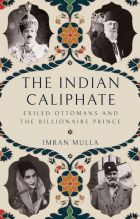
The tomb was part of a plot to re-establish the Ottoman Caliphate in the heart of India, and it is this story that Imran Mulla brings vividly to life in his thrilling new book, The Indian Caliphate. Written in lucid, propulsive prose, it reconstructs the entwined destinies of the Caliphs of Constantinople and the Nizams of Hyderabad, and in the process, upends conventional understandings of the 20th-century Muslim world. So remarkable is the tale that it seems astonishing no one has told it before.
At the centre of this story is the last Caliph himself, Abdülmecid II. Described as a “talented painter, francophile, amateur literary critic and classical music enthusiast”, Abdülmecid was a moustachioed aesthete with a taste for unexpected recitations of Victor Hugo. Raised under house arrest after the Young Ottomans toppled his father, he had spent decades in gilded isolation at his palace on Çamlıca Hill (now the Abdülmecid Efendi Köşkü), where he studied calligraphy, painted Orientalist nudes, and hosted poets and artists at intimate salons. The novelist Pierre Loti recalls being granted access to the harem by eunuchs in “high-necked frock coats”, where he was introduced to one of Abdülmecid’s French-speaking wives, Şehsuvar Kadınefendi, who was playing Bach on the cello.
It was a world that couldn’t last, and by the time he was proclaimed Caliph in 1922, it was clear that the old world was coming to an end. Two years later, Atatürk abolished the Caliphate, and at five in the morning on March 3, 1924, soldiers entered Dolmabahçe Palace, bundled the royal family onto the Orient Express, and sent them into exile.
The last Caliph moved to the French Riviera and began to plot the revival of the Caliphate. The French writer Claude Farrère proposed giving the Caliph a French colonial possession from which to launch a new Caliphate, yet the most audacious plan emerged in 1931, when Mahatma Gandhi’s erstwhile ally Shaukat Ali brokered a marriage between the Caliph’s children and those of Nizam Osman Ali Khan of Hyderabad. The aim was to unite the descendants of the Ottomans and Mughals and establish a revived Caliphate in India, which at the time held the largest Muslim population on earth, greater than the entire Arab world combined.
Osman Ali Khan was, like Abdülmecid, a figure out of time. Similarly moustachioed, he had “eyes that could pierce you… like steel”. As well as penning thousands of “perfumed ghazals”, the Nizam gradually amassed one of the greatest collections of medieval literature in the subcontinent. His state’s public works outdid those in British India, and Osmania University was the Raj’s first college to teach in a non-English vernacular (Urdu). After the death of JD Rockefeller, the Nizam was crowned the world’s richest man, and the fifth-richest in history. With a third of people living under Indian princely rule and an income and expenditure rivalling “those of Belgium and exceed[ing]… those of twenty members of the United Nations”, Hyderabad, the Nizam argued, was not just a princely state but a country in its own right.
In 1931, the Nizam married his son to Abdülmecid Efendi’s daughter. A week later he purportedly secured a deed from the last Caliph, nominating their joint grandchildren as the next Caliphs of Islam. This deed is one of the centrepieces of Mulla’s work, supposedly signed by the Caliph himself in red ink made from night-blooming jasmine. In it, Abdülmecid writes: “I trust that the firstborn son from this new kinship after you [the Nizam] be suitable to the position of the Caliphate and the rulership of Hyderabad Deccan.” The deed has provoked intense debate, with many dismissing it as a forgery, while others maintaining it is genuine. As Mulla points out, the dispute raises as many questions as it answers.
Whatever the case, the Nizam subsequently began construction of a grand Ottoman tomb for the Caliph in the sacred Hyderabadi town of Khuldabad, a short distance from the Ellora Caves. Although Abdülmecid would never actually be laid to rest there, Hyderabad came to be regarded as “the most prominent Muslim city outside of the Holy Land”, its name uttered in the same breath as Mecca and Jerusalem. If Hyderabad’s central place in the Islamic world has today been forgotten, it is only because of the events that were to follow.
Mulla’s evocation of Hyderabad in this period is intoxicating, and the sweep of his book moves deftly from the fall of the Ottoman Caliphate, through the rise of Pakistan as the world’s first Islamic republic, to India’s annexation of Hyderabad in 1948. These three convulsions would completely transform the Muslim world. Mulla occasionally lets enthusiasm run ahead of precision, and his calling the Khilafat Movement “India’s first ever mass protest” is debatable. But this is a minor blemish on a remarkable work. The Indian Caliphate re-establishes India’s place at the centre of global Islam in the interwar years, when the poet Muhammad Iqbal described India as “the greatest Muslim country in the world”. This is a book long overdue, a revelation.
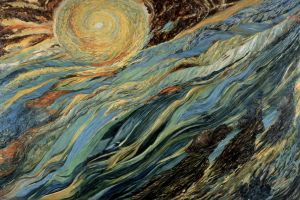
The dazzling work of the Şakir Pasha family
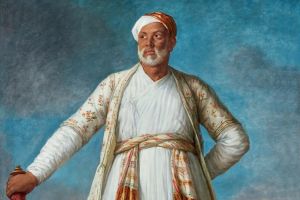
Tipu Sultan, the incomparably wealthy ‘Tiger of Mysore’, was a military and diplomatic innovator well ahead of his time. Lucien de Guise, curator of an important exhibition in Kuala Lumpur on the tragic ironies of his relations with the Ottomans
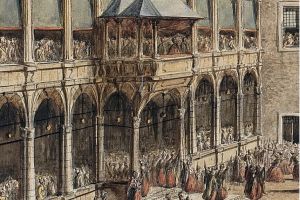
Caroline Finkel reviews Painters of the Ottoman World: British, Maltese and Levantine Artists in the Ömer Koç Collection and pays tribute to the art historian Briony Llewellyn

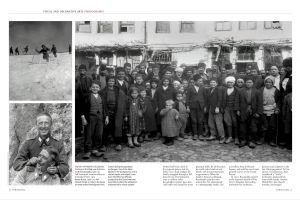
The Istanbul Research Institute celebrates the life and work of Arif Hikmet Koyunoğlu

The wondrous cornelian cherry, by Berrin Torolsan

The ceramic secrets of a 16th-century bath house
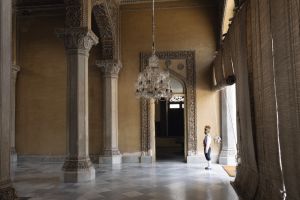
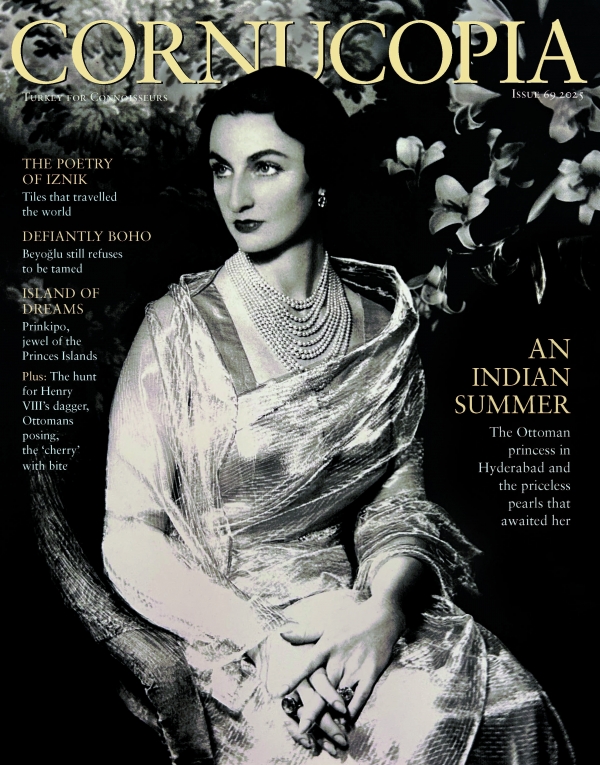
When two exiled Ottoman princesses married into the family of the richest man in the world, the match made headlines around the globe. Cosmo Brockway describes the opulence that awaited them in Hyderabad. Palace photographs by Monica Fritz

Tim Stanley delves into an exhibition about a vanished treasure once believed to have been owned by Henry VIII

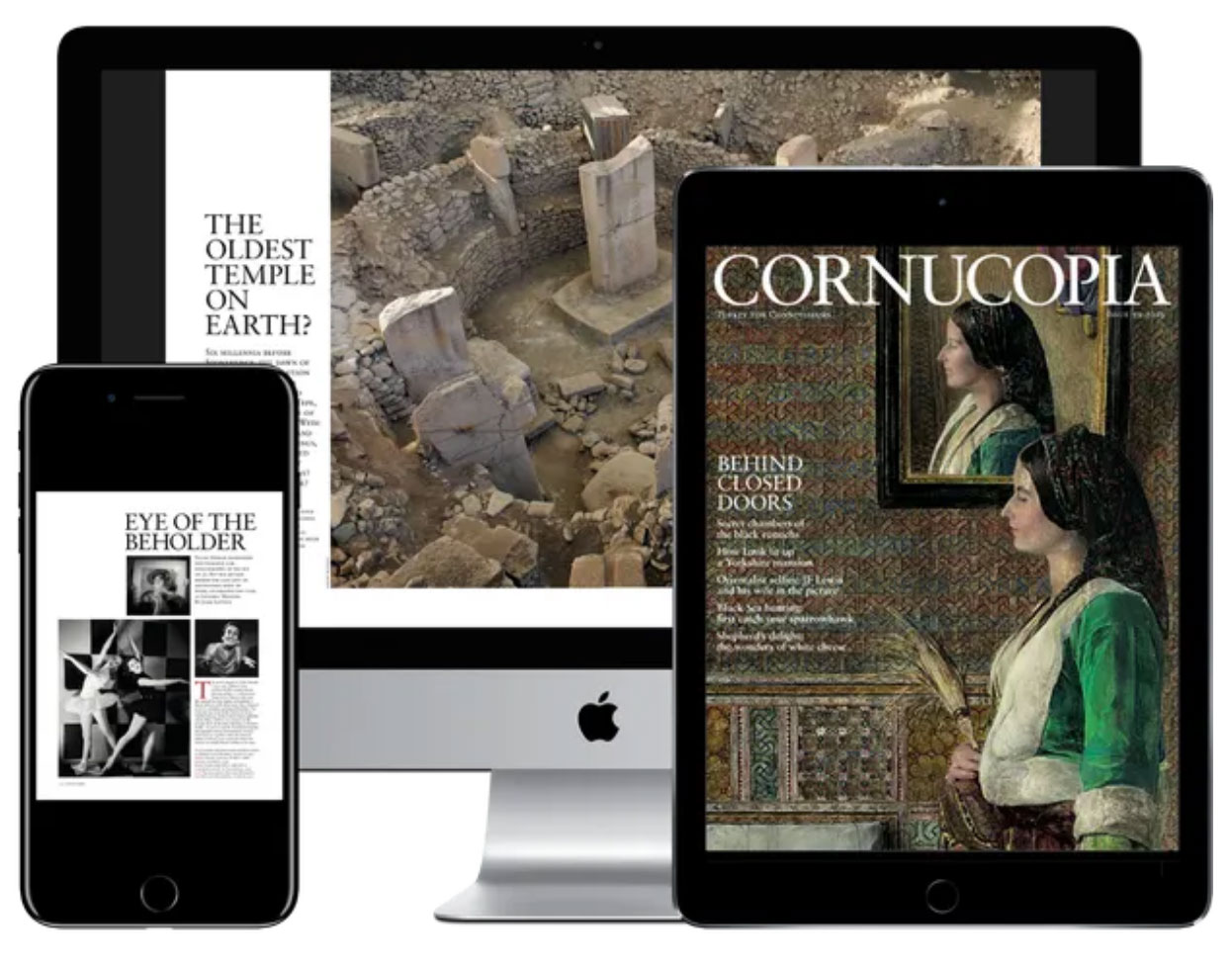
Cornucopia works in partnership with the digital publishing platform Exact Editions to offer individual and institutional subscribers unlimited access to a searchable archive of fascinating back issues and every newly published issue. The digital edition of Cornucopia is available cross-platform on web, iOS and Android and offers a comprehensive search function, allowing the title’s cultural content to be delved into at the touch of a button.
Digital Subscription: £18.99 / $23.99 (1 year)
Subscribe now