
Buy or gift a digital subscription and get access to the complete digital archive of every issue for just £18.99 / $23.99 / €21.99 a year.
Buy/gift a digital subscription Login to the Digital Edition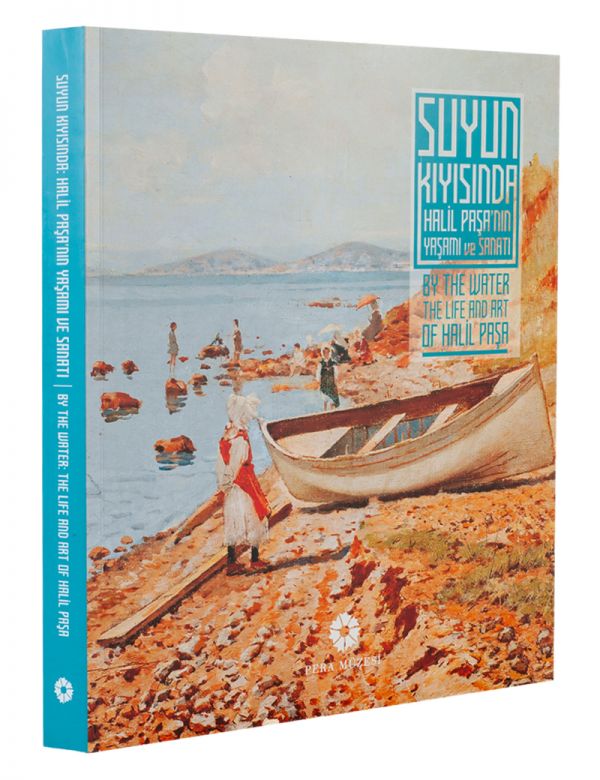
Art was often a negotiation for Halil Pasha as he moved between traditions that did not always sit easily together. The Ottoman painter combined drafting techniques acquired through a military education with the light-drenched brushwork of the Impressionists he encountered during his training in France. He won acclaim for his portraiture abroad, but turned to landscapes that suited conservative tastes at home. Born into an elite family, Halil Pasha was not immune to censure: one painting – a pastoral depiction of a peasant astride a donkey – drew consternation from the Sultan himself.
Those tensions are on view in a sweeping survey of the pioneering painter’s work, By the Water: The Life and Art of Halil Paşa, at the Pera Museum (until August 23), and in a richly documented accompanying catalogue. Both are the result of fresh archival research and material drawn from the artist’s family by the art historian Özlem İnay Erten, who curated the exhibition.
Comprised of 117 paintings, as well as photographs, sketches, journals and personal effects, the biographically driven exhibition is Istanbul’s first major showing of Halil Pasha’s art in three decades and brings together an exceptional number of his paintings scattered across private collections. From a trio of early watercolours set at his family’s home to meditative portraits and luminous Bosphorus scenes, the work unfolds against the backdrop of the late Ottoman world, when inherited norms began to yield to new perspectives.
Halil Pasha tested prevailing sensitivities towards figuration, which remained contentious due to religious beliefs, and brought open-air painting into a tradition still largely centred on the studio. As an instructor, then the director, at the School of Fine Arts, founded in 1883, he helped shape the next generation of painters who would push these experiments further, to lay the foundations of modern Turkish art.
“Art requires continuity, courage, dedication and innovation,” Erten says. “Halil Pasha devoted his entire lifetime to painting, producing about a thousand works. The number is not what’s important, but it shows he never stopped creating; he was constantly pushing boundaries and wholly dedicated to his art.”
By the Water charts Halil Pasha’s artistic journey through the three lands that shaped his work. Born in 1857, he grew up on the shores of the Bosphorus and studied at the Military School of Engineering. Without formal art schools in the Empire, the military was the principal institution to introduce Western-style painting in its 19th-century reform drive, tasking soldier-painters with producing topographical surveys and technical drawings. Halil was eventually sent to Paris in the 1880s to train at the École des Beaux-Arts under the leading French academic painter Jean-Léon Gérôme. In later years, he spent winters in Egypt as a guest of the Egyptian aristocrat Abbas Halim Pasha, creating sun-soaked paintings of life on the Nile and in Cairo’s souks.
In Paris, Halil worked almost exclusively in figuration, and among the exhibition’s most striking sections are drawings of life models, including nudes, that display a mastery of drawing and an adherence to academic conventions fixed in classical ideals. His work was exhibited at the Salon des Artistes Français and at the 1889 Exposition Universelle, where his oil-on-cardboard, Madame X, earned him the bronze medal. The masterpiece delicately handles light and texture, and the rendering of fabric and flesh lends the sitter a palpable presence.
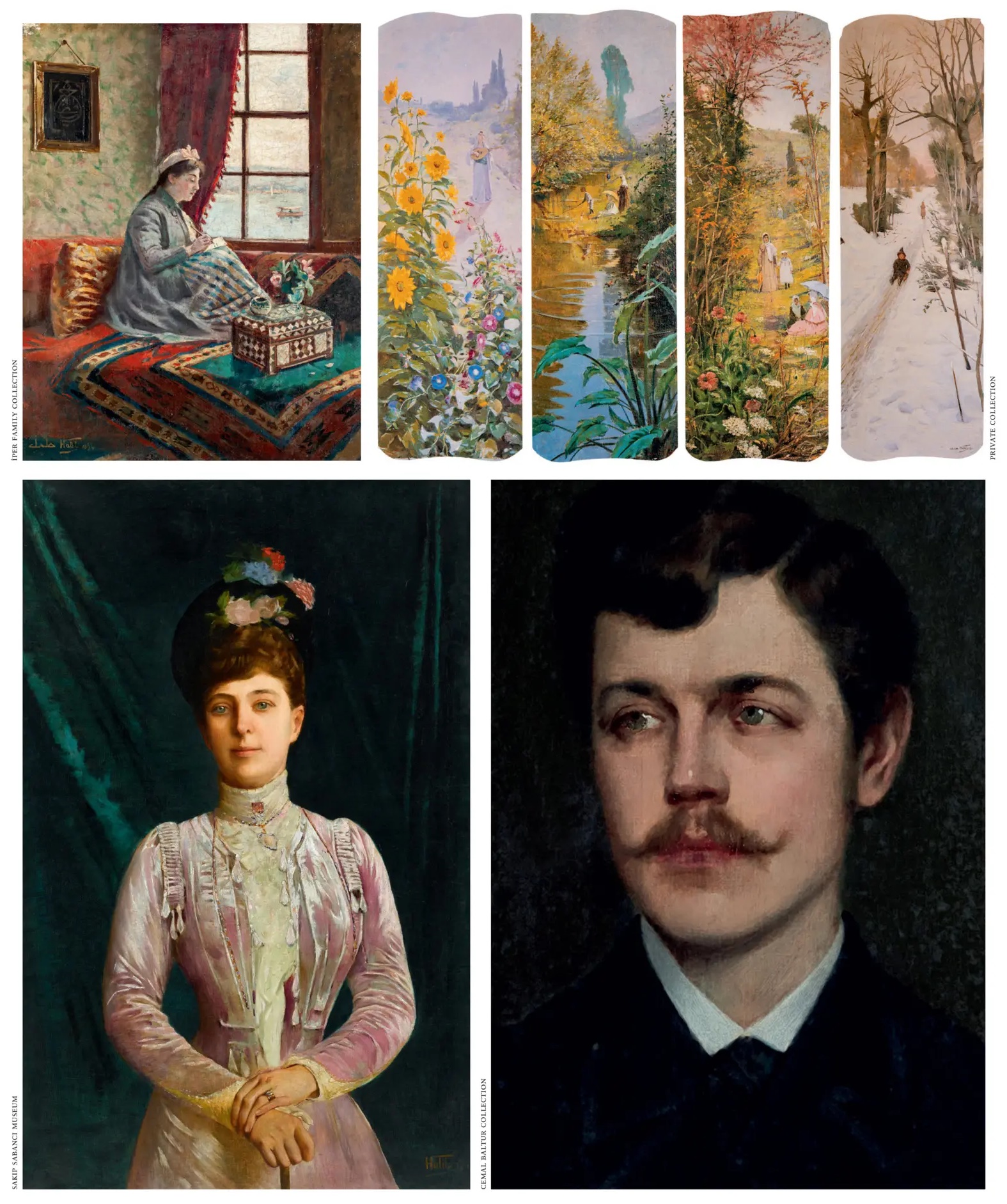
Figures remain a prominent feature in his work when he returns to Istanbul and turns his eye to the surrounding sea and landscape. Women and children take the foreground in the lush compositions of the four-part Spring, Summer, Autumn, Winter (1902–03). Istanbul Triptych (1915) is composed of scenes painted upon a folding screen in which women appear in an idyll that is probably the family garden in Beylerbeyi. Weaving nature into acts of everyday life shows an embrace of the perceptual freedoms opened up by modern painting.
Halil Pasha’s grandchildren opened the family archive to Erten, and a photograph of his studio in 1898 allowed her to reconstruct his atelier at the Pera. The archive included 20 letters written by Halil Pasha from Paris, Istanbul and Egypt in which he shares his experiences and practices. Erten also found three interviews he gave between 1898 and 1938, the year before his death, and his own words helped her to trace his “evolving artistic outlook over time, and these became my primary starting points for his views on life and art”, she says.
Although he is often referred to as the painter who brought Impressionism to Turkey, the interviews reveal Halil’s uneasy relationship with the movement that was in vogue during his Paris studies. Halil initially sided with the academy, which was largely hostile to Impressionism, dismissing it as technically crude. The Turkish painter’s primary concern was overcoming the widespread aversion to figurative painting in the Ottoman realm.
Yet he was susceptible to the style and absorbed its emphasis on light and perception. Erten discovered a visual diary of whimsical sketches prepared by Halil’s companion on their travels through Brittany, a favourite destination for the Impressionists. It is on view for the first time at the Pera.
“Halil Pasha’s methods of working outdoors and his observations of nature were already influenced by both Impressionism and Post-Impressionism, even though he approached them at arm’s length,” Erten says of the memento. “In his paintings, we see that he took elements from artists he saw in museums, synthesising them in his own art and reflecting a local sensibility when he returned to his country.”
Bostancı (1897), the oil-on-canvas work that opens the show, revels in the immediacy of Impressionism. In a slice of life along the shoreline, women shelter beneath parasols, children paddle in the still shallows, and beyond them the Princes Islands hover in a haze of blue. The scene feels caught in passing – glimpsed, rather than composed. For all of the painting’s informality, the draughtsmanship remains assured, as in the crisp delineation of a rowboat. One may think of Seurat in the choice of subject, but the touch is closer to Manet: direct, unlaboured and attentive to the pleasures of the everyday.
Halil Pasha did not abandon portrait-making but took it in a different direction in Istanbul, harnessing its power to express changing ideals. Portrait of a Woman in Pink (1904), probably depicting his wife, Âliye, presents a new, more animated and self-possessed vision of femininity that mirrors societal shifts. Her contemporary dress shows an ease with markers of modern life, while her composed, direct gaze and the careful modelling of her face and hands anchor her as an individual, rather than a type.
Even as Halil moved within the upper echelons of Ottoman society, particularly during his tenure at the palace of Sultan Abdülaziz, he recognised the fraught position of his pursuits. In his memoirs, he recalled that artistic contact with Europe was regarded as “sinful and forbidden”. While teaching at a military college, he provoked the ire of an officer who opposed his new methods and reported him to Sultan Abdülhamid over a painting of a Turkish villager riding a donkey – deemed “unflattering” to the country’s image. He narrowly avoided exile, spared only when another artist’s work was mistakenly submitted to the palace.
Yet Halil Pasha also adjusted to shifting political and cultural currents. Exhibition photographs show a self-portrait in which he wore a fez; the headgear was later removed from the canvas, which remains in the family collection. Erten identified traces of the erasure beneath the surface, suggesting the alteration followed the revolutionary reforms of Mustafa Kemal Atatürk, when the hat itself became a taboo symbol of a superseded order. In this act of revision, his life’s arc comes into focus. Halil Pasha not only helped lead but was also reshaped by the transformations that pushed his country into a new age.
● *‘By The Water: the Life and Art of Halil Paşa’ is at the Pera Museum, Beyoğlu, Istanbul, until August 23, 2026; peramuseum.org *
● The book of the exhibition, by Özlem İnay Erten, is available from cornucopia.net/books
READ THE ILLUSTRATED ARTICLE THROUGH A DIGITAL SUBSCRIPTION HERE HERE
1. STANDARD
Standard, untracked shipping is available worldwide. However, for high-value or heavy shipments outside the UK and Turkey, we strongly recommend option 2 or 3.
2. TRACKED SHIPPING
You can choose this option when ordering online.
3. EXPRESS SHIPPING
Contact subscriptions@cornucopia.net for a quote.
You can also order directly through subscriptions@cornucopia.net if you are worried about shipping times. We can issue a secure online invoice payable by debit or credit card for your order.
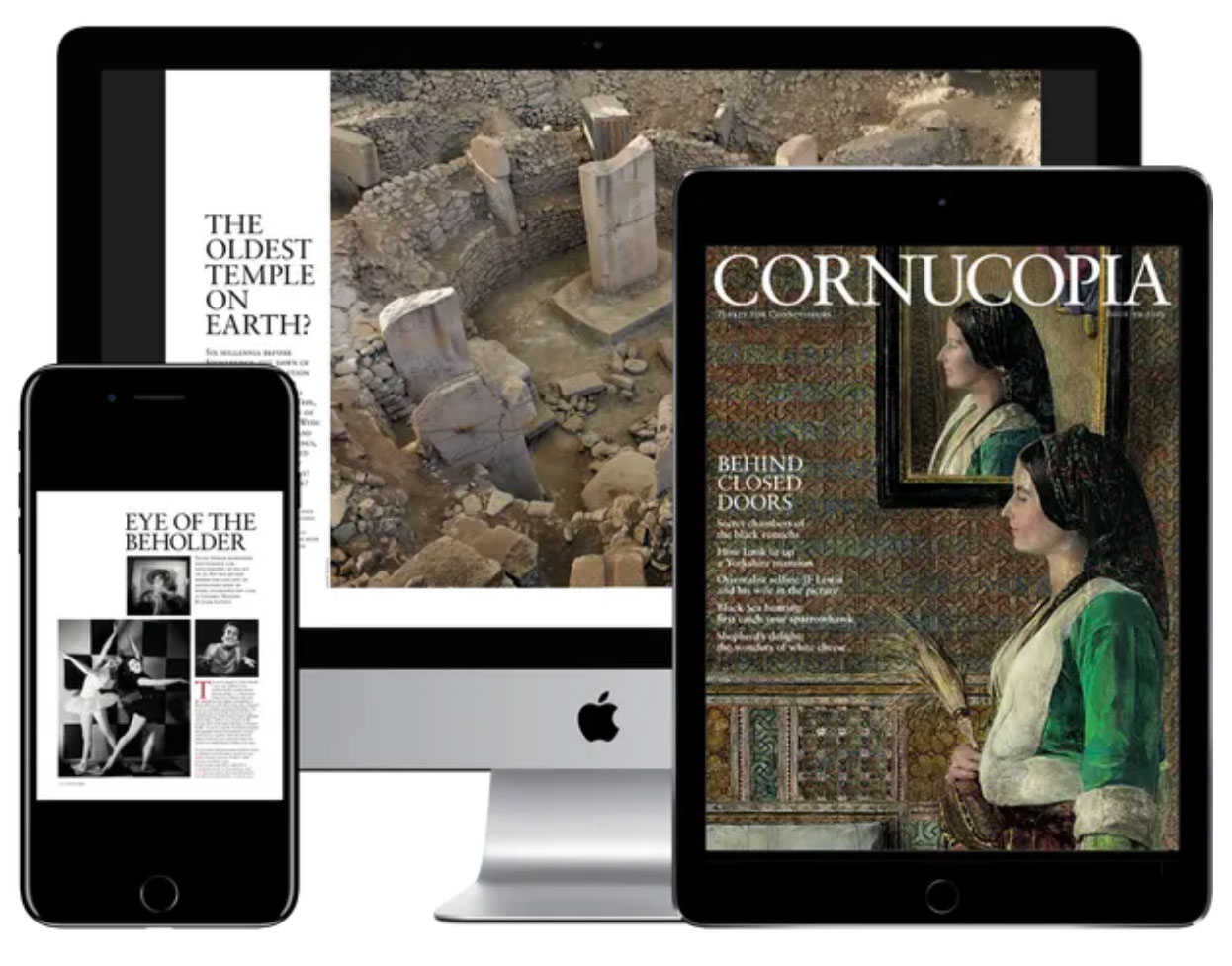
Cornucopia works in partnership with the digital publishing platform Exact Editions to offer individual and institutional subscribers unlimited access to a searchable archive of fascinating back issues and every newly published issue. The digital edition of Cornucopia is available cross-platform on web, iOS and Android and offers a comprehensive search function, allowing the title’s cultural content to be delved into at the touch of a button.
Digital Subscription: £18.99 / $23.99 (1 year)
Subscribe now