Historian and scholar Hüsamettin Şimşir delivers a talk on the changing roles of women in warfare.
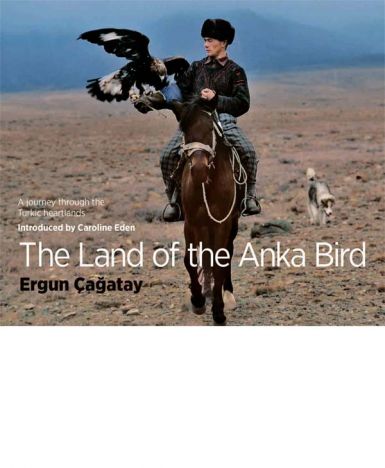
His work has long engaged with Istanbul not simply as a setting, but also as a site where history, imagination and narrative consciousness intersect. In this talk, he examines the evolving roles of women in warfare across nomadic societies from antiquity to the late medieval period, with a particular focus on the Eurasian steppe and the Anatolian frontier regions. Drawing on archaeological evidence, classical sources and medieval texts, it challenges the assumption that warfare was an exclusively male domain in premodern societies. Findings such as weapon-bearing female burials and skeletal evidence of habitual horseback riding suggest that women in early steppe cultures possessed, and at times exercised, martial skills.
The study traces a long-term transformation in women’s participation in warfare. While women in ancient nomadic societies could engage more directly in mounted combat, by the medieval period their roles increasingly shifted toward logistical support, camp management, and in some cases, political or military leadership. However, this shift did not represent a complete disappearance of women from martial life. Instead, it reflects a reconfiguration shaped by the emergence of centralised states, institutionalised armies and new religious and social frameworks.
Focusing on late medieval Anatolia, the talk highlights evidence from sources such as Gazilik Tarikası and contemporary chronicles, which reveal that women could still participate in warfare as part of a broader communal obligation. In certain frontier contexts, women were not only involved in support roles but could also engage in combat, diplomacy, and the negotiation of peace. These findings suggest that steppe traditions of gender flexibility persisted and were adapted within the socio-political realities of the Anatolian frontier, offering a more nuanced understanding of women’s place in premodern military history.
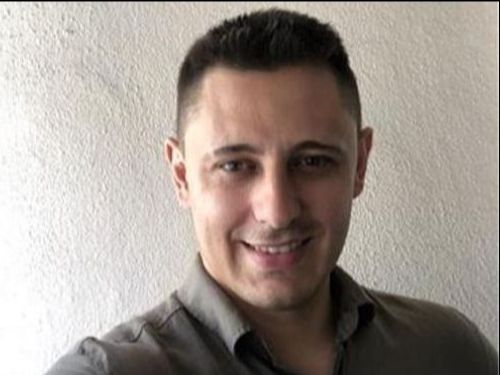
About the speaker: Hüsamettin Şimşir is a scholar specialising in medieval and early modern history, with a special focus on Ottoman-Byzantine interactions. He earned his bachelor’s degree in Turkish Language and Literature at Boğaziçi University, and his master’s degree from Sabancı University; he then earned a PhD in History at the University of Notre Dame. His research explores political, social and religio-cultural relations between different communities, among these being Muslim and Christian communities in the Eastern Mediterranean during the late Middle Ages and early modern period. Şimşir has held research and fellowship positions at institutions such as the American School of Classical Studies at Athens and the Oxford Centre for Islamic Studies. His work covers subject areas such as Ottoman conquests, interfaith coexistence, and historical linguistic sources.