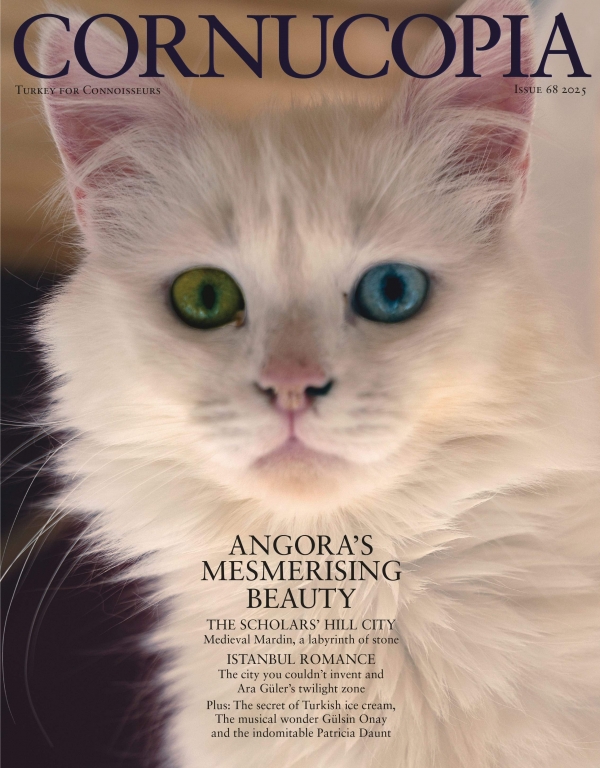
Buy or gift a digital subscription and get access to the complete digital archive of every issue for just £18.99 / $23.99 / €21.99 a year.
Buy/gift a digital subscription Login to the Digital EditionMount Latmos has long inspired devotion – its pillow-shaped rocks framing prehistoric ritual, Endymion’s eternal sleep and Byzantine monasticism. Forty years on, Ross Atabey returns to Heracleia, to follow old paths through a village where, for him, time moves differently

In April and May 2024 I had the pleasure of spending five weeks with the archaeologists at the village of Kapıkırı, “The broken gate”– so named for the fallen arch over the harbour gate. The place is more familiar to the traveller as Heracleia ad Latmum, Heracleia under Latmos.
The site is located on the northern shore of Lake Bafa, some 20 minutes west of Milas. My first visit to Heracleia was as a young backpacker in the 1980s, when I rode the last four miles from the highway to the village on the fender of a then-ubiquitous orange Türk Fiat tractor, rubbing heads with my grizzled farmer-chauffeur. The local dolmuş bus still deposits the traveller on the main highway, from where you have to hitch a lift or walk the last four miles. Not such an onerous choice, actually: the walk skirts the lake on the port side, flamingos in view, with the glowing mountain to starboard. As you leave the highway, the southern slopes of Mount Latmos make a striking appearance. Unlike the rolling hills of Ionia to the north or the familiar pale grey oolitic limestone of the south, the mountain is of metamorphic origin, made up of gneiss, schist, slate, marble and granite.
This geology has led to a very rare and special topography: the southern slopes appear as a jumbled series of pillow-like outcrops, broken up by valleys and pockets of woodland. Not here the usual Mediterranean maquis, or scrubland, but a more easily trodden landscape.
The pinkish-yellow hues of these rocks lend this mountain a uniquely numinous glow, and so thought the ancients. The post-Renaissance mind will put this down merely to an accident of light and colour, and the dew point of condensing moisture. But to a more superstitious age the mountain seemed a fitting abode for a god. The serrated crest, as seen from the lakeside, is frequently shrouded in leaden cloud, and according to the villagers is often girt by lightning. Deep fissures bring forth vapours and warm springs – the whole effect a sure sign of the divine and otherworldly.
The earliest evidence of religious activity on the mountain is found in wall paintings scattered about its middle and upper reaches, done in a red pigment derived from iron ore. The figures are almost exclusively anthropomorphic with a roughly equal division of the sexes. This is striking, as, in the Palaeolithic period, animal figures predominate, with an emphasis on prophylactic and sympathetic magic. The succeeding Neolithic period increasingly concentrates on the human form, reflecting the shift of emphasis from a hunting to a sedentary agricultural lifestyle, when rainfall and a fruitful soil were of paramount importance. Many of the figures wear stylised horns and have been interpreted as priests of a weather god, while many of the female figures are shown in classic Neolithic form, with substantial buttocks.
The two types are taken to represent and propitiate a god responsible for rainfall, and the classic Anatolian Mother Goddess, responsibile for fructifying the earth. Other figures may represent marriage processions. These depictions appear to be located above watercourses or springs and within natural rock shelters, not strictly speaking caves but great slabs of gneiss that have fallen to create them.
Sandwiched between this Neolithic worship and Byzantine monastic activity is the classical legend of Endymion, a tale well known throughout the Graeco-Roman world, in which Zeus granted the moon goddess Selene’s wish that this handsome youth be given eternal youth, sending Endymion into an eternal sleep, in which he and Selene had 50 daughters while he slumbered. Just above the harbour of Heracleia is a highly unusual building which has long been interpreted as a sanctuary of this demigod. The classical texts make mention of such a sanctuary but describe it as “on the mountain”. This is rather more probably a Hellenistic-era construction exploiting the legend as a source of revenue, much as the city of Knidos used its famous statue of Aphrodite as a tourist attraction…
HERACLEIA 1765
Rupert Scott leafs through the diary of the Dilettanti Society’s visit to a site
‘as romantic as its fortune was extraordinary’
… In 1764 the Society of Dilettanti resolved to sponsor an expedition to Greece and Asia Minor. The budget was a not inconsiderable £800 and the expedition was expected to last at least a year.
Richard Chandler, an ecclesiastic and junior fellow at Magdalen College, Oxford, was chosen to lead the expedition. In some respects he was an odd choice. He was, young, short and plump (or “round and considerably below the standard” as his biographer the Rev. R Churton describes him). Chandler had little experience of life outside clerical and academic circles in England. His principal qualification “to execute the Classical part of the plan” was his formidable classical erudition.
The expedition’s official publication was Ionian Antiquities (first part-published in 1769, with views and exact drawings and descriptions of the Temple of Dionysus at Teos, of Athene at Priene and of Apollo Didymaeus near Miletus). But in some respects an equally important product was Chandler’s own diary, published in 1775 as Travels in Asia Minor and considered a classic of the age. It is an 18th-century travel book that can still be read for pleasure (particularly in Edith Clay’s abridged edition of 1971)…
NOTES

Faik Şenol’s camera transports Clara Robins back to Thirties Istanbul

The Islamic Arts Museum Malaysia has claimed its second Osman Hamdi Bey painting. The curator Lucien de Guise reflects on the enduring fascination of the Ottoman world, real and imagined

Martyn Rix on a new wave of botanical illustrators that is transforming a nation’s appreciation of nature every species and producing paintings of selected species for publication

A show on food in art at the İşbank Museum of Painting and Sculpture is a veritable remembrance of times past

Known as the ‘Turkish Henri Cartier-Bresson’, Ara Güler roamed the streets, creating gritty portraits of everyday life

Visitors who climb the long flight of rock-hewn stairs to the monastery of Mar Musa al-Habashi in the Syrian Desert, whatever their faith, will find a place of serenity, a welcome, and frescoes to dazzle them

Istanbul’s mystique has long captivated writers, but, as an exhibition reveals, not all care to visit. Maureen Freely gives us chapter and verse
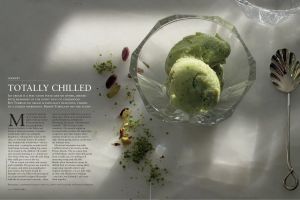
Ice cream is the feel-good food like no other, imbued with memories of the sunny days of childhood. But Turkish ice cream is especially delicious, thanks to a unique ingredient. Berrin Torolsan has the scoop

Mardin can only be compared to such cities as Granada and Fez, filled with the palaces of merchants, studded with university colleges, guarded by mountains and fed by their springs
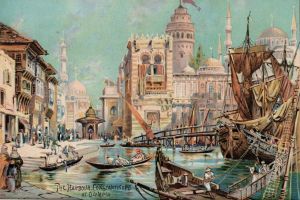
A ‘Constantinople’ spectacular in Victorian London, by Andrew Finkel



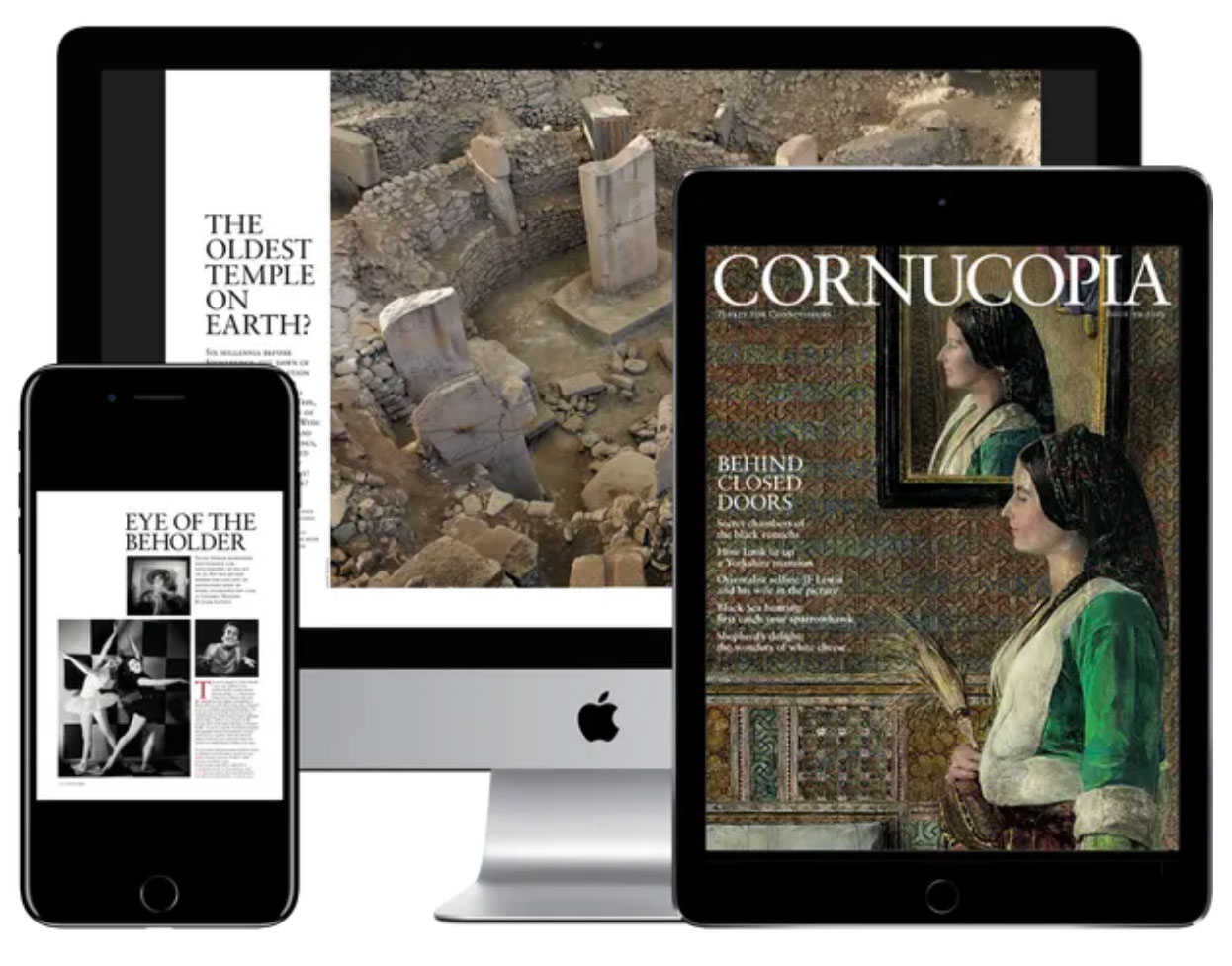
Cornucopia works in partnership with the digital publishing platform Exact Editions to offer individual and institutional subscribers unlimited access to a searchable archive of fascinating back issues and every newly published issue. The digital edition of Cornucopia is available cross-platform on web, iOS and Android and offers a comprehensive search function, allowing the title’s cultural content to be delved into at the touch of a button.
Digital Subscription: £18.99 / $23.99 (1 year)
Subscribe now