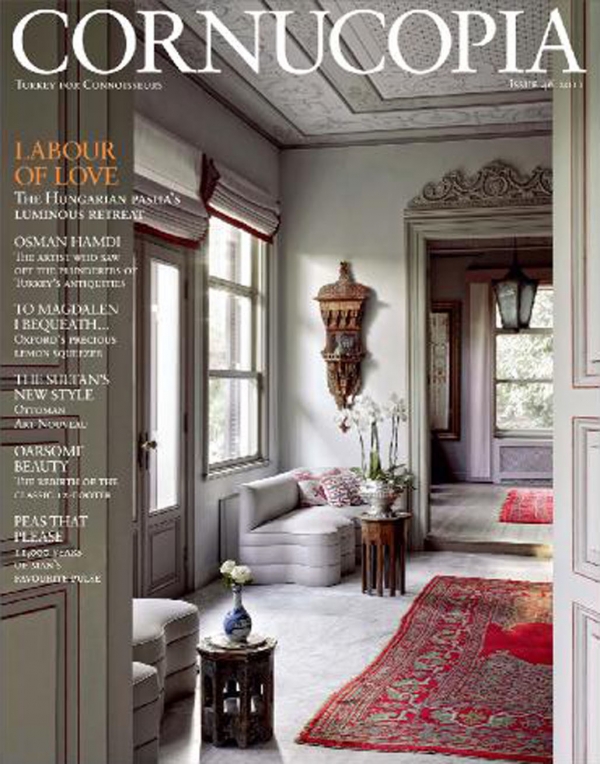
Buy or gift a digital subscription and get access to the complete digital archive of every issue for just £18.99 / $23.99 / €21.99 a year.
Buy/gift a digital subscription Login to the Digital EditionSet amid pines with a glimpse of the Bosphorus is a romantic house built in the 19th century by a Hungarian-born refugee for himself and his young wife. Many such wooden houses nestle in the hills and valleys on the Asian shore. But, as Berrin Torolsan reveals, its restoration by the designer Serdar Gülgün has been a rare labour of love. Photographs by Jürgen Frank
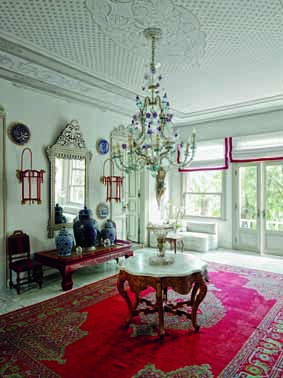
Set back from the sea, the house stands in a valley full of gardens and nurseries famous for cucumbers and roses. A door in a high retaining wall reveals steps shaded by cypress, pine, magnolia and fruit trees, climbing to a series of narrow terraces filled with jasmine and honeysuckle and the soothing sound of water from a marble fountain. Among the tree tops I had my first glimpse of the magnificent three-storey köşk.
The origin of the English word “kiosk” a köşk can be anything from an Ottoman mansion to a pavilion, varying enormously in size. Gülgün’s, size-wise, is a palace.
Serdar Gülgün’s Teşvikiye apartment is featured in At Home in Turkey,
by Berrin Torolsan with photographs by Solvi dos Santos
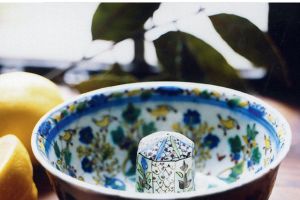
The potters of Kütahya designed their ware to brighten monastic settings. Today these ceramics bring a glow to the old Oxford college of a discerning collector. John Carswell follows in the tracks of their journey from 18th-century Anatolia to English academe. Photographs by Lottie Davies
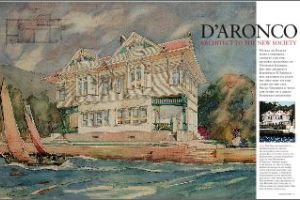
He was an Italian with a powerful affinity for the historic buildings of Ottoman Istanbul. But the architect Raimondo D’Aronco was destined to leave his own very stylish stamp on the city. Paolo Girardelli tells the story of a great European innovator

A handful of green peas improves not only the flavour but the look of many a winter dish. Celeriac hearts, for example, are unthinkable without a garnish of peas. Pea soup and pilav with peas bring a beam of spring sunshine to the table.
More cookery features
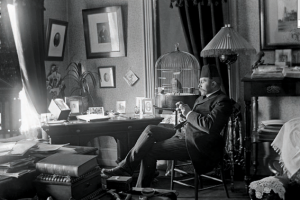
Osman Hamdi and the American’s rocky start in the Ottoman Empire, by Robert Ousterhout and Renata Holod
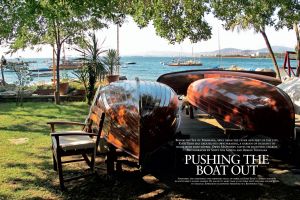
Furnished and burnished: the varnished hulls of three of Rıfat Edin’s 12-foot dinghies in his Istanbul seaside garden. He has built more than 30 of these nippy wooden sailing boats to original Edwardian blueprints preserved in a Bosphorus yalı

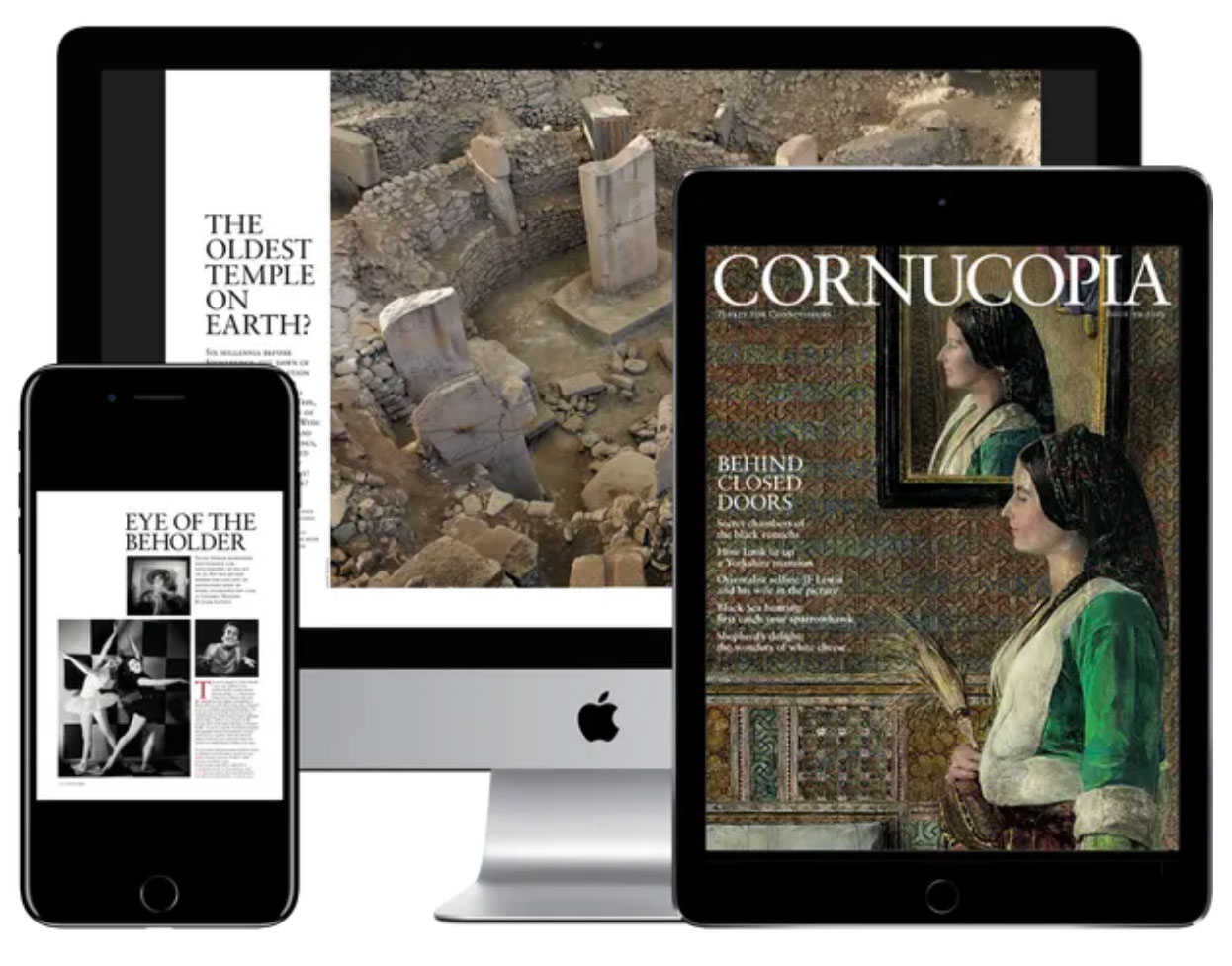
Cornucopia works in partnership with the digital publishing platform Exact Editions to offer individual and institutional subscribers unlimited access to a searchable archive of fascinating back issues and every newly published issue. The digital edition of Cornucopia is available cross-platform on web, iOS and Android and offers a comprehensive search function, allowing the title’s cultural content to be delved into at the touch of a button.
Digital Subscription: £18.99 / $23.99 (1 year)
Subscribe now