Buy or gift a digital subscription and get access to the complete digital archive of every issue for just £18.99 / $23.99 / €21.99 a year.
Buy/gift a digital subscription Login to the Digital EditionScaling the heights Not long ago, jazz musicians were selling their instruments to put food on the table, yet a rich flow of talent is now emerging in school corridors. What more inspiring voice to aim for than that of Istanbul’s Queen of Jazz? Sibel Köse talks to John Shakespeare Dyson

t was a grey, overcast day in November when I met the jazz singer Sibel Köse in a café in Cihangir. I first met Sibel when I was living behind Botter Han, an Art Nouveau mansion at the Tünel end of İstiklâl Caddesi, Beyoğlu, and she and other musicians would sometimes call on me before going on stage at the nearby clubs. On this occasion, however, I wanted not to make small talk or discuss her cats and their crimes, but to investigate her history – how and why she came to be known as “the Queen of European Jazz”.
The last time I had seen Sibel perform was at the Nardis Club, hard by the Galata Tower, in January 2023. In my Musical Shares blog on that concert, I wrote: “She hits the high notes with tremendous force and faultless intonation; she improvises creatively with nonsense words even more frequently than before, fashioning them into meaningful episodes within the song as a whole; and her emotional range remains unrivalled within my experience of jazz singers. All this is mixed in with both a searing sincerity and a wry sense of humour. How could anyone fail to enjoy and appreciate her artistry?”
I asked what influences had shaped that artistry, and she named three main figures. The first was the legendary Turkish jazz pianist, saxophonist and composer Tuna Ötenel, whom she had met while still a student of architecture at the Middle East Technical University in Ankara. She said she had learnt a lot by performing with him, though he had never given her formal lessons. She also told me the story of how he had acquired his surname. In 1933 his father had come to Istanbul from Bulgaria as the goalkeeper of a football team, though he was also a violinist. After the match he sought political asylum, eventually taking Turkish citizenship. When he went to get his identity card, a process that involved choosing a Turkish surname, he entered the office holding his violin – which the clerk promptly asked him to play. Impressed, the clerk suggested he call himself Ötenel, which means “Singing Hand”.
Her second big influence was Janusz Szprot, a Polish musician who had come to Ankara in the 1990s to head up the Jazz Department of Bilkent University and had invited her to attend a summer school for jazz vocalists in his native country. There she received tuition from Deborah Brown and Rachel Gould, two singers from the USA. The Polish connection is still going strong. At her concerts there, Sibel often cooperates with pianist and teacher Bogdan Hołownia, and sometimes sings 1930s cabaret numbers – in French – by the writer and singer Jeremi Przybora.
Her third major influencer, she said, was the French trumpet player, composer and arranger Jean-Loup Longnon. She has recently made recordings with his big band in Paris. The two have given many concerts in France, Russia and elsewhere. Sibel told me how their taxi from the airport into Dakar in Senegal had broken down outside the city. Her worst fear had been not the prospect of being late for a meeting with the concert organisers, but of being eaten by the lions that were roaming around…

Annette Louise Solakoğlu on the visionary sculptures of İlhan Koman

Don McCullin and Barnaby Rogerson travel back in time, elated by the enduring power of Mithras, god of the sun

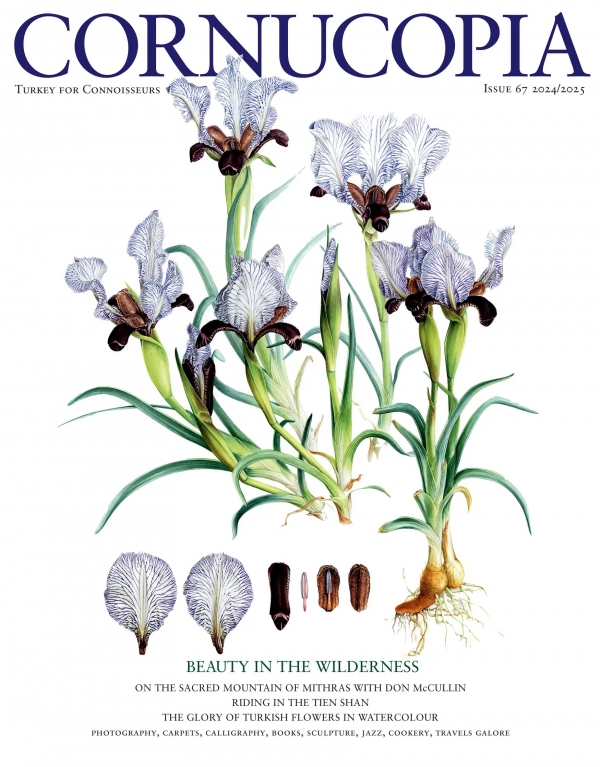
The botanical artistry of Işık Güner, by Harriet Rix

Sweet but with a tang, boza is a favourite winter drink. Restorative, gently uplifting, it inspires mellow conversation and is a cornerstone of Istanbul life, while the nocturnal cry of its street-sellers, a not-quite-distant memory, is still the stuff of poetry. By Berrin Torolsan

Joachim Meyer, of Copenhagen’s David Collection, on the powerful aura of Islamic calligraphy

An exhibition in London reveals the Islamic art that captivated William Morris. By Thomas Roueché

She was the wife of the Sultan’s court painter and mother to four children. But Elisa Zonaro was also an artist in her own right, a pioneering female photographer in Abdülhamid II’s Istanbul. Philip Mansel celebrates a free-spirited trailblazer
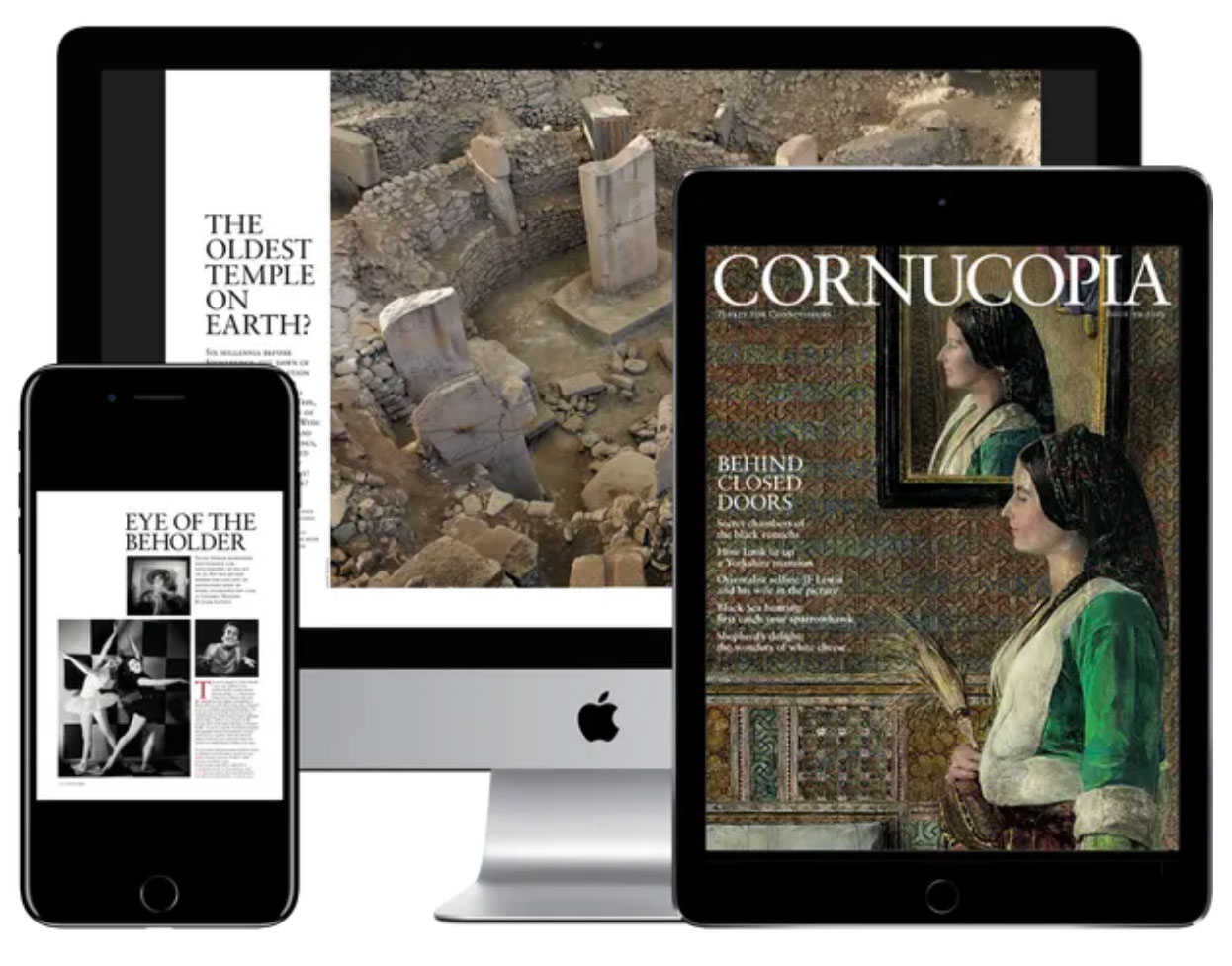
Cornucopia works in partnership with the digital publishing platform Exact Editions to offer individual and institutional subscribers unlimited access to a searchable archive of fascinating back issues and every newly published issue. The digital edition of Cornucopia is available cross-platform on web, iOS and Android and offers a comprehensive search function, allowing the title’s cultural content to be delved into at the touch of a button.
Digital Subscription: £18.99 / $23.99 (1 year)
Subscribe now