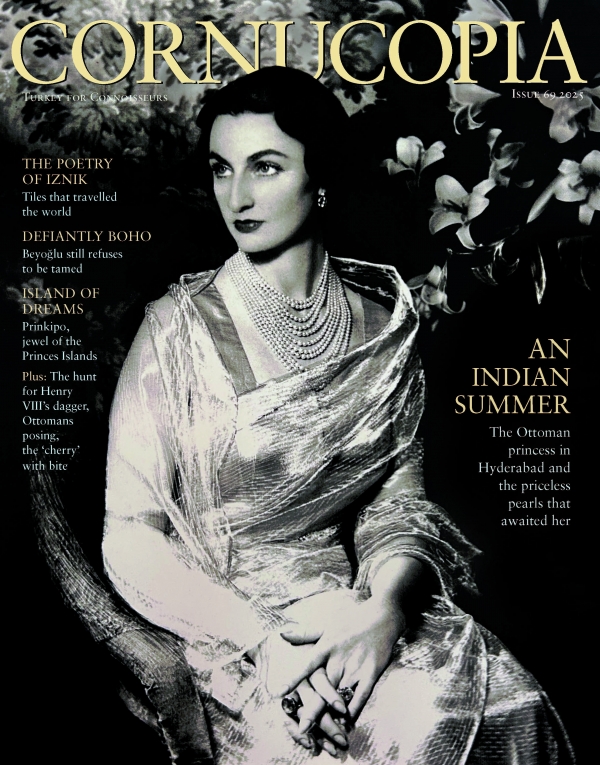
Buy or gift a digital subscription and get access to the complete digital archive of every issue for just £18.99 / $23.99 / €21.99 a year.
Buy/gift a digital subscription Login to the Digital EditionArif Hikmet Koyunoğlu upset his family when he trained to be an architect, then seen as a low-ranking occupation. He went on to become a great achiever, designing some landmark buildings and excelling in photography. Clara Robins finds his work celebrated at the Istanbul Research Institute

Arif Hikmet Koyunoğlu was not your typical architect. Born in 1893, he pursued 31 different professions in a life of restless curiosity, all the while helping to define the look of early Republican Turkey. Yet Koyunoğlu’s first love may have been photography. He bought his first camera at the age of 10, long before amateur photography became common, which began his lifelong fascination with capturing the world around him. The Photography Studio of an Adventurous Architect, at the Istanbul Research Institute in Beyoğlu, traces Koyunoğlu’s extraordinarily varied life through his photographs. Koyunoğlu was born into a family keenly aware of instability. Although his mother had been raised in the imperial palace and his father was a kadı (judge), the family struggled through a fall from favour. Determined to raise a resilient child, Koyunoğlu’s mother gave him cold baths and insisted he learn practical skills. By adolescence, he could make baklava and börek, and trained rigorously in gymnastics. When the family’s finances collapsed, Koyunoğlu paid his own school fees. He apprenticed in a photography studio, ran a jewellery shop in Beyazıt Square, and sold his own hand-painted scarves in the Grand Bazaar.
In 1910, Koyunoğlu started at the Imperial School of Fine Arts in Istanbul, the leading institution for architects, painters and sculptors in the late Ottoman period. Yet his choice of architecture, then considered a “lowly” profession, dismayed his respectable family. Osman Hamdi Bey, the school’s founder, encouraged Koyunoğlu to take up painting. His third-year project, a residence for a painter in the Imperial School, reveals his superb draughtsmanship. He also worked as an assistant to his teacher Giulio Mongeri on the new St Antoine Church on İstiklâl Caddesi. Koyunoğlu’s studies were dramatically interrupted by the Balkan Wars. He volunteered, was captured, sentenced to death by a military court, but escaped at the last moment to the Italian consulate. From there, Koyunoğlu was sent to refugee camps in Italy and Alexandria, where he organised gymnastics classes for fellow refugees. His mother eventually traced him, and he returned to Istanbul in 1914 to complete his degree.
As a student, Koyunoğlu’s adventurous streak had sent him travelling across Anatolia to photograph architectural monuments. He later returned to many of these sites while serving on the Erzurum and Caucasus fronts during the First World War. Even there, his camera never rested: he cleaned glass negatives with melted snow and guided fellow soldiers on cultural tours in Niğde and Sivas. Athletic and multilingual, Koyunoğlu helped Austrian officers to establish the army’s first ski troop. He trained its earliest military skiers, founded the first ski school in Sivas and led the Erzurum ski platoon. After the war, Koyunoğlu opened Istanbul’s first electrically lit photography studio, which later became a gallery. But this was also a period of dangerous audacity for the architect. Clashes with British and French officers in disputes over his photographs and studio culminated in his flight to Ankara with forged documents.
The exhibition also highlights Koyunoğlu’s architectural legacy. In 1927, two of his most significant buildings were completed. These were the Headquarters of the Turkish Hearths and the Ethnography Museum of Ankara, both monumental symbols of the young Republic. Drawing on Seljuk and Ottoman forms to bridge past and present, these works became defining examples of the First National Architecture Movement. Koyunoğlu’s photographs reveal how both his personal vision and architectural approach gave meticulous attention to form, perspective and context. By placing photography and architecture side by side, this exhibition offers vivid insights into a formative era of Turkish architecture – but also restores attention to the remarkable figure of Arif Hikmet Koyunoğlu himself. u
● ‘The Photography Studio of An Adventurous Architect’ is at the Istanbul Research Institute until May 17, 2026; en.iae.org.tr


The wondrous cornelian cherry, by Berrin Torolsan

The ceramic secrets of a 16th-century bath house
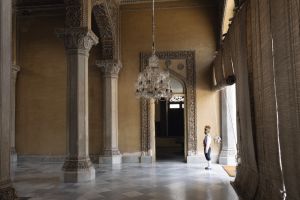
When two exiled Ottoman princesses married into the family of the richest man in the world, the match made headlines around the globe. Cosmo Brockway describes the opulence that awaited them in Hyderabad. Palace photographs by Monica Fritz

Tim Stanley delves into an exhibition about a vanished treasure once believed to have been owned by Henry VIII

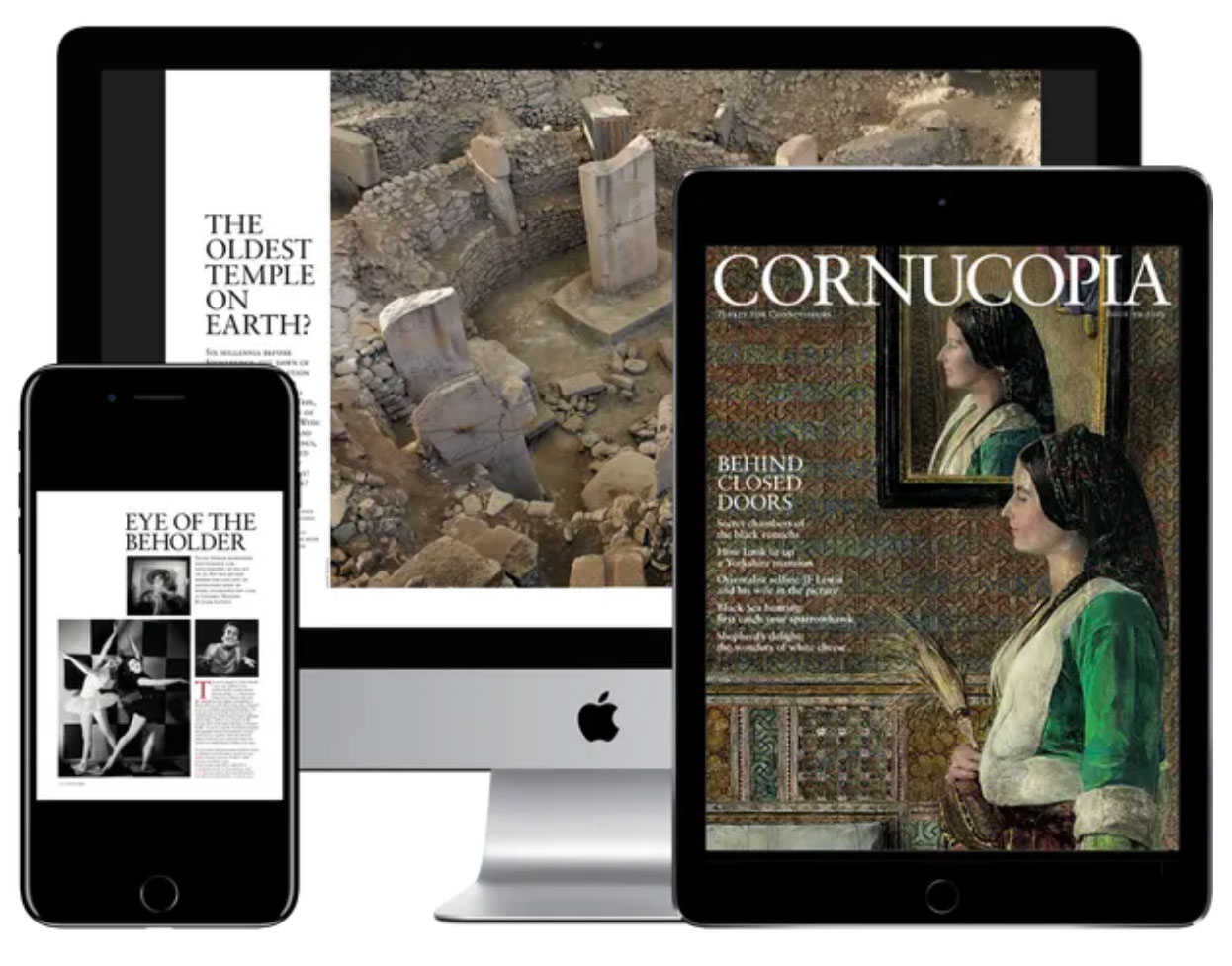
Cornucopia works in partnership with the digital publishing platform Exact Editions to offer individual and institutional subscribers unlimited access to a searchable archive of fascinating back issues and every newly published issue. The digital edition of Cornucopia is available cross-platform on web, iOS and Android and offers a comprehensive search function, allowing the title’s cultural content to be delved into at the touch of a button.
Digital Subscription: £18.99 / $23.99 (1 year)
Subscribe now