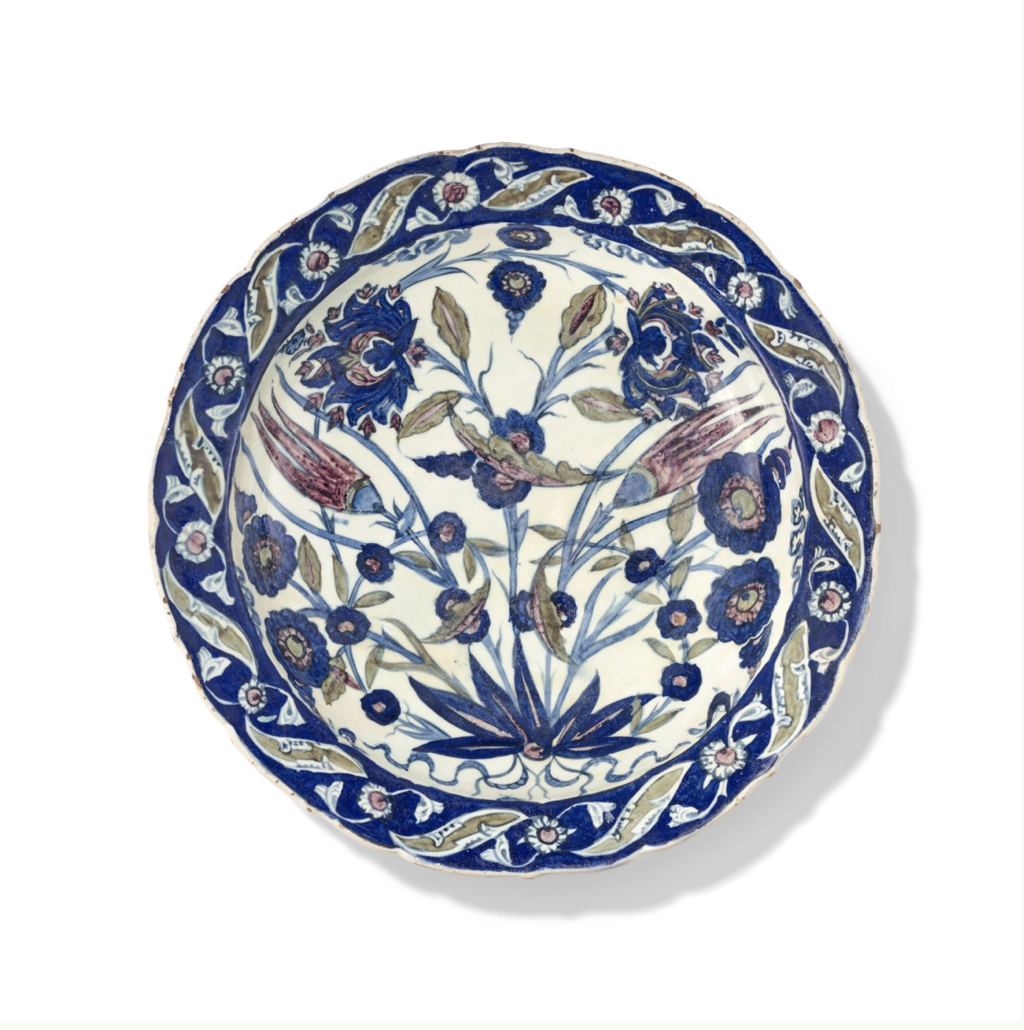
An Iznik 'Damascus-style' pottery dish, Ottoman Turkey, c.1545–55, Lot 49 (est. £80,000-£120,000)
Christie’s sale of Art of the Islamic and Indian Worlds including Rugs and Carpets will present an exceptional selection of objects, works on paper, jewellery, rugs and carpets celebrating more than a millennium of artistic achievement. Taking place live in London on 12 November, the auction showcases creativity and craftsmanship of cultures stretching from Spain and North Africa to India and Central Asia.
Highlights include an important 13th-century Ayyubid carved wooden panel and a rare Mamluk mosque lamp from the complex of Sultan Hasan. From India is an important group of folios from the Mughal Zafarnama of Akbar and fine jewellery from the collection of the American heiress, adventurer and collector Adeline Pepper Gibson. A further highlight is an exceptional large painting by the Sikh artist Bishan Singh. We are also delighted to be offering a second group of significant arms and armour from the Collection of Howard Ricketts.
The superb selection of rugs and carpets is led by two important Classical 18th century examples of the village weaving tradition in the Caucasus. The first is a rare Caucasian ‘Dragon’ carpet from the late 17th/early 18th century which comes to the market for the first time in over 40 years. The second is a stunning south Caucasian Karabagh carpet from a noble European collection which was last exhibited in 1999. Further highlights include a beautiful Indian Agra carpet from the collection of the esteemed American collector Mary Griggs Burke, woven during India’s carpet weaving renaissance in the early 19th century . The labour intensive process of Sericulture and silk weaving is further highlighted with exceptional examples from across the Silk Road including an Ottoman silk Koum Kapi prayer rug, silk weavings from the oases towns in the Tarim Basin, to an impressive group of luxurious Persian Qajar silk palace carpets from an important private collector.

Lot: 180
A silk and metal-thread Koum Kapı prayer rug
Istanbul, Turkey, c.1910
Although this rug is unsigned, there is little doubt that it was woven in the workshop of a Koum Kapi master weaver. This particular design, with the inclusion of the hanging mosque lamps within the prayer spandrels, the added polychrome decoration within the metal thread and the technical ability required in the handling of the material, are all characteristics of the work of the grand master, Zareh Penyamin.
Estimate: £40,000–£60,000
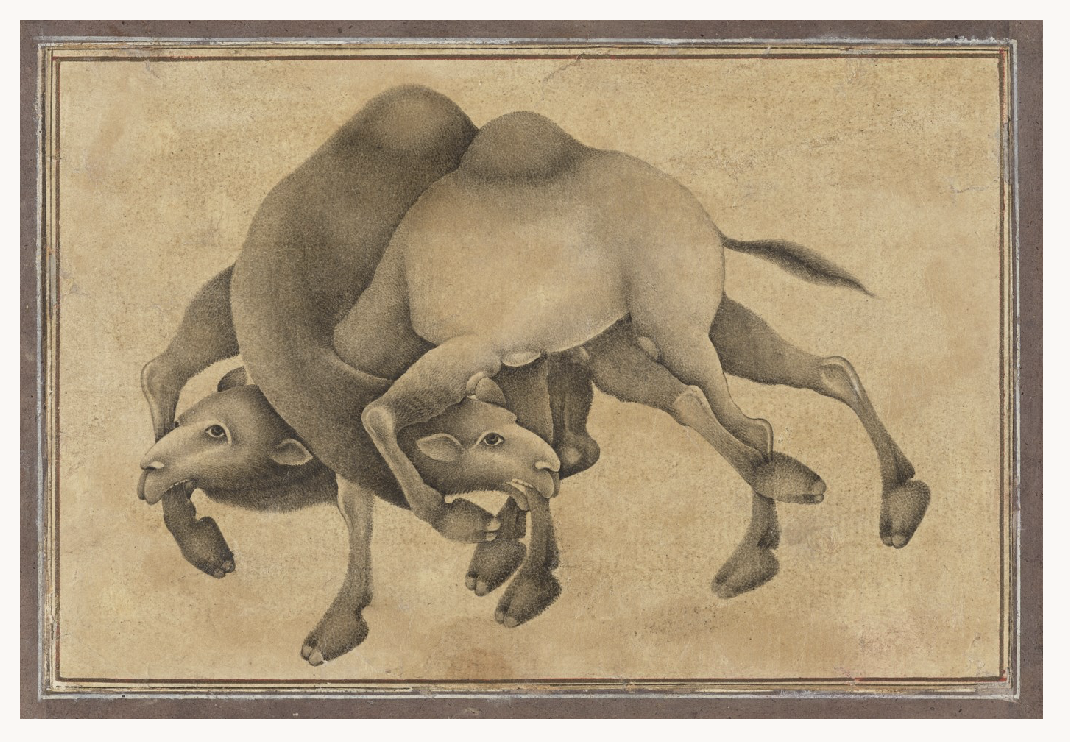
Lot: 34
A Camel Fight
Iran, second half of the 17th or 18th century
Ink on paper, within a single red rule, laid down onto purple, green and red borders, gold and polychrome rules, the verso plain, mounted, framed and glazed
Estimate: £20,000–£30,000

Lot: 169
A Caucasian 'dragon' carpet
Karabagh region, Azerbaijan, late 17th/ early 18th century
14ft.9in. x 7ft.1in. (455cm. x 215cm.)
Estimate: £100,000–£150,000
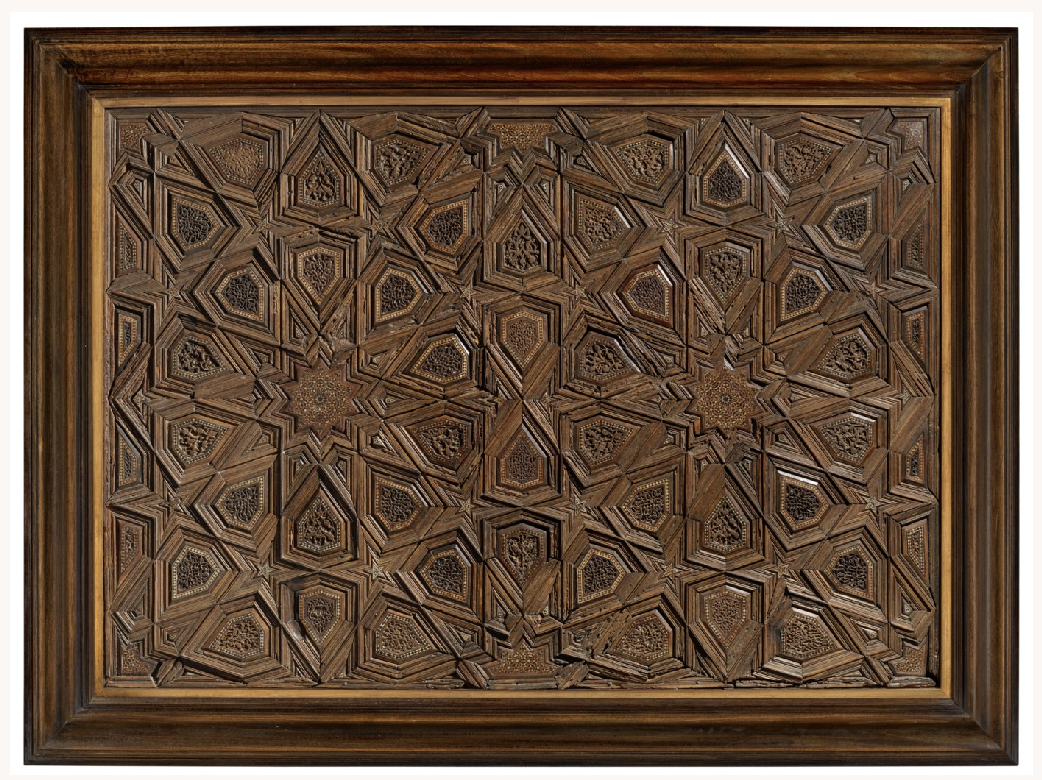
Lot number: 16
An Ayyubid or Mamluk bone-inlaid wooden panel
Syria or Egypt, second or third quarter 13th century
Of rectangular form, the panel arranged in a large geometric composition centred on two ten-pointed stars, the stars radiating towards ten polygonal arrowhead shaped panels, surrounded by similar groups with five-pointed stars and panels above and below, pointing towards half and quarter ten-pointed stars in the corners and top and bottom centres, stars and panels partially inlaid with wood and bone, framed
Panel 57¼ x 39¾in. (145.5 x 101cm.); frame 68¾ x 51in. (174.5 x 129.5cm.)
Estimate: £300,000–£400,000
An Iznik 'Damascus-style' pottery dish, Ottoman Turkey, c.1545–55, Lot 49 (est. £80,000-£120,000)
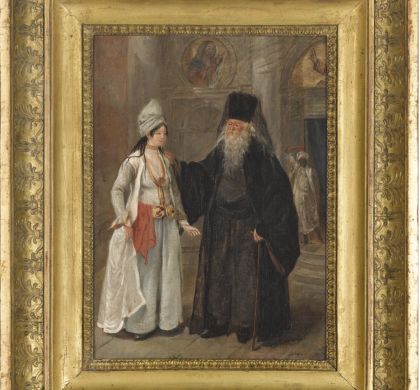 Sotheby’s Arts of the Islamic World & India November 2026