Buy or gift a digital subscription and get access to the complete digital archive of every issue for just £18.99 / $23.99 / €21.99 a year.
Buy/gift a digital subscription Login to the Digital EditionJohn Shakespeare Dyson applauds Mehmet Mestçi, whose Opus Amadeus festivals have enlivened Istanbul’s music scene
When I came to interview Mehmet Mestçi in a café near the Atatürk Cultural Centre’s Theatre Hall, I little knew he had lived in Hungary for eight years, Edinburgh for one and Morocco – where he was a tourist guide – for nine. In Ankara, where he spent his early years, he went to a French-medium school and so was well qualified to shepherd French tourists around Marrakesh and other exotic locations. While there, he also made a film and wrote a book about daily life in Merzouga, a small town in the Sahara Desert. It was only when he grew tired of Morocco that he relocated to Istanbul, where since 2012 he has been putting on musical events – the Istanbul International Opus Amadeus Chamber Music Festival, a similarly named Organ Festival and some mouthwatering piano recitals – under the auspices of Artisan Organizasyon, his production and organisation company.
Many of these events involve Hungarian performers, which is unsurprising as he spent so many years learning the flute at a branch of the Budapest Liszt Academy in Debrecen. He has brought so many Hungarian musicians to Turkey that in 2022 he was awarded the Knight’s Cross of the Order of Merit of the Hungarian Republic. He was also decorated by the Poles for organising four “Chopin Weeks” during 2010, the year Istanbul was European Capital of Culture.
His interest in music began early: his father, who ran an art gallery in Nişantaşı, Istanbul, had a large collection of classical records, and young Mehmet fell in love with Bach’s Brandenburg Concertos. His mother was a fashion designer whose advertisements brightened early issues of Cornucopia. The musical career he had envisioned since his student days at the Ankara State Conservatoire never materialised, however. After those eight years in Debrecen – and the one in Edinburgh, where he wrote a thesis on Peter Maxwell Davies’s bizarre piece Missa super l’homme armé – a Hungarian doctor told him that if he went on
playing the flute, the pressure on his eyes caused by continuous blowing would eventually give rise to retinal detachment.
Thus, some years later, he found himself struggling to survive in Istanbul’s musical milieu as an impresario without any form of sponsorship or state support. Somehow he remains undeterred despite the harsh realities of ever-increasing competition (chamber music concerts are catching on), low ticket sales and the high fees demanded by venues. The concerts Mestçi puts on at one of these venues – the Naval Museum in Beşiktaş – have earned praise in my blogs not just for their high standard of performance (I have heard some superb renditions of Liszt’s piano music there), but also because the performances take place right under the bows of one of the gigantic caiques, decorated with intricate carvings and mother-of-pearl inlays, that were used by the sultans and their womenfolk for picnic expeditions up the Bosphorus or the Golden Horn. Across this cavernous space there is a floor-to-ceiling window through which the twinkling lights of Üsküdar and the silhouettes of steamers coming in to dock are visible, making this easily the most visually arresting concert venue in the whole of Istanbul.
Opus Amadeus’s choice of programmes is sometimes courageous (meaning, in real terms, one of high financial risk): it has brought us music from medieval Holland and 20th-century pieces by Ligeti; last year there was a series of concerts consisting entirely of piano variations. At this autumn’s Organ Festival, there were works by little-known Spanish, French and German composers – as well as
by Bach, Haydn and Purcell. I attended a recital given by the Spanish organist Loreto Aramendi in the crypt of St Antoine in Galatasaray and was carried away both by the alternately soothing and soaring sounds and by the medieval feel of the venue. Tranquil Baroque tinklings gave way to tuneful pieces by Gabriel Fauré and a German composer I’d never heard of, but was impressed by. I was pleased to see very few empty seats under the arches of this semi-subterranean sanctuary.
Mestçi’s Chamber Music Festival, meanwhile, is an occasion that enlivens Istanbul’s spring months. Concerts have been organised at venues in Beyoğlu, Beşiktaş and Fulya, as well as in churches in Moda and Sarıyer. If, at one of these events, you see a figure wearing thick glasses and a long scarf hovering in the background, make sure to congratulate Mr Mestçi on his sterling efforts to bring us honeyed harmony and crafty counterpoint.
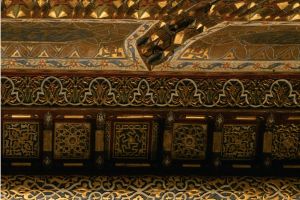
Philip Mansel explores Manial Palace’s magnificent pavilions and the life of their creator, one of the most enlightened kings that Egypt never had.
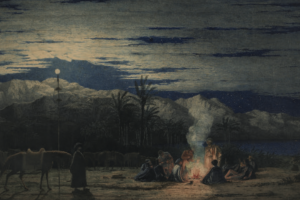
Richard Dadd was a rising Royal Academy star, but his work all but disappeared after a trip to the East triggered his decline into psychosis in 1843. Confined to Bedlam after killing his father, he was urged to go on painting by enlightened doctors who became his most important patrons. Simon Toll is fascinated by the artist’s internal dreamscape
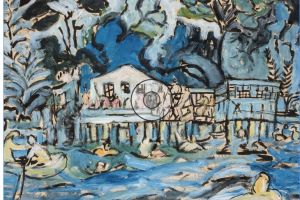
The Turkish modernist painter Fahrelnissa Zeid’s style was constantly evolving, but through it all ran the sadness of a turbulent life
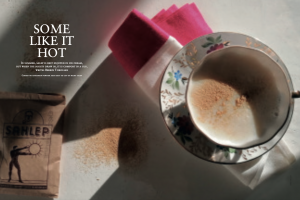
In summer, salep is best enjoyed in ice cream, but when the nights draw in, it is comfort in a cup, writes Berrin Torolsan
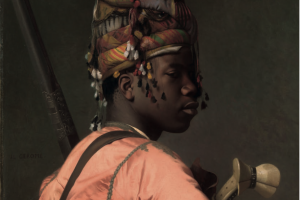
Lucien de Guise admires the Met’s calm reclaiming of the term ‘Orientalist’ for its new show exploring European and Ottoman views of Islamic art
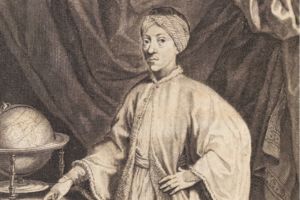
Thomas Roueché loses himself in cabinets of delight at Istanbul’s Meşher
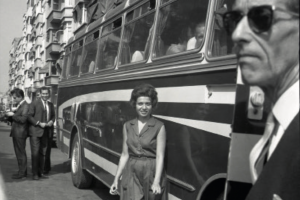
How easy is it to travel between London and Istanbul without flying? Caroline Finkel recently started taking the bus instead, and has faced a succession of challenges. But the experience has also brought its rewards
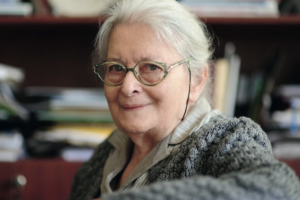
Clara Robins pays tribute to İonna Kuçuradi, the pioneering Turkish teacher and writer who urged human beings to think for themselves
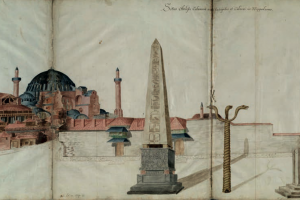
Tim Stanley, curator of ‘Constantinople to Istanbul: One City, Two Empires’ at the V&A, ponders elusive links between the two imperial capitals and relishes the chance to exhibit surprising treasures that show the role this great city has played in fashioning our idea of how to live
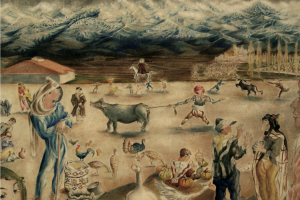
Andrew Finkel recalls the life of a German scholar and artist fleeing Nazi persecution, who settled in Istanbul in the 1930s but saw exile as an opportunity for renewal rather than despair
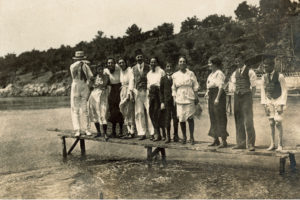
Alexander Dawe is bewitched by images of Büyükada from the Moris Danon Collection
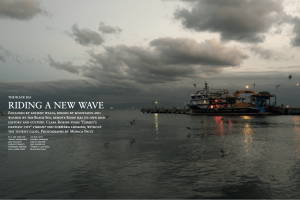
Enclosed by ancient walls, ringed by mountains and washed by the Black Sea, remote Sinop has its own rich history and culture. Clara Robins finds ‘Turkey’s happiest city’ vibrant and forward looking, without the tourist gloss
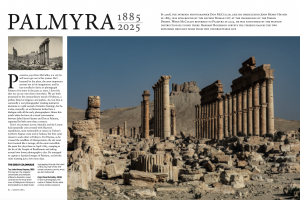
In 2008, the intrepid photographer Don McCullin, like his predecessor John Henry Haynes in 1885, was spellbound by the ancient Roman city at the crossroads of the Syrian Desert

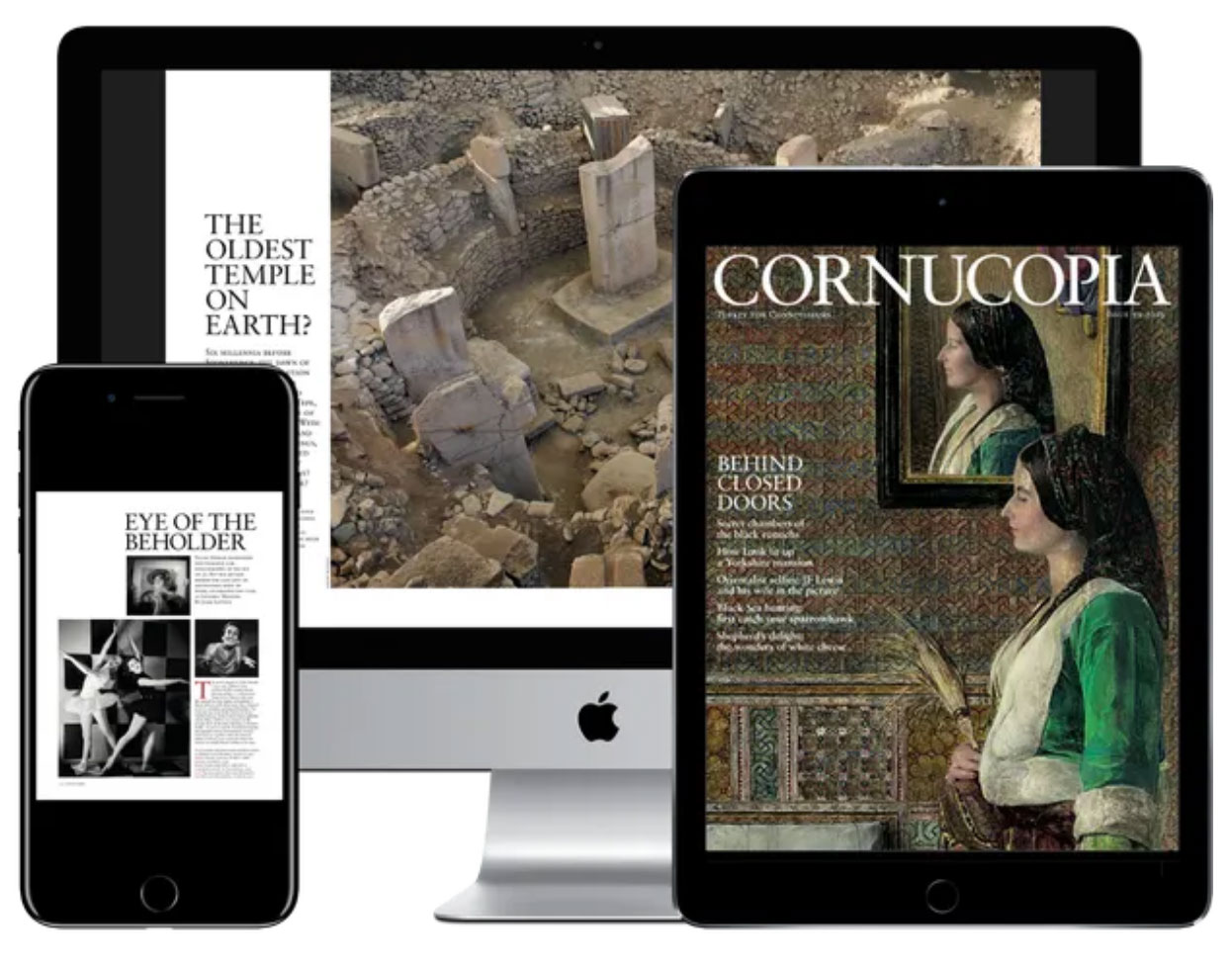
Cornucopia works in partnership with the digital publishing platform Exact Editions to offer individual and institutional subscribers unlimited access to a searchable archive of fascinating back issues and every newly published issue. The digital edition of Cornucopia is available cross-platform on web, iOS and Android and offers a comprehensive search function, allowing the title’s cultural content to be delved into at the touch of a button.
Digital Subscription: £18.99 / $23.99 (1 year)
Subscribe now