
Buy or gift a digital subscription and get access to the complete digital archive of every issue for just £18.99 / $23.99 / €21.99 a year.
Buy/gift a digital subscription Login to the Digital EditionWith Donkeys Across Anatolia: The Diary of an Extraordinary Journey Christopher Trillo Cornucopia Books £25
The most famous donkey in Turkish life must surely be the nameless ass belonging to the medieval figure Nasrettin Hoca, which features often in the stories that embody his wit and wisdom. Equally central to his master’s comedic identity was Dapple, the donkey of Sancho Panza, who was also probably nameless, and known instead by the colour of his coat –perhaps, as we have often found in Turkey, rural folk do not name their animals. Among other travelling donkeys, centuries later, there was Modestine, who accompanied Robert Louis Stevenson in the Cévennes.
In August 1981, four donkeys were conscripted in the village of Gümüşpınar, southwest of Bursa, and given the names Castor and Pollux, Henry and Dobbin. All but one undertook an expedition that ended 62 days and
350 miles later in the village of Değirmenözü, halfway between Beyşehir Lake and the Mediterranean coast.
These donkeys, who were renamed along the way –respectively Trevor, Professor Plodder, Dylan, and Doctor Dobbs – are described in Christopher Trillo’s diary of the expedition as “by turns sulky, affectionate, exuberant, aggressive, lazy, hungry, lustful, wilful and patient... cheap, sturdy, low maintenance, resilient, hardy, strong and agile, stoical...”. Donkey-management is tricky, and this gang took their time, generally adopting “a reluctant plod”. Modestine was similarly unbiddable, although Stevenson remarked that he felt bereaved when he sold her, reflecting that, “Up to that moment I thought I hated her.” Sancho Panza said of Dapple, “I am not going to leave him behind though they took me away to be Grand Turk”, while although Nasrettin Hoca expressed little affection for his donkey, or donkeys, he said of one, in the service of a story, that it was so clever that he could teach it to read.
Travelling with equines is an experience like no other. Expeditions with horses are many and well recorded – see the Longriders Guild website – but donkey trips are unusual, and it is odd to think how rare it is to see a donkey in Turkey these days. Gone are the times when horses and donkeys were an integral and essential part of the rural economy, but 45 years have passed since Trillo and co crossed western Anatolia, and that is an eternity.
Over the years we lived in Istanbul we heard mutterings about an Anatolian donkey ride, unsurprisingly, because a couple of friends had participated in it, but details were elusive, and we wanted more. With the publication of Trillo’s diary, the highs and lows of donkey-travelling are exposed. One point of interest is how different in their moods and behaviours horses are from donkeys when in long-distance mode. In 2009,
I and fellow riders rode along another axis of western Anatolia: the attributes Trillo and his friends applied to their donkeys were alien to our horses, who were neither cheap nor low maintenance, nor aggressive, nor lazy. Least surprising, perhaps, is the reminder that the conditions of travel on equine expeditions are stressful.
The Turkey described in these pages is one that old-timers remember well from their early travels. Roads were bad, villages were isolated, and lives lived in the countryside were hard. Trillo gives a palpable sense of this past, his narrative sparking emotions of recall from our own wanderings. He describes the genuine hospitality and generosity of the villagers into whose spaces the donkey expedition wandered, the varied and often hazardous landscapes crossed, the unseasonable weather, and how he and his companions of four feet and two coped with each circumstance they encountered. And more: the heat of late summer, industrial quantities of tea that could not be refused, the difficulty of finding a spot to camp, the fleas and bedbugs that lay in wait when sleeping indoors, and by day the horseflies, and the pervasive pall of exhaustion.
We rode our horses, but the humans on this expedition walked: the donkeys were there to bear inanimate burdens. They were much loved and well looked after: without them there could be no progress. When not plodding along, negotiating the many obstacles in their way, their behaviour could be disconcerting, as when Trevor “storms off faster than we have ever seen him, faster than we believed possible. Fifty kilos of luggage wobbling on his back, ears erect, nostrils distended, mouth foaming, he charges through the village...”. Girths often loosened, and luggage ended up around the donkey’s belly or spread upon the ground, or, as befell Trevor on one occasion, the lure of a female donkey might prove too much to resist. Both circumstances are occupational hazards of equine travel.
With Donkeys Across Anatolia is written with an intensity and level of detail that eludes many a travel writer. We feel ourselves to be there, on the journey, as the travellers meet the many people who lived and worked along their way – not just in the villages, but also the shepherds, foresters and hermits in the sparsely populated areas between.
The rhythms of rural life in this distant era run through the book. Change was slow, and this past was regretted more by travellers for the varied experiences it offered us than it was by those
living without the many comforts enjoyed by the country dwellers’ urban peers.
No expedition is complete without an artist, and Simon Nicholas’s charcoal sketches, and the paintings that resulted, vividly capture sights seen along the way. The many photos of the expedition, of which some are in the book, are a historical treasure trove.
Trillo avoids exoticising the past; indeed, the people he and his fellow travellers meet are encountered as individuals on an equal footing in their interactions with these creatures from another world. He observes of the chasm between the lives of hosts and visitors the former’s “often-repeated faith that ‘if we came to your village, we would receive the same welcome’, and I would visualise with secret shame the reception that I imagine would be given to a dishevelled band of Turkish travellers entering [a British village] at twilight in search of hospitality”. This is a thought that often came to the minds of travellers in Turkey.
The Turkish modernist painter Fahrelnissa Zeid’s style was constantly evolving, but through it all ran the sadness of a turbulent life
Lucien de Guise admires the Met’s calm reclaiming of the term ‘Orientalist’ for its new show exploring European and Ottoman views of Islamic art
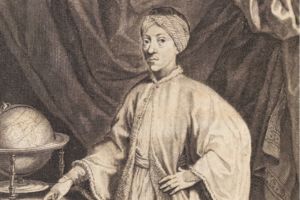
Thomas Roueché loses himself in cabinets of delight at Istanbul’s Meşher
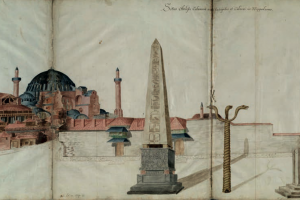
Tim Stanley, curator of ‘Constantinople to Istanbul: One City, Two Empires’ at the V&A, ponders elusive links between the two imperial capitals and relishes the chance to exhibit surprising treasures that show the role this great city has played in fashioning our idea of how to live



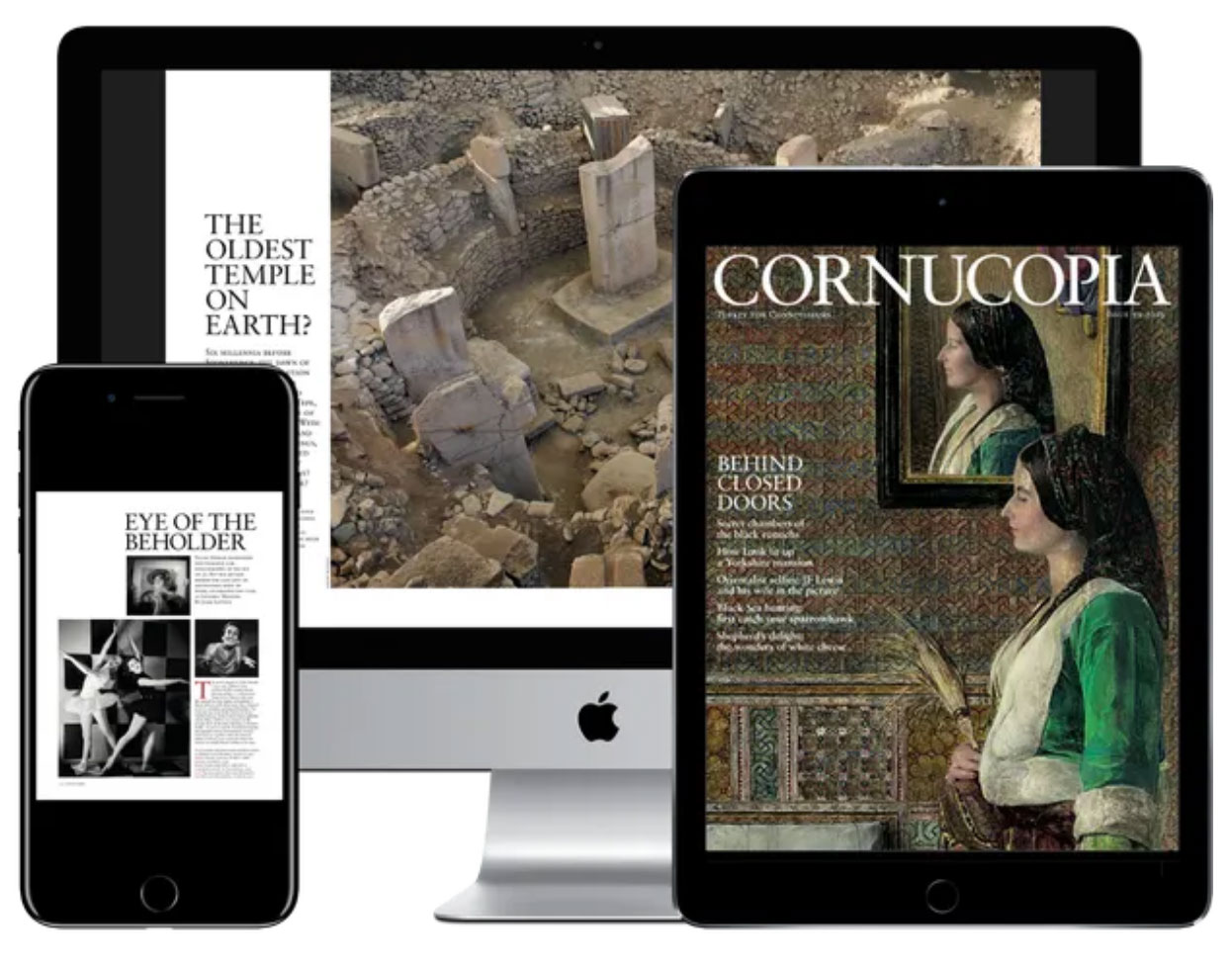
Cornucopia works in partnership with the digital publishing platform Exact Editions to offer individual and institutional subscribers unlimited access to a searchable archive of fascinating back issues and every newly published issue. The digital edition of Cornucopia is available cross-platform on web, iOS and Android and offers a comprehensive search function, allowing the title’s cultural content to be delved into at the touch of a button.
Digital Subscription: £18.99 / $23.99 (1 year)
Subscribe now