
Buy or gift a digital subscription and get access to the complete digital archive of every issue for just £18.99 / $23.99 / €21.99 a year.
Buy/gift a digital subscription Login to the Digital Edition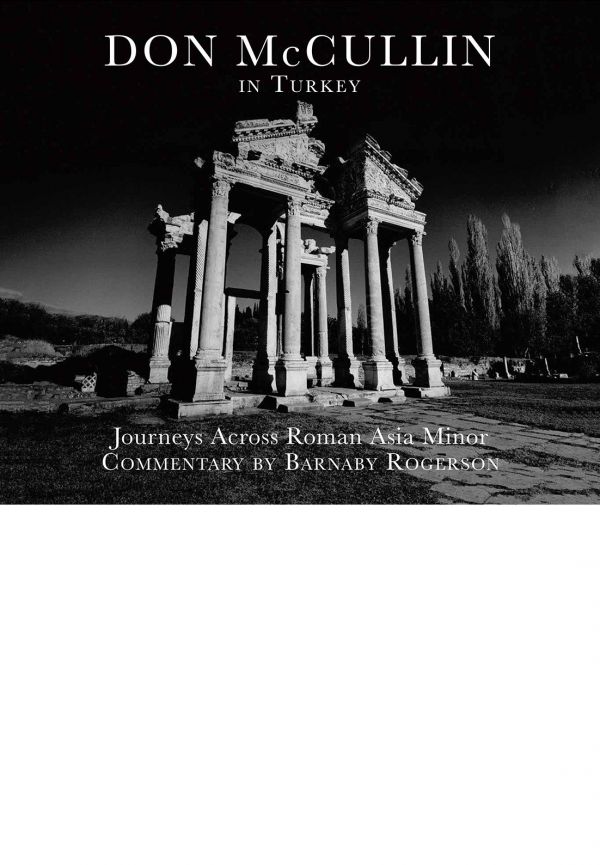
Don McCullin and Barnaby Rogerson are back on the road in the latest issue of Cornucopia. No 70. SEE A JOURNEY TO ROUGH CILICIA
The first four journeys resulted in this spectacular book:
Don McCullin spoke about the book at The Oldie Literary Lunch, held on 17th October 2023 – listen to the podcast here…
‘Photography for me is not looking, it’s feeling. If you can’t feel what you’re looking at, then you’re never going to get others to feel anything when they look at your pictures’ – Don McCullin
Journeys Across Roman Asia Minor is driven by an eye for beauty and an ear for history. It is an album of the most recent photographs taken by Don McCullin, informed by a life full of hard-won experience. Working the ineffable magic of a master-craftsman, he frames an ancient sanctuary known to Homer, then focuses on the broken face of an exhausted emperor, before turning his eye on the sensuous torso of a goddess.
While most of us were sheltering from Covid, Don explored the mountains, valleys and coast of western Turkey, hunting out the most poignant and powerful ruins of the Roman Empire. He has created a meditation on landscape, the effects of light on ancient stone, the way clouds animate the past, but it is also inescapably about past conflict. About conquest, about imperium, about power.
Journeys across Roman Asia Minor shows us a world still packed full of enchantment and wonder. He shows us pavements once trodden by Aristotle and Alexander the Great, Caesar and Sulla, St Paul and Hadrian. Through his lens we view ancient theatres cascading down the slopes of mountains, two-thousand-year-old bridges still used by hill farmers, and find spring water flowing into fountains still dominated by statues of the gods.
This book is the result of three journeys undertaken by Sir Donald McCullin and Barnaby Rogerson in 2019, 2021 and 2022. Each journey was recorded in in the pages of Cornucopia: The Road to Pergamon (No 61), Roman Roads (No 64) and Rome’s Eternal Legacy (No 65).
Don McCullin and Barnaby Rogerson are available for interview
For interview requests, publicity images, access to a digital copy of the book and any further information, please contact Steph Allen on +44 (0)2392 631071 or at press@travelbooks.co.uk
HOW TO ORDER
The easiest way to order around the world is online from Cornucopia. Tracked shipping is required for this title outside the UK and Turkey.
UK stockists include John Sandoe’s; Setanta Books and [Daunt Books](https://dauntbooks.co.uk.
Istanbul stockists include the Arter Bookshop, Envai (Bebek), Homer (Galatasaray), Patika (Nişantaşı), Pera Museum (Tepebaşı), Türk-Alman Kitabevi (Tünel) and the Sakıp Sabancı Museum.
In Turkey, you can also order from CORNUCOPIA. Email abone@cornucopia.net or call Seval Alpaslan on 0532 385 1522. The price TL5500, post-free in Turkey (or at the special discounted price of TL4500 if you are a subscriber). Please transfer the amount to either of the accounts below and email the receipt to: Kayık Yayıncılık ve Turizm Tic Ltd, Yapı Kredi Bankası, Valikonağı Şb., Istanbul. IBAN: TR78 0006 7010 0000 0069 3839 58
ON THE TRAIL OF ROMAN TURKEY WITH DON MCCULLIN
The great war photographer has now brought to life some of the finest ruins of the ancient world.
...Despite being one of the world’s most well-travelled men, Don had never explored Turkey, though he had chronicled many wars fought near its frontiers. I was able to reassure him that the country would equal what he had seen of Roman North Africa. I was also able to tell him that, despite exploring the ruins of Turkey for the past 30 years with what my family considers to be excessive zeal, there were a large number of ruins I was still keen to track down…
...The ‘Asia Minor’ in the title of our book is an important marker. The Roman province of Asia was only one of the seven Roman provinces within the modern frontiers of Turkey. But it is an elusive name. To us it meant the western province of Roman Turkey, but we later found out that it came into common use only through early Christian writers tracking the journeys of St Paul, and was never an official term during the classical age of the Empire. But we were reassured when a scholar informed us that the word Asia has always meant different things at different times: starting off as the Hittite homeland (Aswiya) in Anatolia before it grew and embraced all of their Bronze Age empire, which stretched across Turkey. Now it embraces a vast continent. So we have stuck to that romantic resonance of Roman Asia Minor, a literary province of the mind.
Read the Full Review…
– Barnaby Rogerson, The Spectator, August 2023MY TURKISH ODYSSEY
Don McCullin, 87, Britain’s greatest war photographer, turns his lens to the heavenly ruins of Asia Minor
I have been travelling the world for the past 65 years – so I can’t explain how Turkey evaded me until recently. A couple of years ago, I had the great pleasure of meeting the charming Turkish Ambassador to London at the time, Ümit Yalçın, and it was with his blessing, and alongside my dear friend, the author Barnaby Rogerson, that we embarked on a series of journeys to discover the remains of Roman Turkey.
These, I thought, have been somewhat overlooked in a country so full of other historical treasures. The Ambassador opened all the most important museum doors for us, which was marvellous, and I was lucky that Barnaby was a fount of knowledge on the history of these sites. I remember how I couldn’t get over the beauty of the exhibits at the Istanbul archaeological museums and didn’t know where to start. The museum in Antalya was equally eye-opening, with the most impressive display of huge Roman figures and some of the best and most creative lighting I have seen in any museum, thanks to the director, Dr Candemir Zoroğlu, who studied for two years at the British Museum.
I realised I would need a whole lifetime to document Roman Turkey, as there are simply hundreds of sites waiting to be discovered. Sadly, I am past the age where this is possible, without the strength to clamber over beautiful temples and amphitheatres. A misplaced foot, as I have found to my cost in the past, can be dangerous. I felt so rewarded by the warmth and welcome of the people.
Don McCullin’s journey into classical Turkey is a visual treasure by one of the greatest photographers of the age. Accompanied by Barnaby Roger- son, the writer on North Africa and Islam, the 87-year-old McCullin toured the Roman ruins of southern Turkey to produce this colossal book of dazzling, pinpoint-sharp black-and-white photographs. “I have been tra- velling the world for the last sixty-five years”, he wrote on a fishing trip off the coast of Guinea this year, “but I can’t explain how Turkey evaded me until recently.”
It reflects his transition from an earlier life of heroic but intensely decent war photography into a seniority focused on peaceful spirituality… One of the photographs, for example shows the 2nd century CE Dionysus Sarcophagus at Perge. Two rather bored men lounge above a bacchanalian orgy of bodies, satyrs and comical faces. The scene is astonishingly alive, modern and beautiful, bursting out of the crystal-clear marble.
The genesis of this extraordinary book, in which every image drags you in, came in 1973 when McCullin was commissioned with Bruce Chatwin to cover a story that took them from a murder in Marseille to the Aures highlands of Algeria. It was a last-minute visit to a Roman ruin that lay embedded in McCullin’s imagination and three decades later the writer Brigid Keenan recruited Rogerson to accompany McCullin on two trips into Western Libya and southern Algeria. The result is this hauntingly beautiful book. The photographs, all developed by McCullin himself, cover wonderful sites from Istanbul and Troy to Pergamon, Aphrodisias, Ephesus and Antalya…
Then and now, McCullin’s work is professional, compassionate and honest. This book is a triumph.
– Trevor Mostyn, Islamic Studies, University of Oxford, Asian Affairs, Volume 54, Issue 4, 2023Fresh from a successful fall exhibition at the Palazzo delle Esposizioni in Rome, Don McCullin is the subject of a major book project centered on his travels in Asia. While most of us were sheltering from Covid, Don explored the mountains, valleys, and coast of western Turkey, seeking out the most poignant and powerful ruins of the Roman Empire. He has created a meditation on the landscape, on the effects of light on ancient stone, on the way clouds animate the past, but it also inevitably speaks of past conflicts. On conquest, on imperium, on power.
Journeys through Roman Asia Minor reveal a world still full of enchantment and wonder. He shows us the sidewalks once trod by Aristotle and Alexander the Great, Caesar and Sulla, St. Paul and Hadrian. Through his lens, we see ancient theaters cascading down mountainsides, two-thousand-year-old bridges still in use by hill farmers, and spring water flowing in fountains still dominated by statues of the gods…
This stunning photographic volume highlights the artistic “continuum” in McCullin’s work.
It is a hymn to the aesthetics of photography in every sense.
Readers who expected this book to be an expanded version of the series of journeys which Barnaby Rogerson chronicled in Cornucopia are in for a pleasant surprise. With sheaves of new photographs by Sir Don McCullin, beautifully reproduced, it also benefits from Barnaby’s fascinatingly detailed and amusing captions and, perhaps even more valuably, his excellent bird’s-eye view of Asia Minor in classical history.
This supplies a real want, one which I suspect is faced by almost every traveller in modern Turkey who tries to make sense of the region’s classical past. We may have a nodding acquaintance with the names Ionia or Cilicia, but of their contribution to history – let alone art – we are often ignorant, and the veil descends yet further when we stumble into Mysia and Bithynia and Pontus, and worry about the Battle of Actium and whether the Romans picked up where the Greeks left off. Most efforts to explain the shifting kaleidoscope of satrap, principality, kingdom and empire in the region now covered by modern Turkey, over the course of a thousand years, are too general and vague, until it all comes to feel like the usual jumble of obscure items of harness and brown pots that greets a visitor in Room I of an archaeological museum.
‘The Story of Asia Minor’, the essay that accompanies the 146 photographs, is subtitled ‘Achilles to Augustus’. Rogerson explains how the two travellers, sponsored by Cornucopia, sought out “monuments from the high noon of the Roman Empire – the time of the Five Good Emperors, as it known: Nerva, Trajan, Hadrian, Antoninus Pius and Marcus Aurelius”. Dispensing with the more fashionable tropes of modern classical studies, the author points out that this Antonine Age was simply a happy time for humanity at large. To understand how this happened, and how Anatolia bequeathed its share, Rogerson swiftly limns in the background, reaching back to Troy’s Bronze Age antecedents, the Iron Age, the rise of the Lycian League, the arrival of the Persians, and on to the Peloponnesian War and the rise and fall of Alexander.
We learn how power was distributed among the Hellenistic kings, and how Rome used one against the other, and won, even though for all the Romans’ power, “in terms of material, intellectual or spiritual benefits they could offer nothing at all to the people of Asia Minor. The Roman Empire for its first hundred years, was an entirely predatory state.”
Hence, we discover, the near-inevitable explosion of the Mithridatic wars, Rome’s shocked response, and Pompei’s peace, which delivered some autonomy and the creation of the so-called Decapolis of self-governing cities, “home to a complex fusion of cultures which has the added fascination of being the intellectual background to the youth of Christ”.
Plainly Rogerson did not waste his time while Don McCullin waited for the evening light (they were either up very early, or to bed very late); his days seem to have been spent happily plunging into every museum between Istanbul and Antalya, ferreting out the main lines of connection while treasuring those nuggets of information that spearhead the best stories, and give shape to the most cogent explanations. We are privileged, I suspect, to be reading the polished version of what Rogerson would have found himself explaining to his companions over another supper of aubergines and eggs in a small provincial pansiyon; and it is all the better for that.
He has spotted how an Augustan formula – “beheading rulers but giving liberty to individual cities – single-handedly helps explain the golden age of the Roman Empire. It bridges the great dichotomy between the merciless deeds of centuries of aggressive Roman imperialism and what we actually found on the ground: the fountains cascading with fresh spring water brought down from the mountains on a long march of arched aqueducts; the fortress-like cisterns for conserving water over long summers; the storm drains; the splendid kiosks in the centre of market squares, allowing elective magistrates to police fair practice among the traders; the opulent senate, and such vastly ambitious theatres and circus tracks that you realise each city was the festival centre for a much larger rural hinterland.”
A final section of the essay deals with the settled peace of the Augustan Empire and the five adoptive successions that gave us the Good Emperors, whose own successors, Rogerson declares, “had a coherent vision that could have kept this ancient world alive,” as he shudders, “before the Christian mobs start smashing the faces of the old gods in their temples”.
William Dalrymple’s introduction celebrates Don McCullin’s career, and looks to understand the link between his earlier work, photographing the gritty realities of war and flesh and death, to recording the stony relics of a vanished empire. “These images,” he decides, “share his ever-present sense of beauty in wreckage, and that savouring of elegy and loss.” They seem to testify to the value and significance of life, too, lives like ours, celebrated or challenged, in times of hope and of tumult. Aphrodisias crowning Zoilos AD30 is not mocked by a missing arm: time has laid that moment low, and the sculpture itself, it seems, was recovered by archaeologists from where it had been flung into the hastily erected defensive walls of Aphrodisias; but the modest slant of Zoilos’s head and the generosity of the city he embellished remain in Don’s photo as reminders of the perpetual human comedy, of which Zoilos and his sculptor and Don and we are all part.
 Out of Print


1. STANDARD
Standard, untracked shipping is available worldwide. However, for high-value or heavy shipments outside the UK and Turkey, we strongly recommend option 2 or 3.
2. TRACKED SHIPPING
You can choose this option when ordering online.
3. EXPRESS SHIPPING
Contact subscriptions@cornucopia.net for a quote.
You can also order directly through subscriptions@cornucopia.net if you are worried about shipping times. We can issue a secure online invoice payable by debit or credit card for your order.
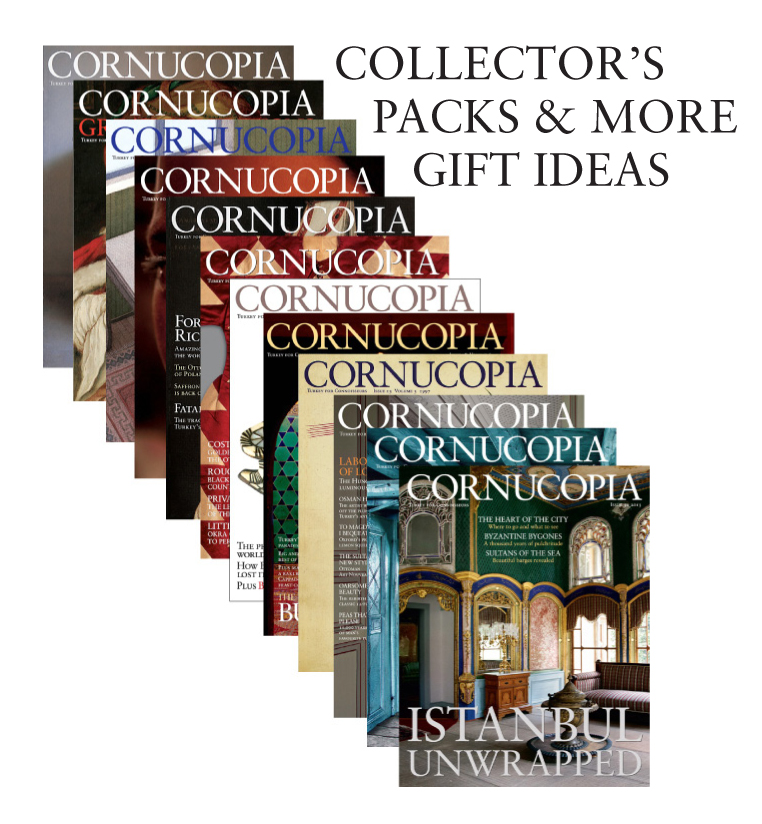
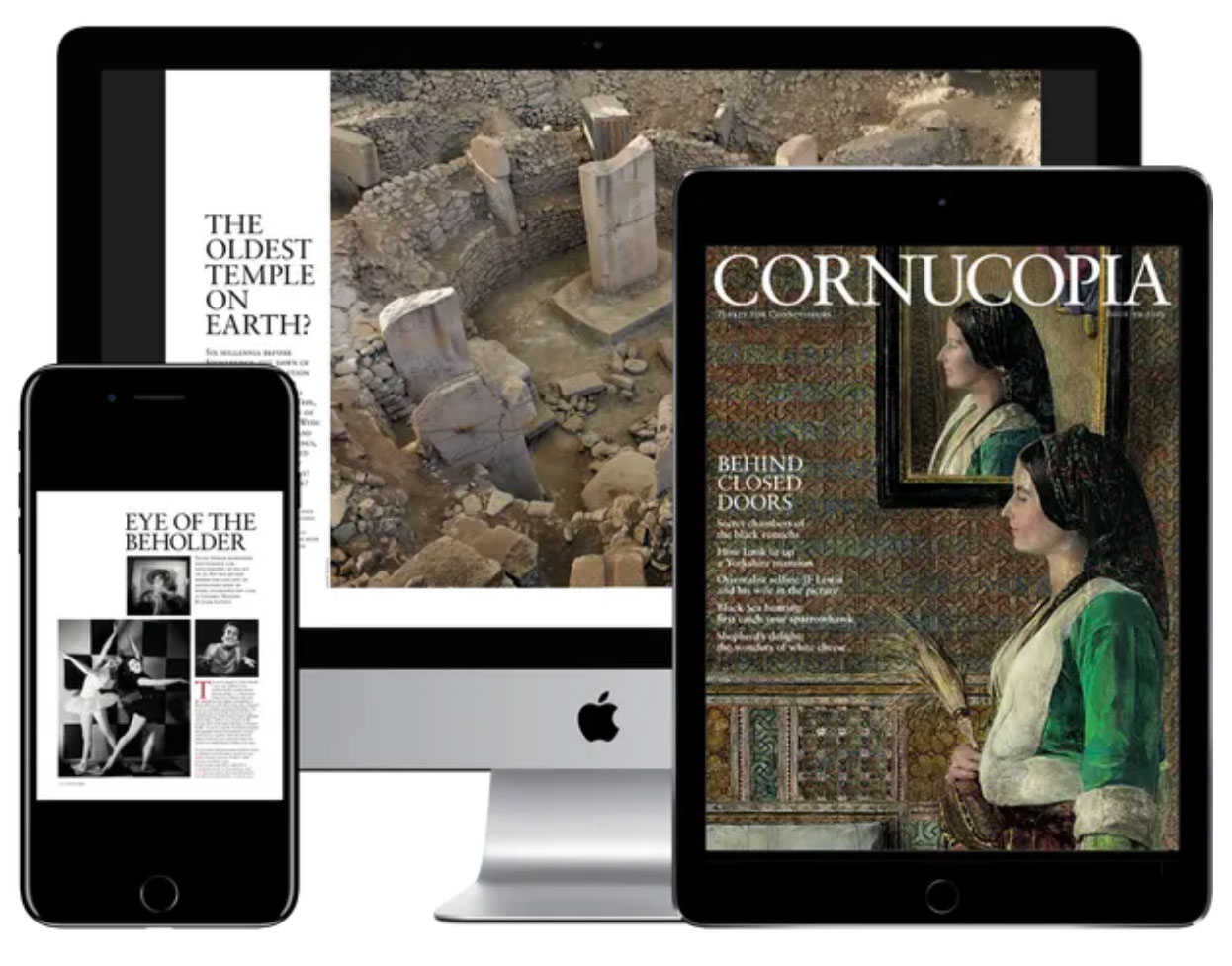
Cornucopia works in partnership with the digital publishing platform Exact Editions to offer individual and institutional subscribers unlimited access to a searchable archive of fascinating back issues and every newly published issue. The digital edition of Cornucopia is available cross-platform on web, iOS and Android and offers a comprehensive search function, allowing the title’s cultural content to be delved into at the touch of a button.
Digital Subscription: £18.99 / $23.99 (1 year)
Subscribe now