Fishermen on Turkey’s Black Sea coast are said to have an expression to describe their reliance on instinct to read the waters. At Sea We Sense, On Land We Reason, the 10th edition of the art biennale Sinopale, borrows the phrase to ask whether different forms of knowledge can help us find our bearings in an uncertain world.
From fishing to food and migration to memory, the exhibition draws on traditions and practices rooted in Sinop, the coastal town that has hosted Sinopale since 2006. A former officers’ club serves as the main venue this year, its peeling plaster walls providing a backdrop to work by 23 artists from a dozen countries who explore what is passed down and adapted.
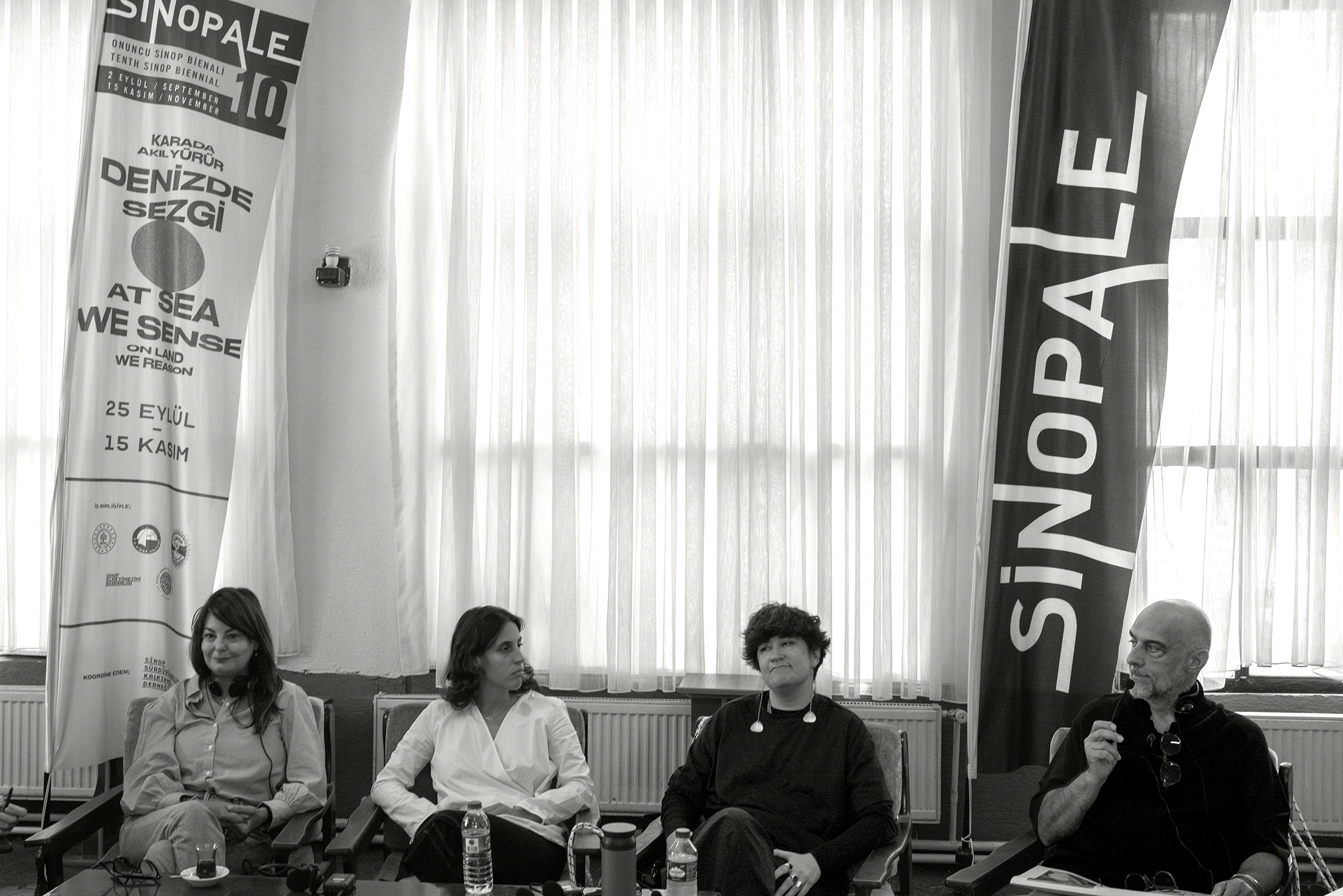
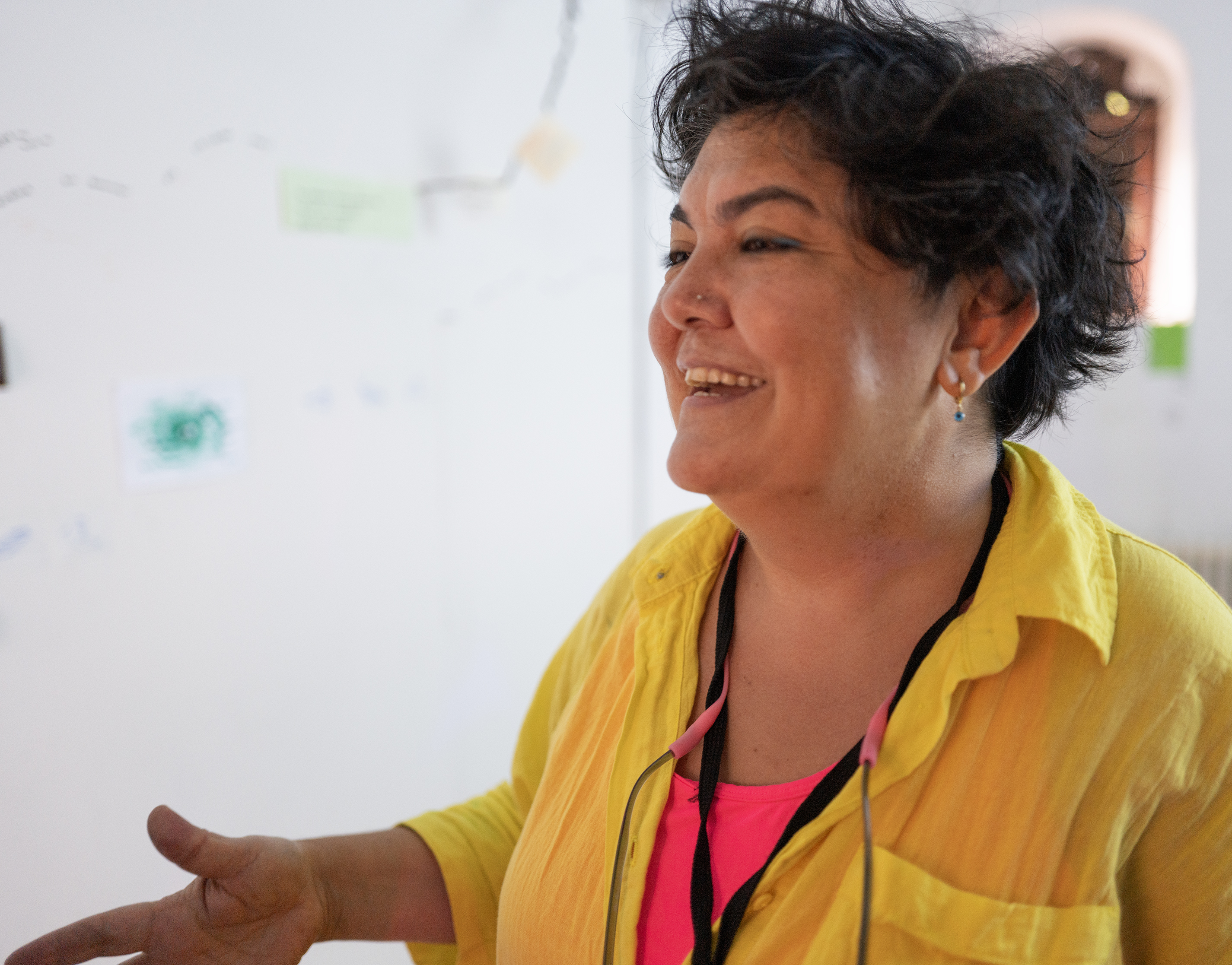
The curator talk, left to right: Marina Fokidis, Deniz Kırkalı, Mariam Natroshvili and Melih Görgün.
Turkey’s second-oldest contemporary art biennale, Sinopale brings artists to Sinop ahead of the exhibition to develop and make much of the work, creating a residency model that sets it apart from Turkey’s growing field of biennales. This year, two Turkish curators, Melih Görgün and Deniz Kırkalı, were joined by Marina Fokidis from Athens and Mariam Natroshvili of Tbilisi.
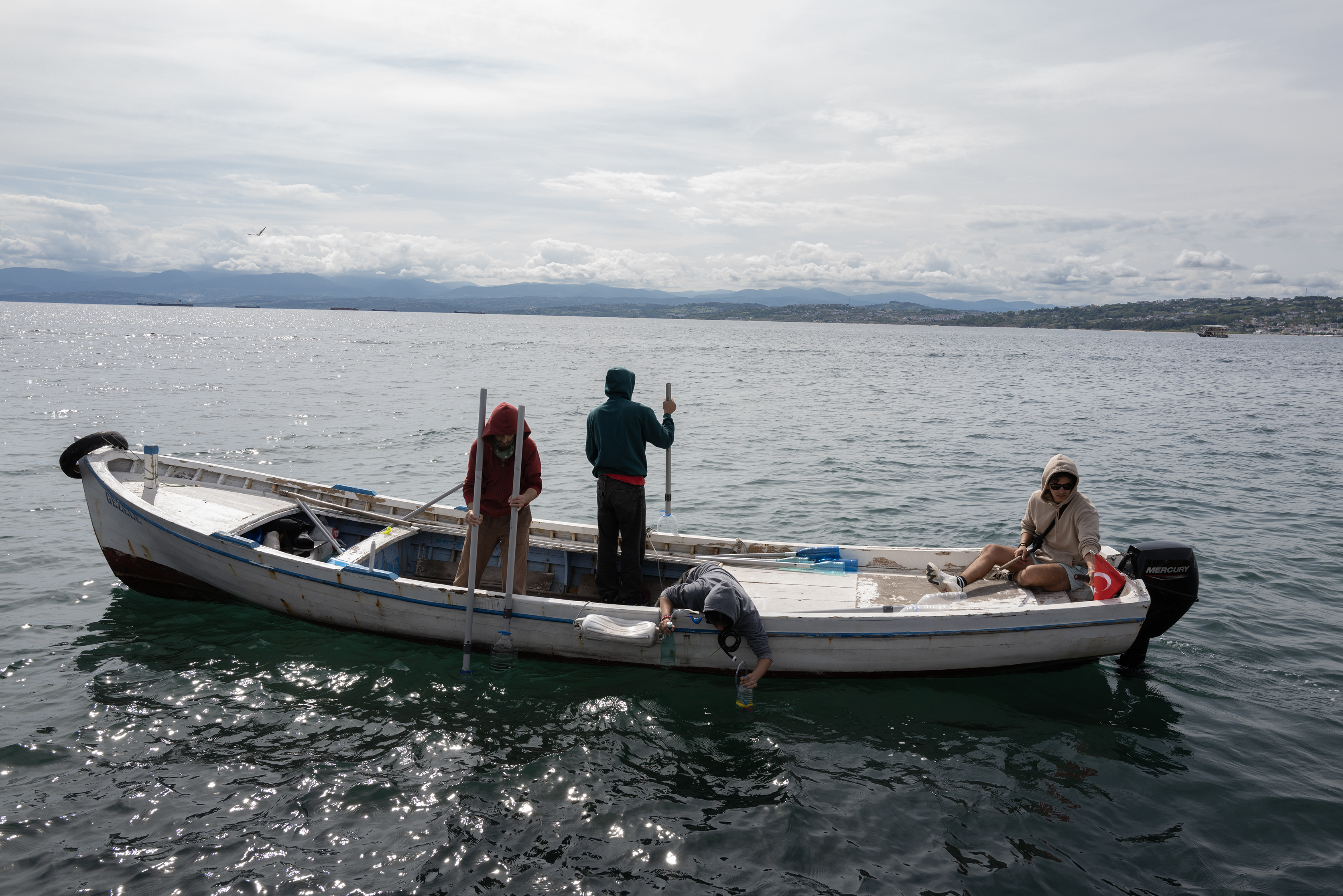
Serkan Aka (in red), Basma Seiba and Selim Cizdan making music with the wind and the waves.
“In a world where we are living through many crises … we can work together and learn from this town, its people, its crafts, its history and the sea,” Kırkalı said at the opening. “The sea teaches us something in a way that another human does not.”
One lesson comes from listening to what the sea is already doing. In Swamp Archive (2023-), sound artist Serkan Aka secured PVC pipes outfitted with whistles in a revetment so that the wind and water play them. Aka first experimented with using waves to produce sound on the Greek island of Lesbos; at Sinop’s harbour, his instruments recall folklore in which “one goes and tells their secrets in a wetland. Reeds then grow there and give voice to those secrets in the wind,” he says.
Evrim Kavcar
Evrim Kavcar
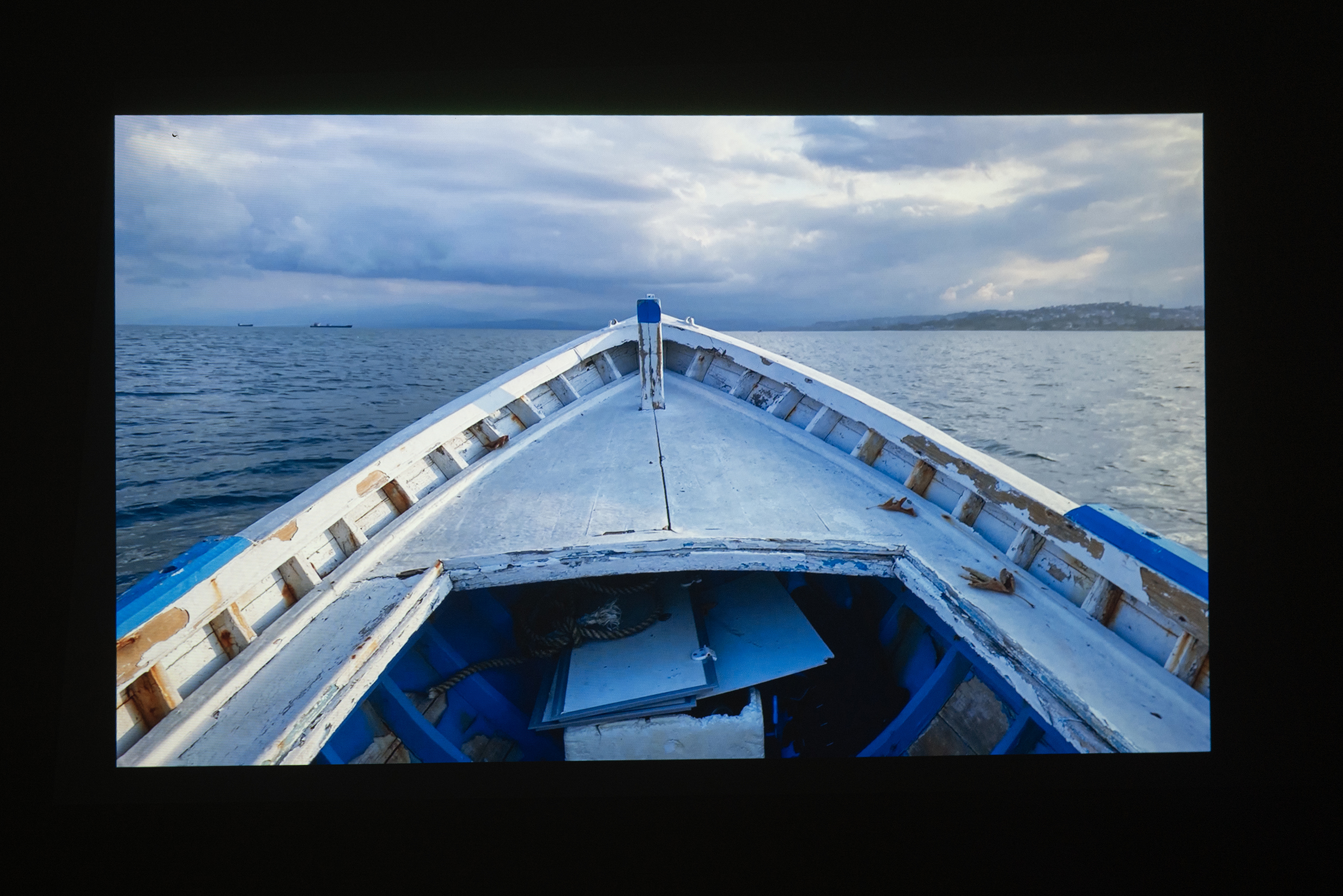
Istanbul-based artist Evrim Kavcar boarded the Gezele, a traditional wooden sandal, or rowboat, to find the sense of balance required by the sea. Her stop-motion video of waves tapping the bow are accompanied by small paintings she attempted while rocking in the boat. “You feel like a nutshell in a huge ocean. You must learn to move with it,” she says. The sandal, once ubiquitous along Turkey’s coastline, has been replaced by motorised, fibreglass vessels, prompting Kavcar to question consumption and loss in Sea Leads (2026), including the disappearance of monk seals from the Black Sea in the 1980s.
Ezgi Tok Knowing From Here, So Far.
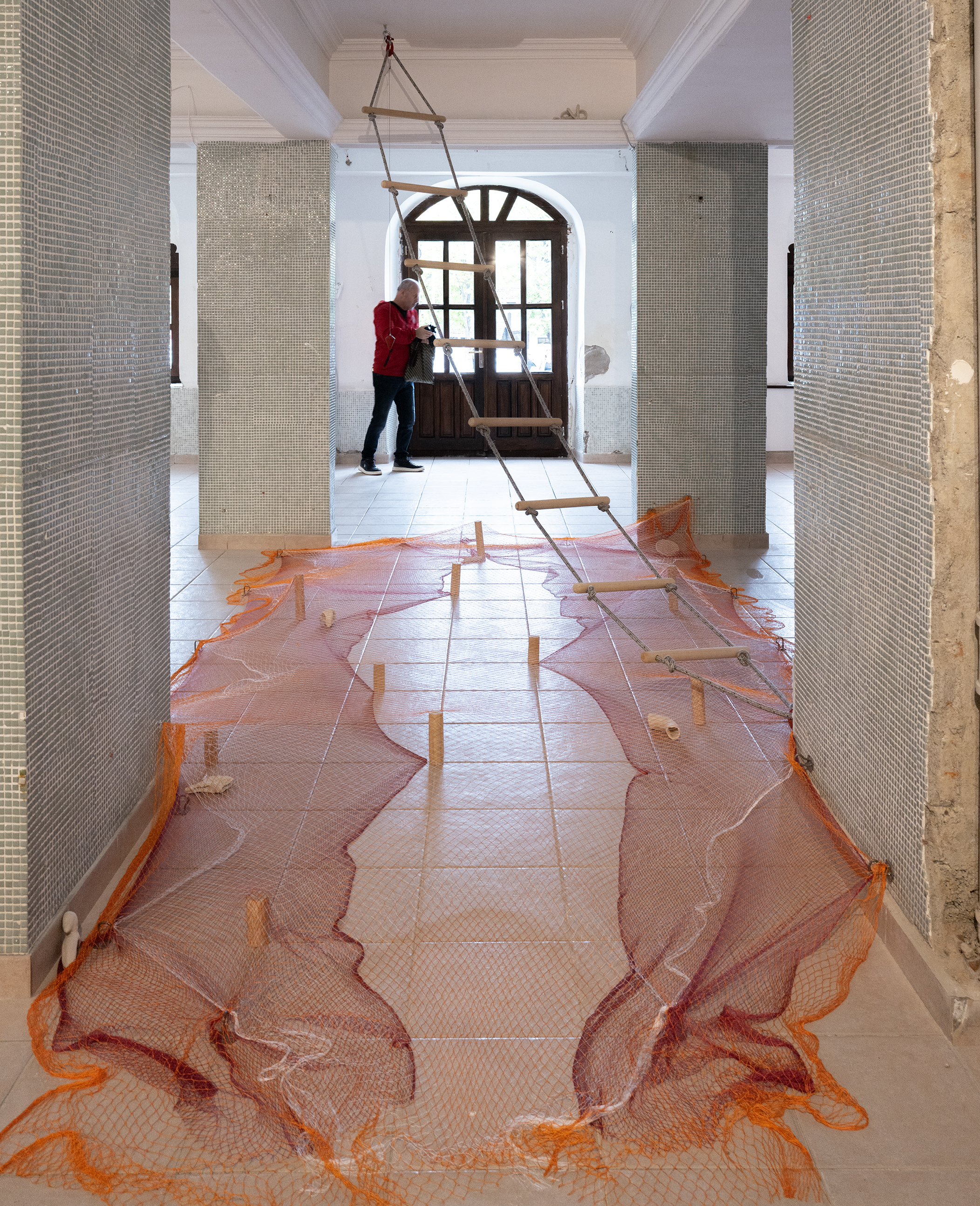
A jungle gym fashioned out of fishing nets, plumb bobs and a rope ladder also throws viewers off-kilter in Knowing From Here, So Far (2026) by Ezgi Tok. Ceramic replicas of the inner ear guide viewers through the installation. “It asks whether we can find a new balance … and bring the intuition of the sea with us onto land,” she says.
The north-easterly poyraz wind that blows down from Russia’s steppes churns debris onto Sinop’s shores, where residents collect driftwood to heat their homes. In After Washed Ashore (2026), Burak Kabadayı stacks the firewood beneath a charcoal wall drawing of a windswept sea, demonstrating how local resourcefulness turns the detritus of a storm into energy.
Tanja Ostojić Menopausal Tea Party
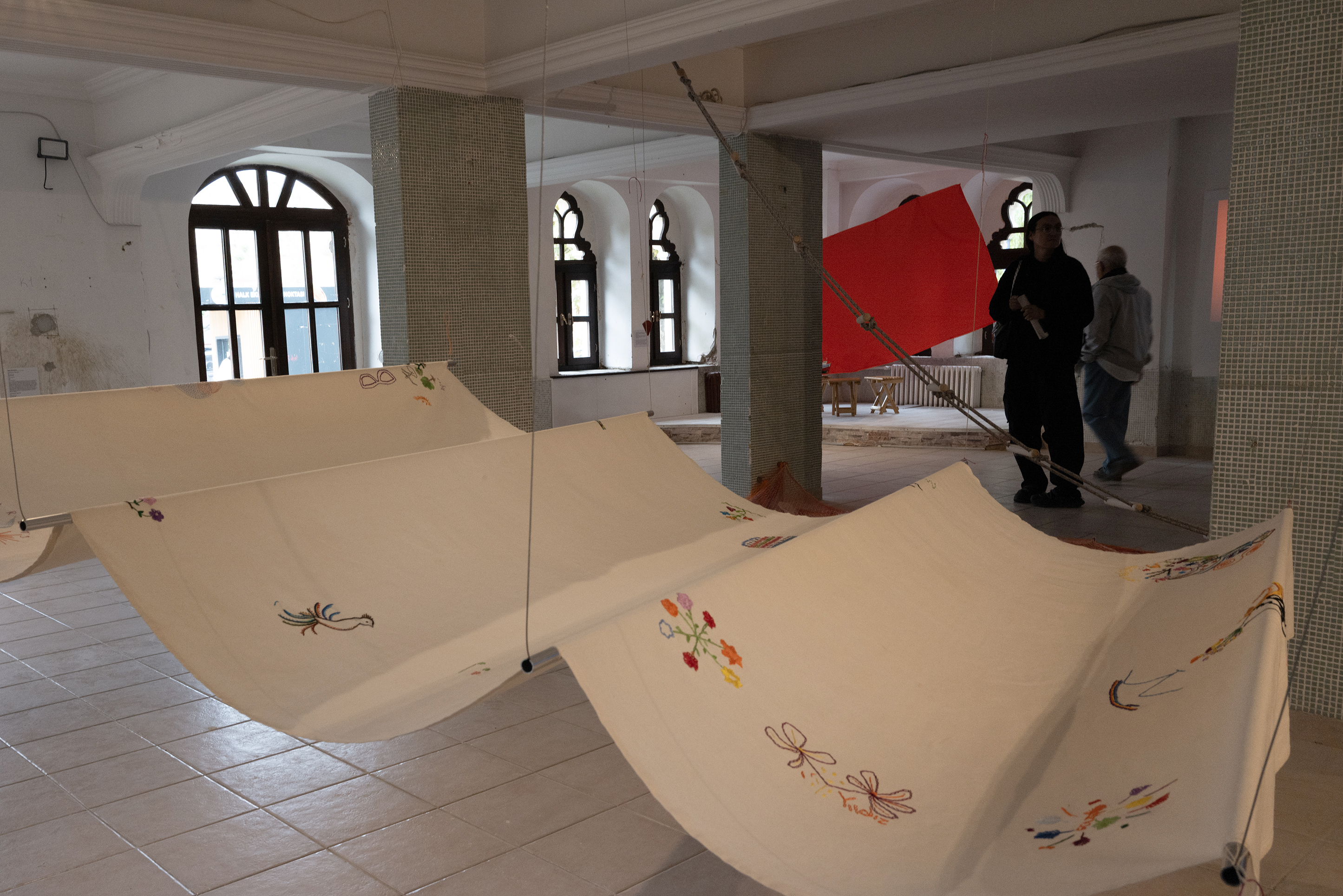
A phoenix, a mountain path and an explosion are among the motifs women in Sinop embroidered onto a tablecloth in Berlin-based Tanja Ostojić’s Menopausal Tea Party (2026). The disparate experiences of menopause – a subject Ostojić found was rarely discussed openly in Sinop – became a form of connection through the textile, draped over metal rods to form gentle folds like waves.Romanian artist Adina Mocanu’s Sténopé / Sinope plays on the resemblance between the French word for a pinhole camera and Sinope, the nymph who gave the city its ancient name. Participants from Sinop built simple cameras from boxes to photograph their windows, allowing light, movement and chance to shape the images.
Artists from the Black Sea region are particularly well-represented in this year’s roster, a focus that emerged organically, says Fokidis. “Through the tensions and being close to one another, these artists understand each other and the conditions,” she says.
In Investigation Into the Sunken Village, Tbilisi-based artist Aleksi Soselia combines photographs of the Sarıkum Lake near Sinop with identikit-style drawings based on locals’ descriptions of the characters in a legend about a village said to have sunk at the site. Reconstructing a folktale as if it were a criminal inquiry blurs the lines between myth, memory and environmental change.
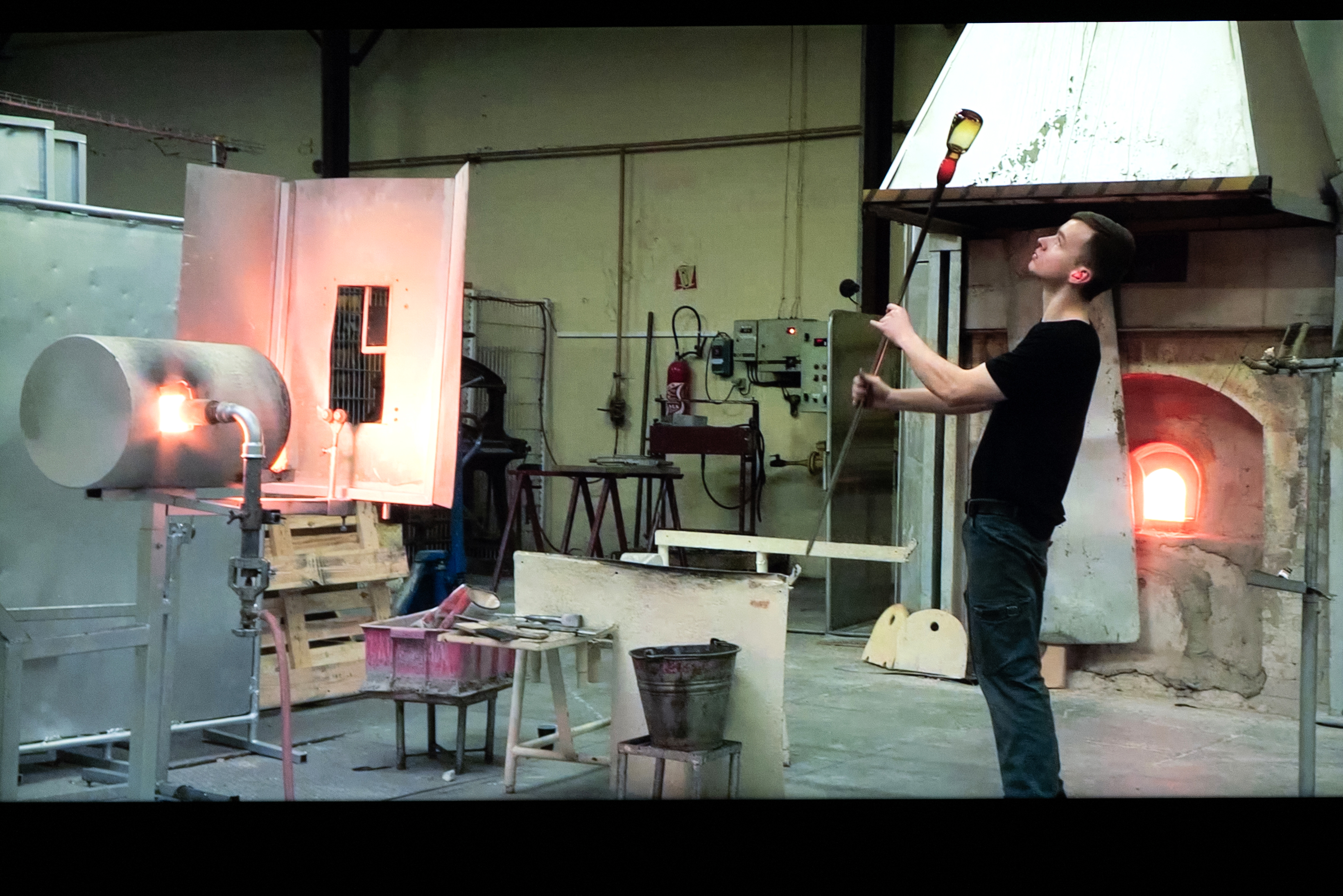
Ali Kazma’s Crystal (2015), filmed at the Saint-Louis crystal works in France, follows the highly choreographed labour of craftsmen making luxury glassware, part of Kazma’s body of work that he calls “an ongoing atlas of the world and my times.”
Saint-Louis, founded in the 16th century, reminds us that the tradition has all but disappeared in Sinop, where a soda and crystal glass factory once trained a generation of artisans until the 1990s. “Industry, for all of its negatives like pollution, for a time brought about solidarity, unions, political awareness. When all of that leaves, there is a vacuum,” Kazma says.
Sinopale asks what art can learn from working with a place and its people, as well as the natural world. In a second installation, Aka transforms emergency thermal blankets into a shifting expanse as motors beneath the crinkled foil make the surface rise and fall, evoking a sea of ice or melting glaciers. Halfway There (2026) reminded Aka of efforts in the Alps to blanket glaciers and ski slopes in geotextiles to stave off rapid melting from climate change. “It speaks to that human confidence that we can solve problems through sheer intellect. And it is also an act of profound compassion,” he says.
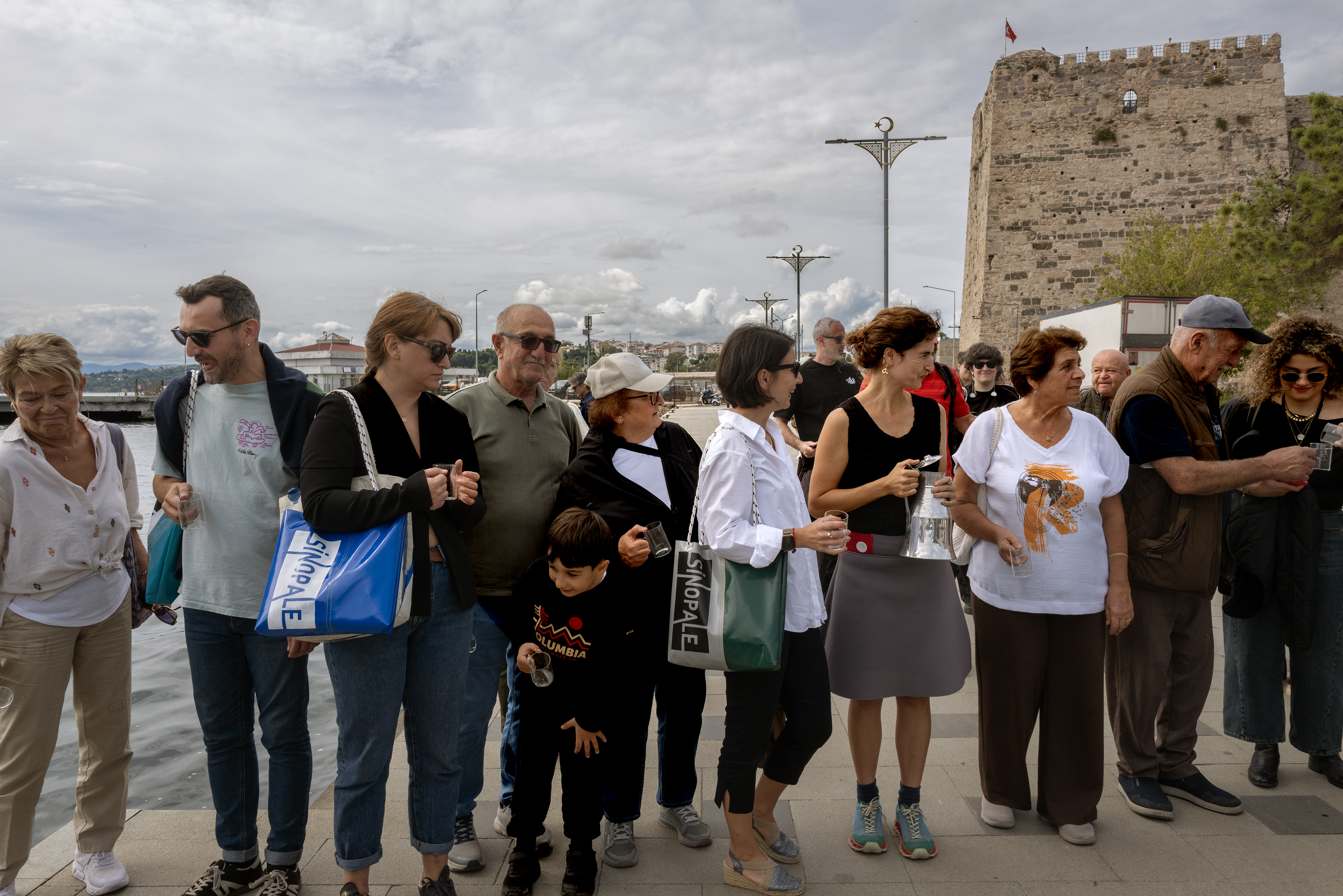
Curator Mariam Natroshvili
Sinopale runs through 15 November. https://www.sinopale.org/sinopale-10

_140_88_80.jpg)