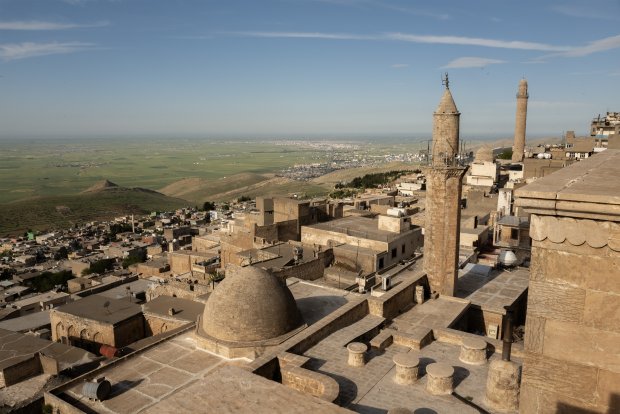
From its ridge high above the Mesopotamian plain, the city of Mardin in southeastern Turkey appears suspended between Earth and sky, its honey-hued buildings mixing with bands of heat and light. This meeting between the ethereal and the earthly underpins SKYground, the seventh edition of the Mardin Biennial, that brings the ancient city’s mythic image into conversation with its past and present layers.
The exhibition this year reaches beyond the city centre into the surrounding landscape with installations at the millennia-old Deyrulzafaran Monastery, the Roman fortress city of Dara and a disused hammam in Kızıltepe, a town just north of the Syrian border. For curator Çelenk Bafra, moving between the venues helps reveal the region’s sometimes contrasting realities.
“There's a utopian, idealised, exoticised aspect to Mardin, but when you dig a little deeper and examine it, you come across the hard ground of truth,” she said. “Art offers a means to learn something new, to look at events from a different perspective … like the swallows we see rising and descending through passing clouds above.”
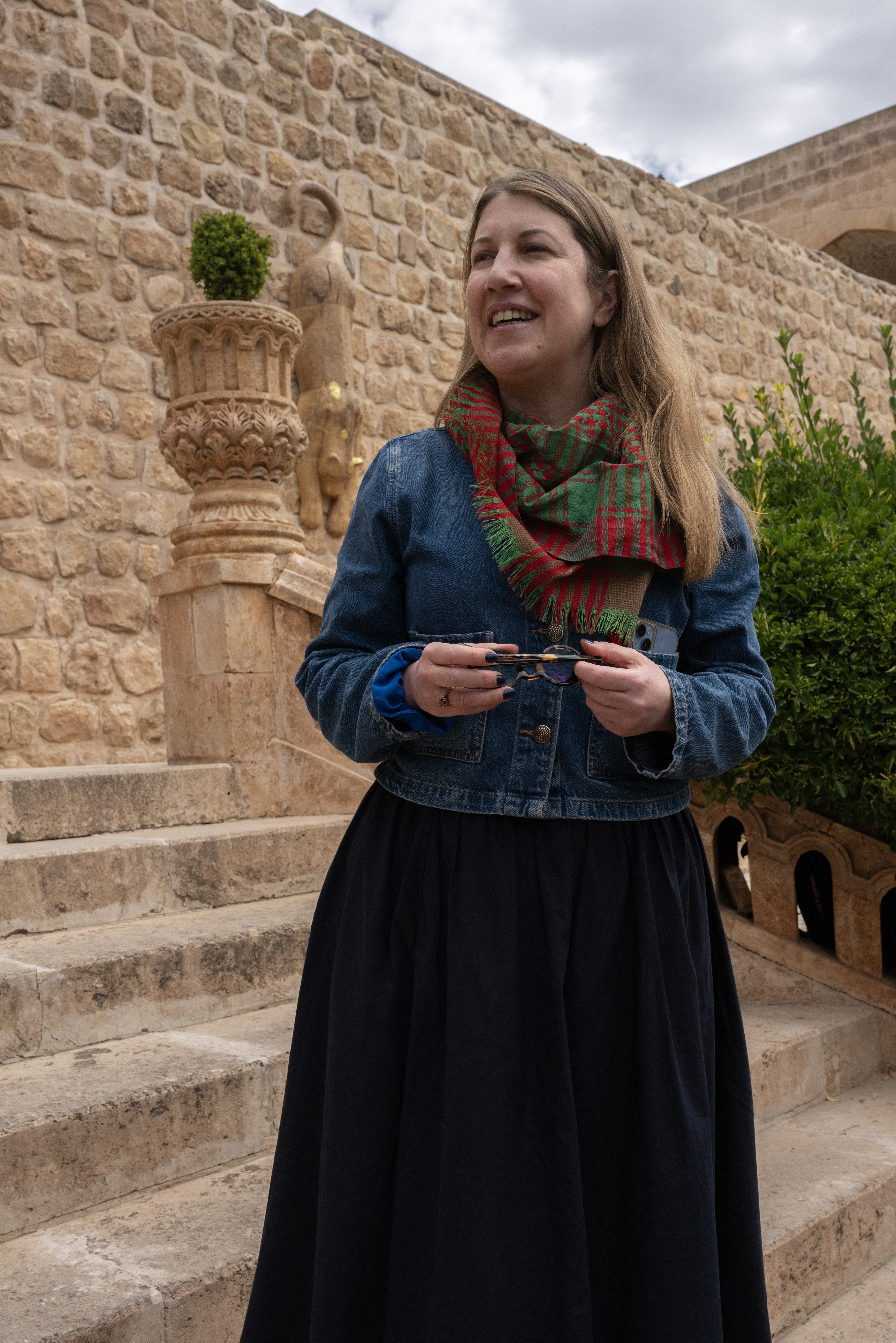
Curator Çelenk Bafra, at the Deyrulzafaran Monastery, where the bienniale appears for the first time.
The Mardin Biennial, running through 21 June, has grown into one of the country’s most important contemporary art events outside of Istanbul. This year, more than 40 artists from across the world are showing work in SKYground. Almost a quarter of them have their roots in the region, and at least half of the artists are women.
The region’s art community embraces the Mardin Biennial as a rare and vital opportunity to connect local production with national and international audiences. Parallel events with work by 165 artists have sprung up in spaces across the city, many organised by the artists themselves.
“In this part of the country, beyond Istanbul, the biennale generates significant impact and resonance for artists, creating ripples and waves of influence,” said Rıdvan Kuday, who owns the sole contemporary art gallery in the region’s largest city of Diyarbakir. He is showing work by 18 artists in parallel with the biennale.
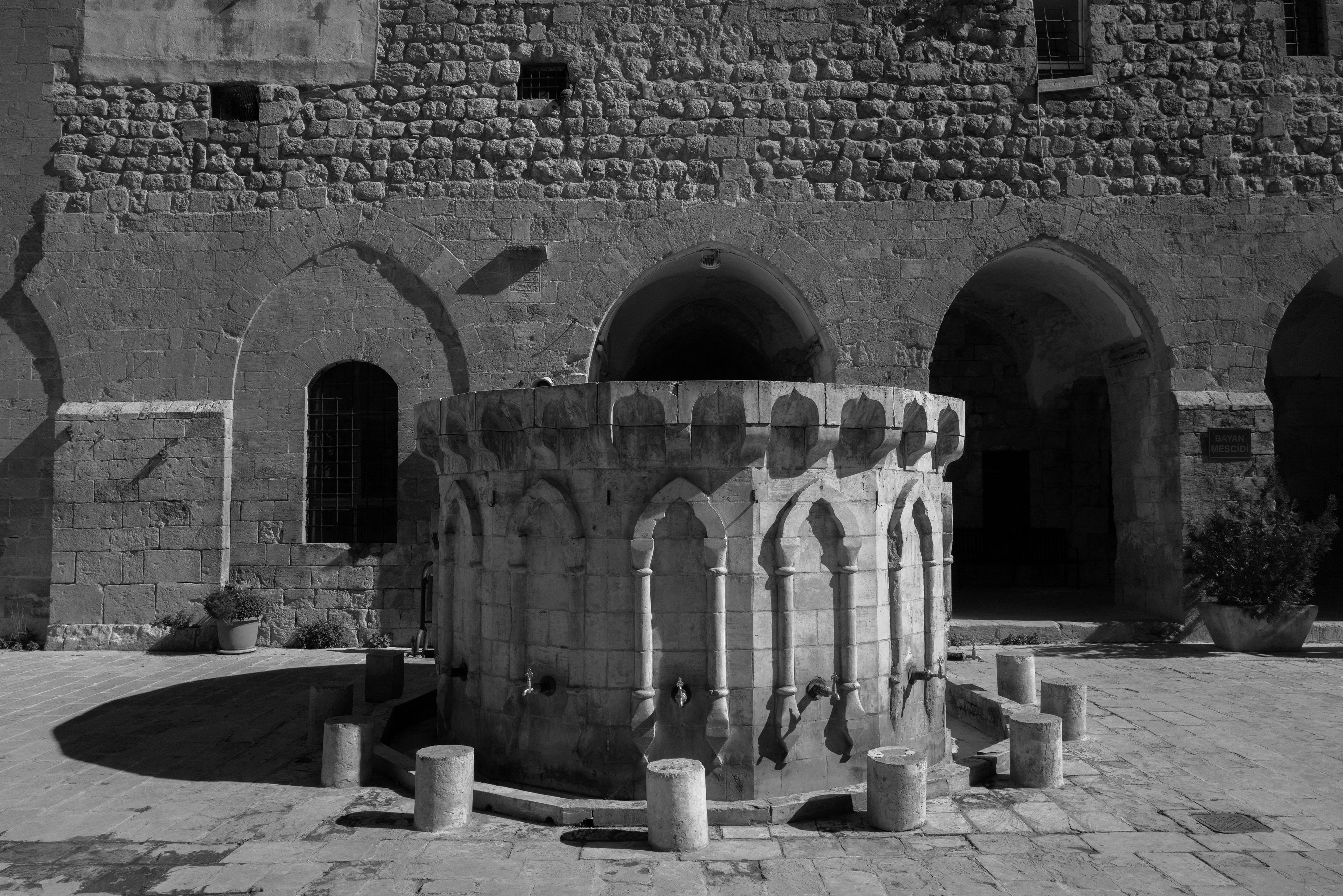
Mardin's Ulu Cami's magnificent stone ablution fountain.
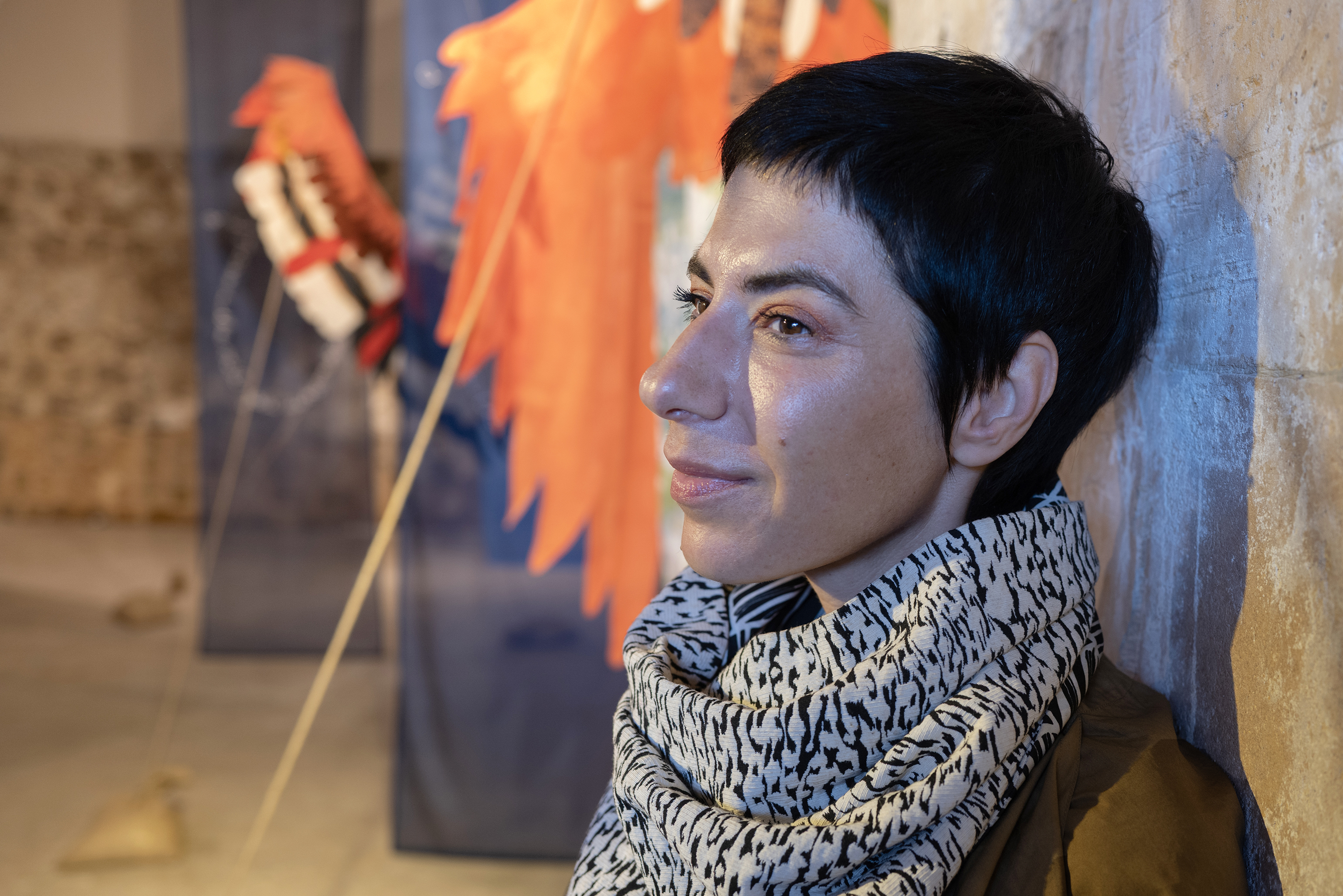
Esmeralda Kosmatopoulos, born in Thessaloniki and working between Cairo and Paris, meditates on the “in-between state of what we are and what we want to be” in her fabric and audio installation The Bird, the Thread and the Open Sea.
Kosmatopoulos's vibrant wings and blue sails render the 13th century Sufi poem The Conference of Birds into a physical space to wander through, much as the birds in the Persian allegory search for a truth they ultimately find within themselves.
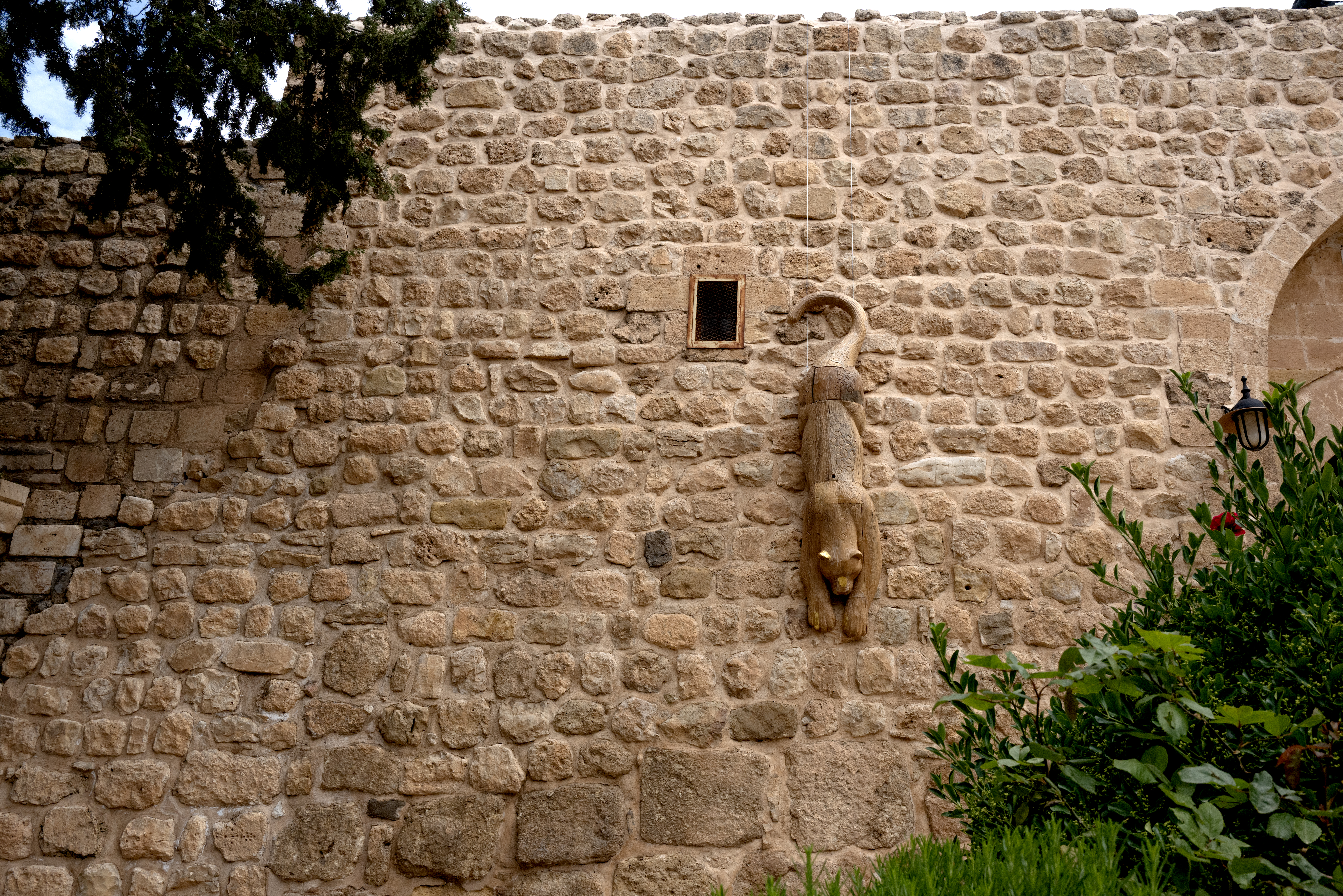
A pair of snow leopards crouch on the wall of the Deyrulzafaran Monastery in Swarm Works, by Malatya-born and New York-based artist Vahap Avşar. Created for last year’s Bukhara Biennial, the beasts are carved of 200-year-old wood salvaged from the columns of demolished buildings in the Silk Road city. Avşar borrowed a colony from a local beekeeper to implant in the leopards’ torsos. “It is a living sculpture … about empathy, camaraderie and community,” he says.
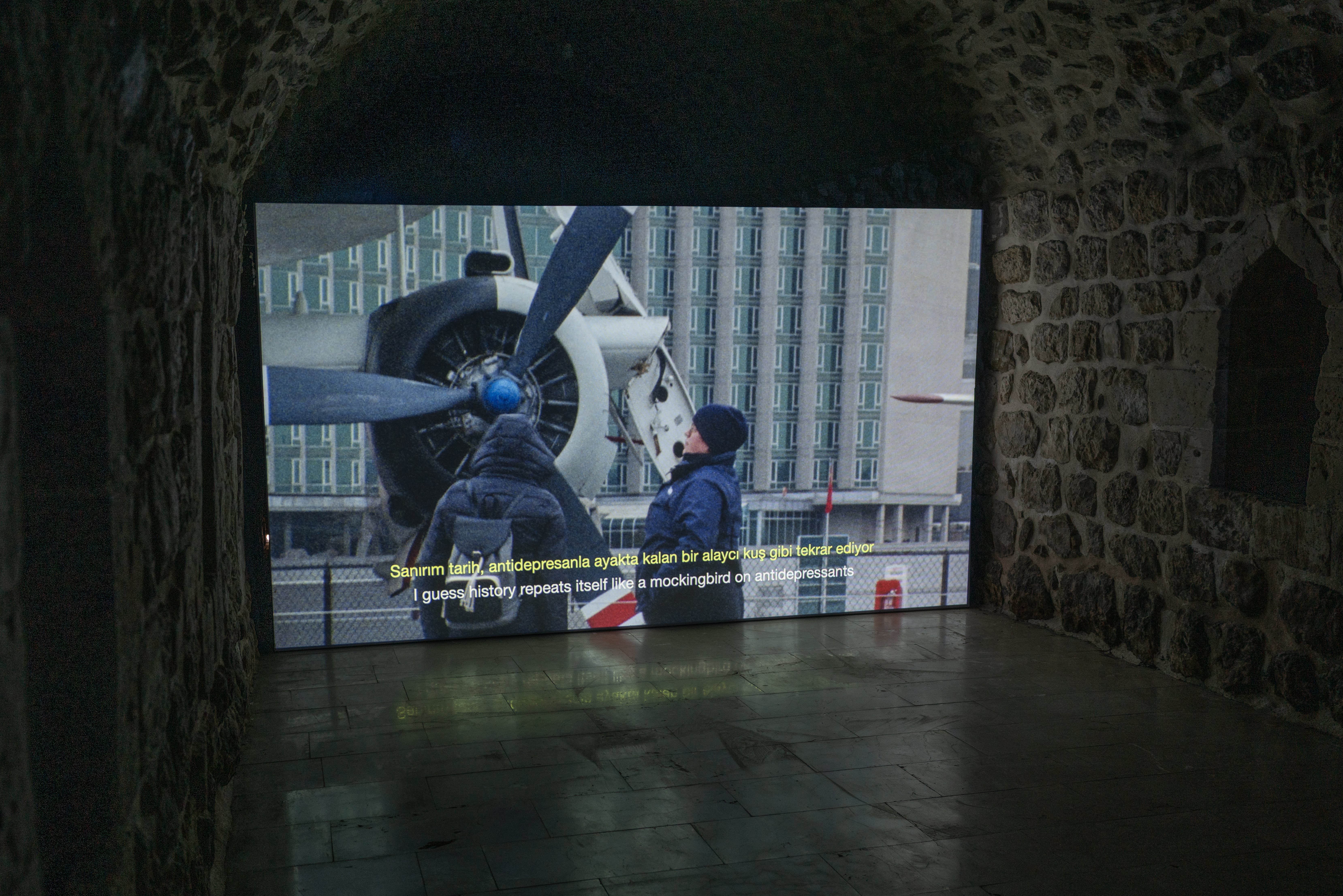
A still from Basim Magdy’s The Birds Choose the Cards offers an absurdist reflection on a world shaped by war, algorithms and uncertainty. The 2016 film moves through a disquieting sequence of loosely connected images, places and events that Magdy describes as a deliberate “level of ambiguity, even confusion … to open the doors to think about this moment based on people’s own experiences.”
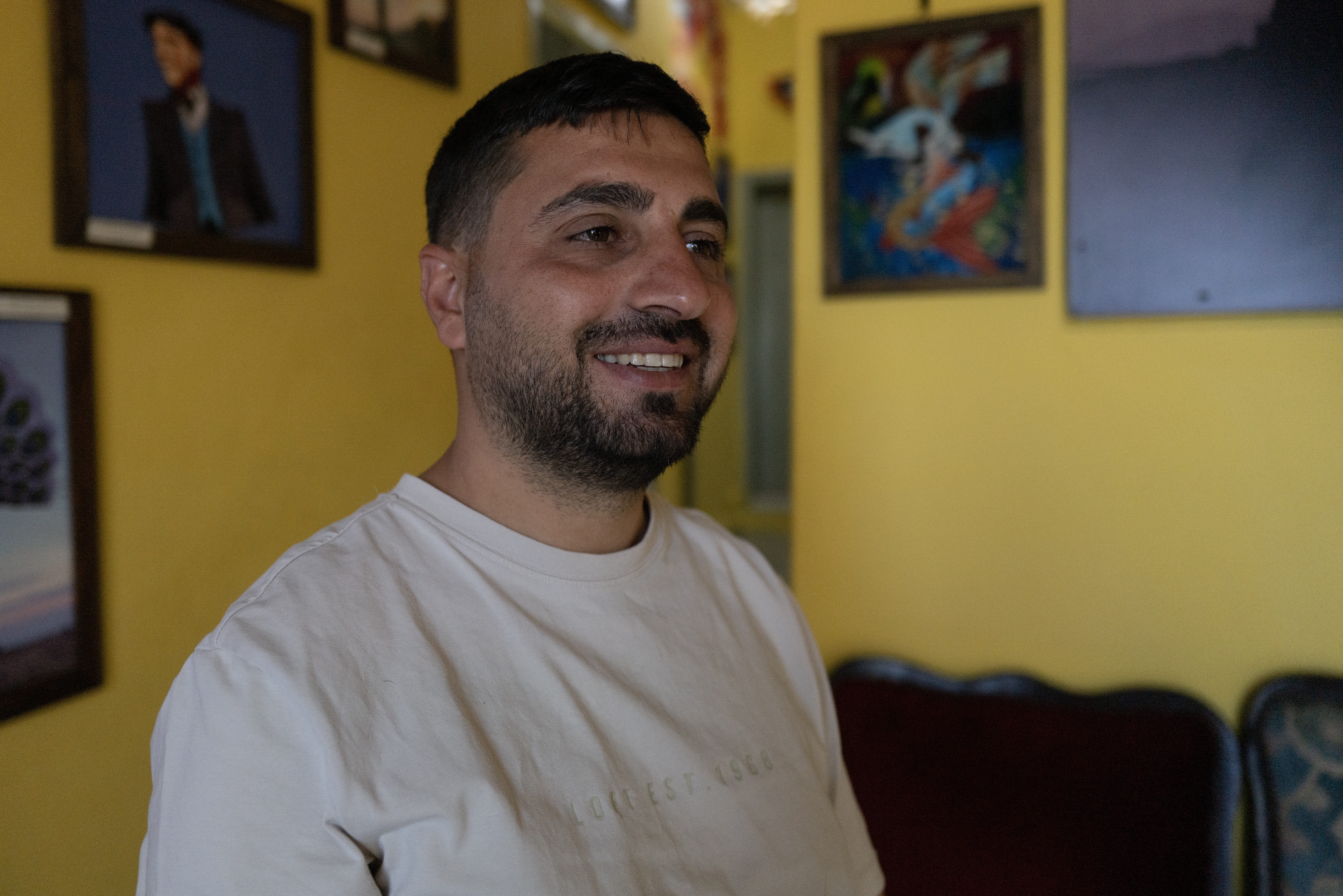
Mardin's persistent winds and terraced houses make kite flying a favourite pastime, and 32-year-old kitemaker Zahit Mungan uses local symbols, such as the benevolent serpent queen Shahmaran and the sacred peacock, to elevate the craft to an art form.
Mungan's House of the Scorpion is a yellow arachnid - both a familiar menace in the arid climate and a local folklore motif - hovering from the ceiling at the Sakıp Sabancı Mardin City Museum.
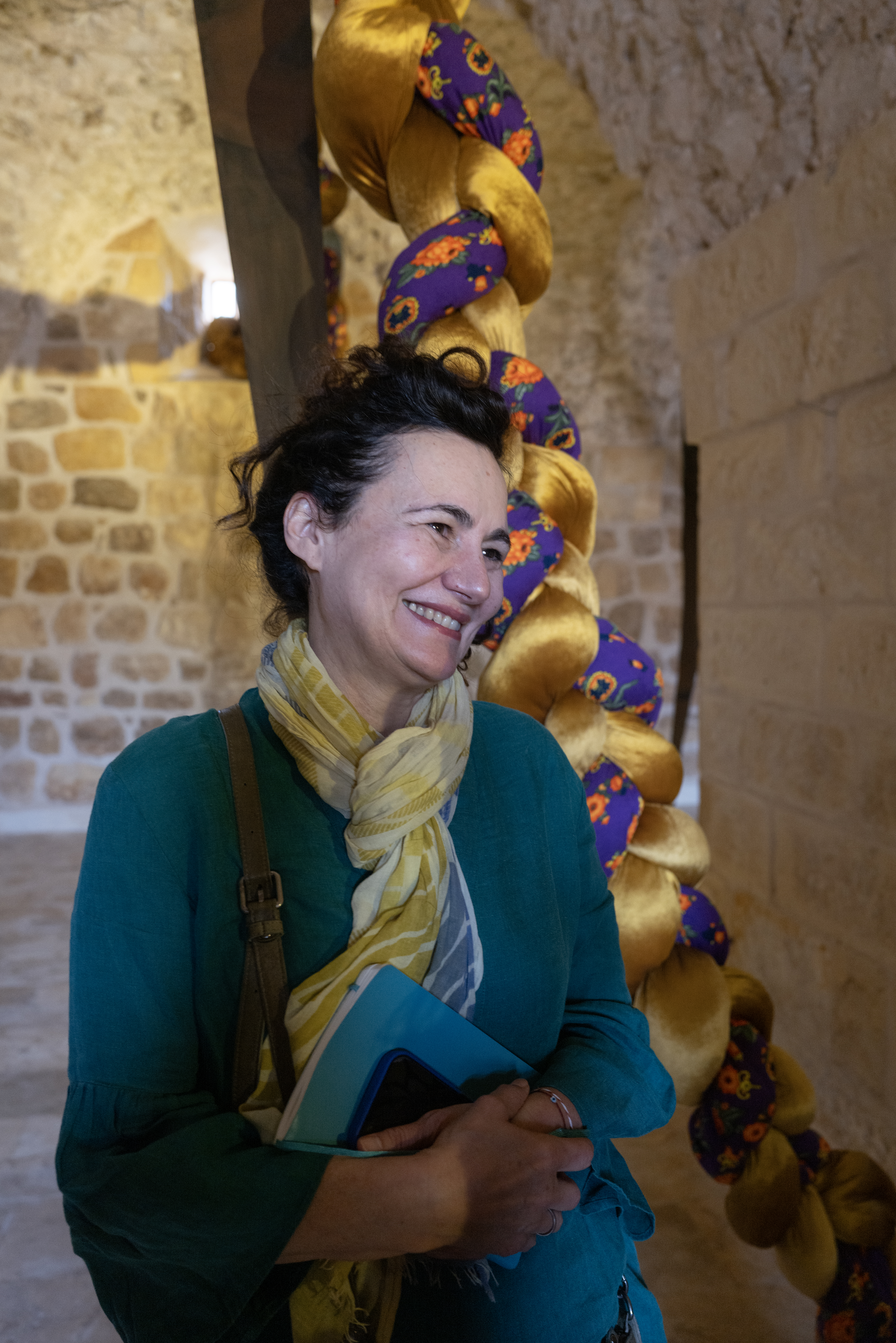
Athens-based Maro Michalakakos worked with local artisans to produce The Journey, which transforms the braid of a woman’s hair, called kezi in Kurdish and a source of feminine pride, into a large-scale, serpentine weave that recalls the biennale's themes of pilgrimage and self-discovery. The saffron-coloured fabric alludes to Deyrulzafaran, named for the golden tint of its walls that is said to come from saffron mixed into the mortar.
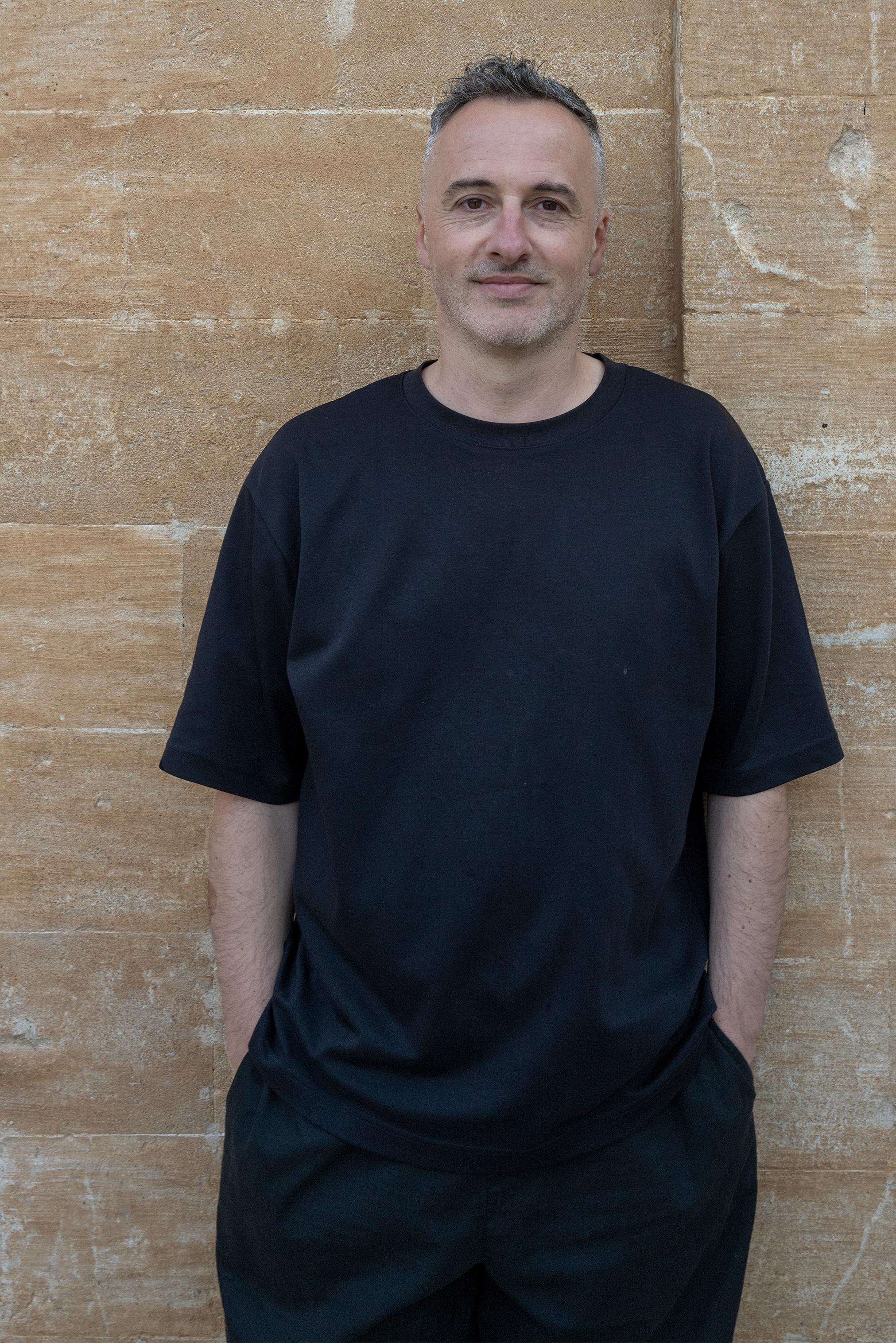
A visit to West Africa inspired Jakup Ferri to transpose his miniature drawings onto textiles. Since 2011, he has worked with Kosovo and Albanian embroiderers who use traditional techniques to create joyous, almost psychedelic tapestries in which animals, humans and imaginary life forms exist on equal footing.
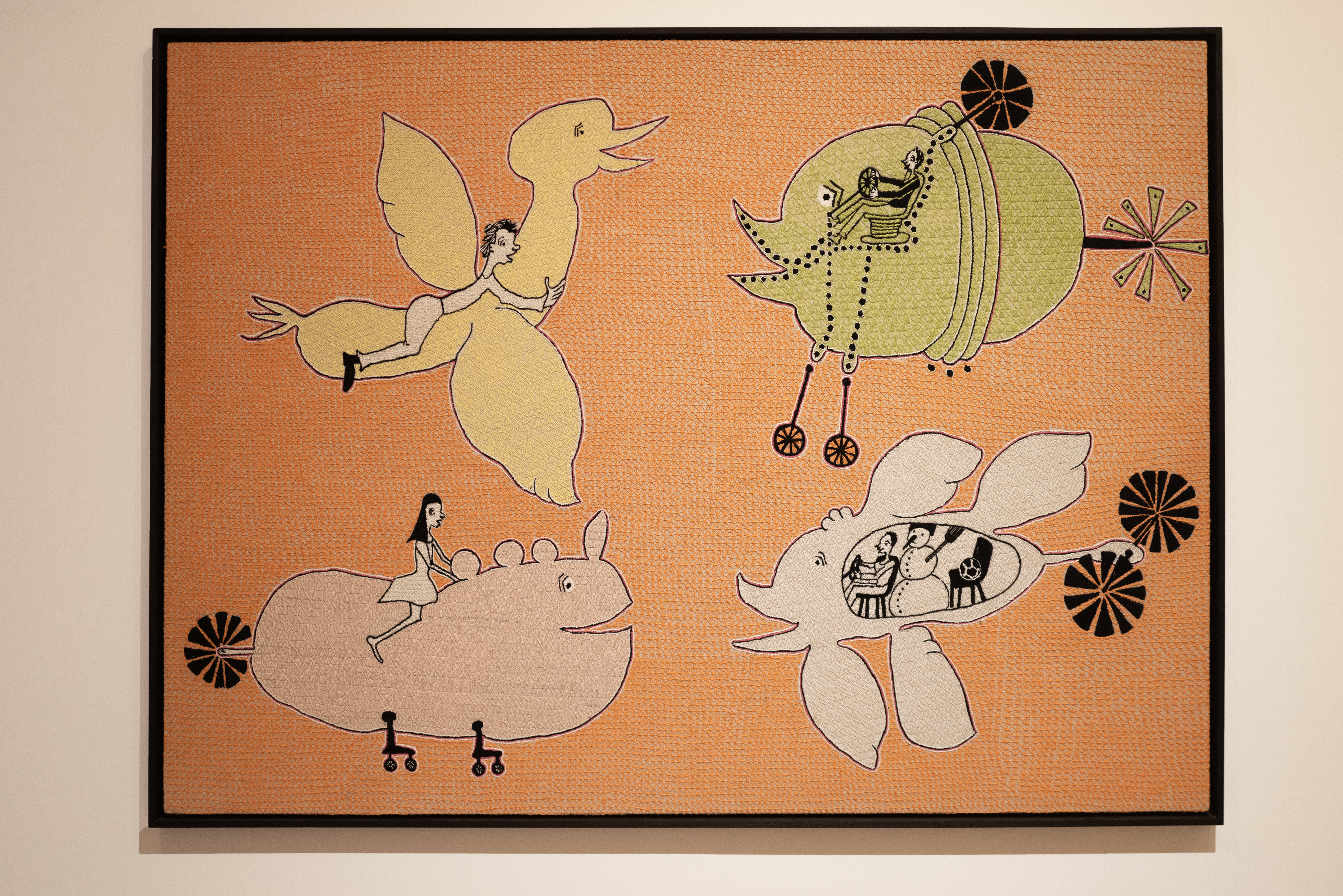
We,We, from 2022, hints at Ferri’s interest in naïve art. “You have to forget everything you know to make a new image because we are so full from phones,” he says.
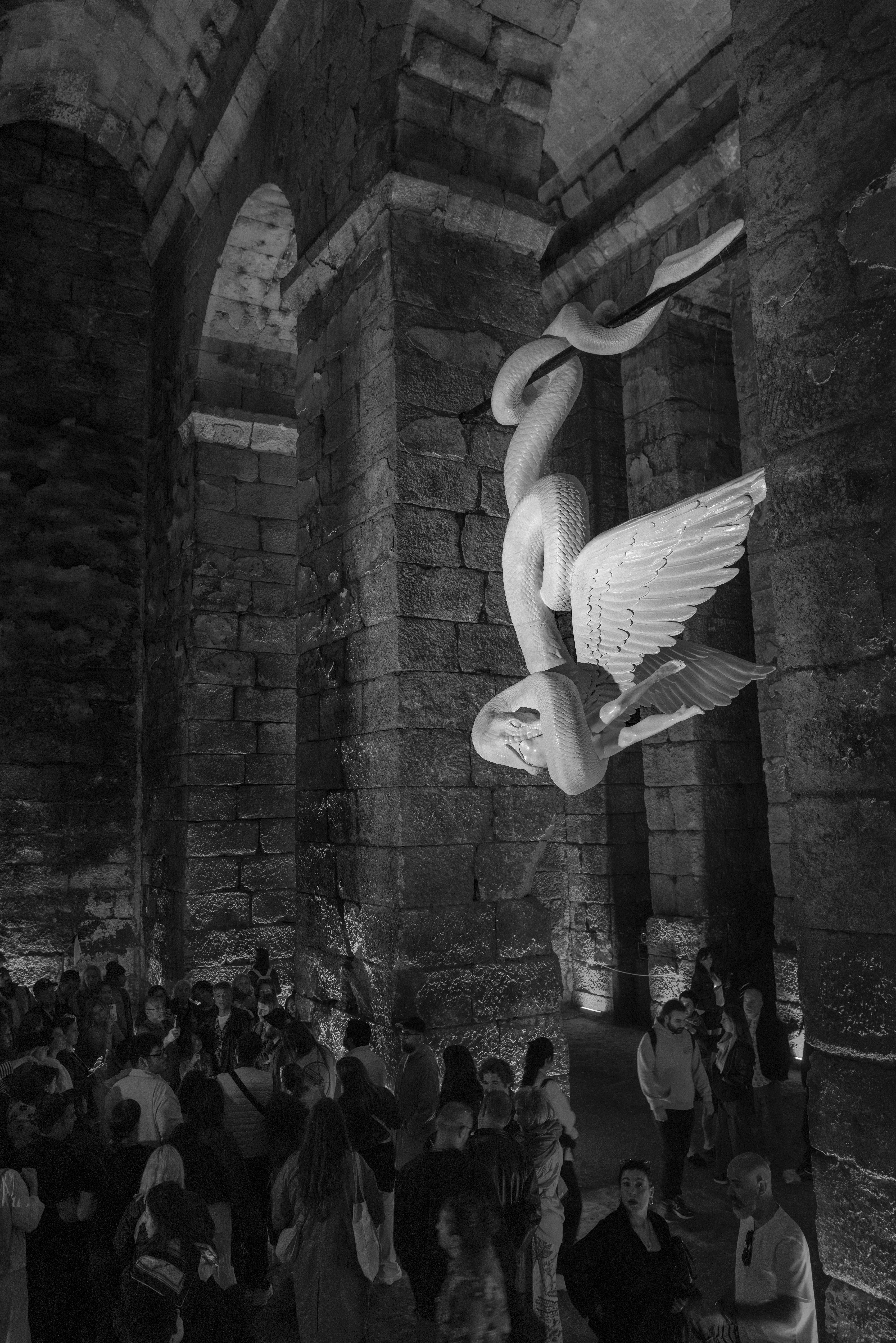
Suspended between two columns in Dara’s underground cistern is Turkish artist Alper Aydın's System Failed. The four-metre-tall sculpture captures the moment a serpent devours an angel, a vision of innocence overcome by darkness in a space locals call "the dungeon" after it was used to imprison Armenians before their deportation to the Syrian desert during the First World War.
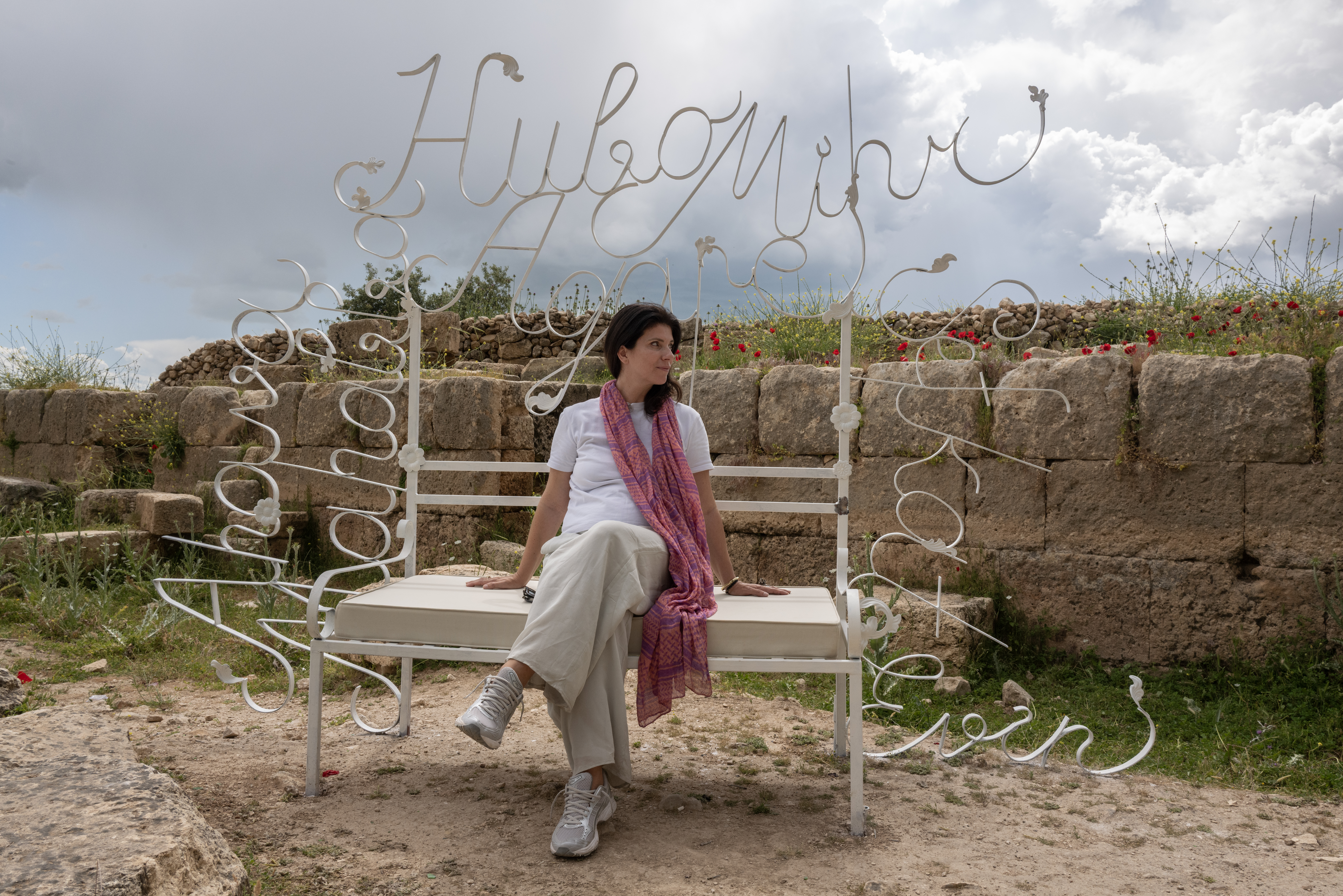
Bosnian artist Šejla Kamerić sits among the ruins of Dara on Agape Bench, inscribed with words for love from different languages. The forged-metal sculpture posits that understanding comes not from perfect translation but through the act of gathering. After the exhibition closes, the bench will remain in Mardin as a permanent gift to the community.
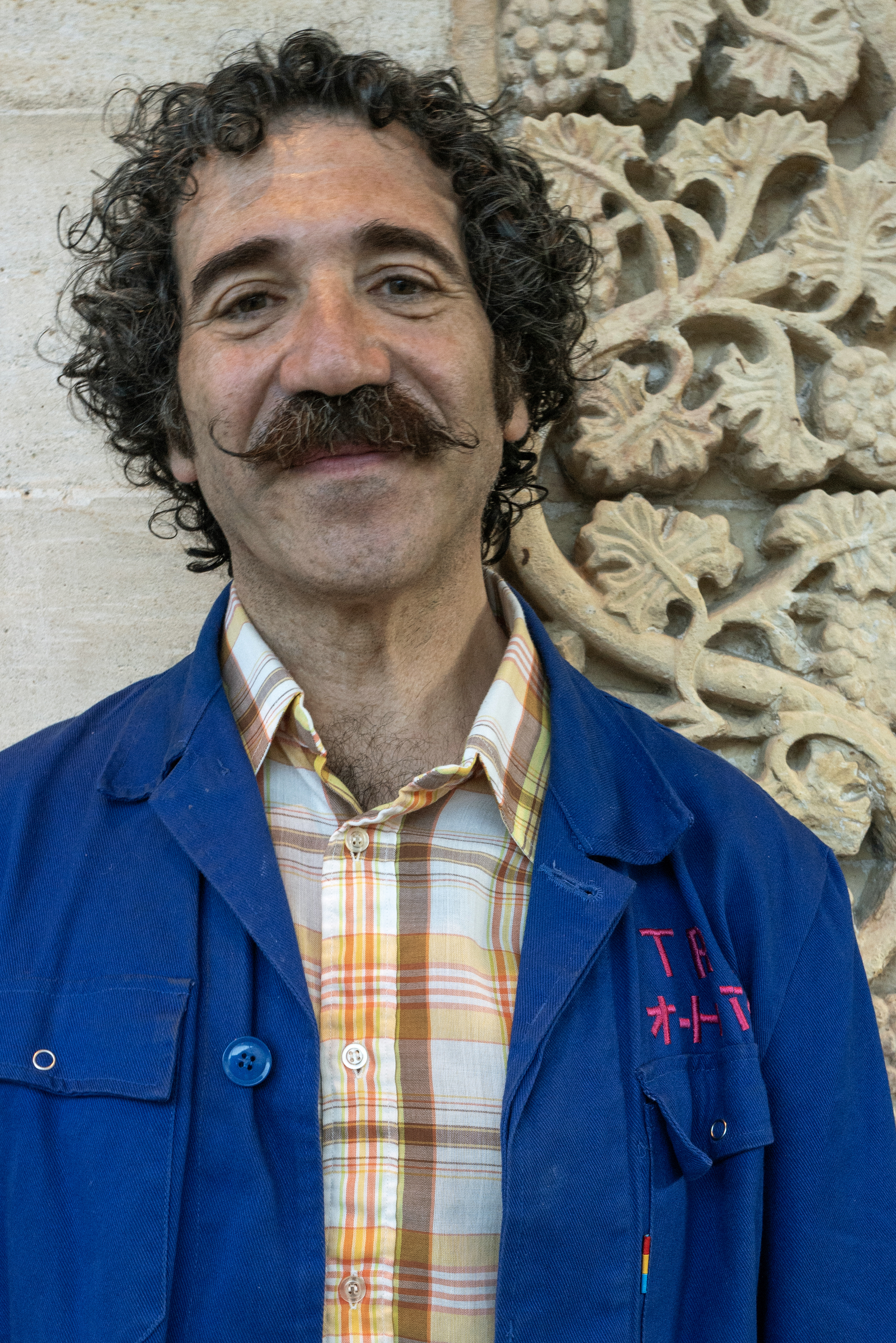 .
.
For Michael Rakowitz, art is a way of restoring what history has tried to erase. In an address at the biennale’s opening, the Chicago-based artist of Iraqi Jewish descent described how the identity he grew up with has been contested since Israel's founding. “I feel a volatile and unjust pressure to admit I’ve made a mistake in identifying as an Arab Jew and for the work I do, as if I should apologise for who I am,” he said.
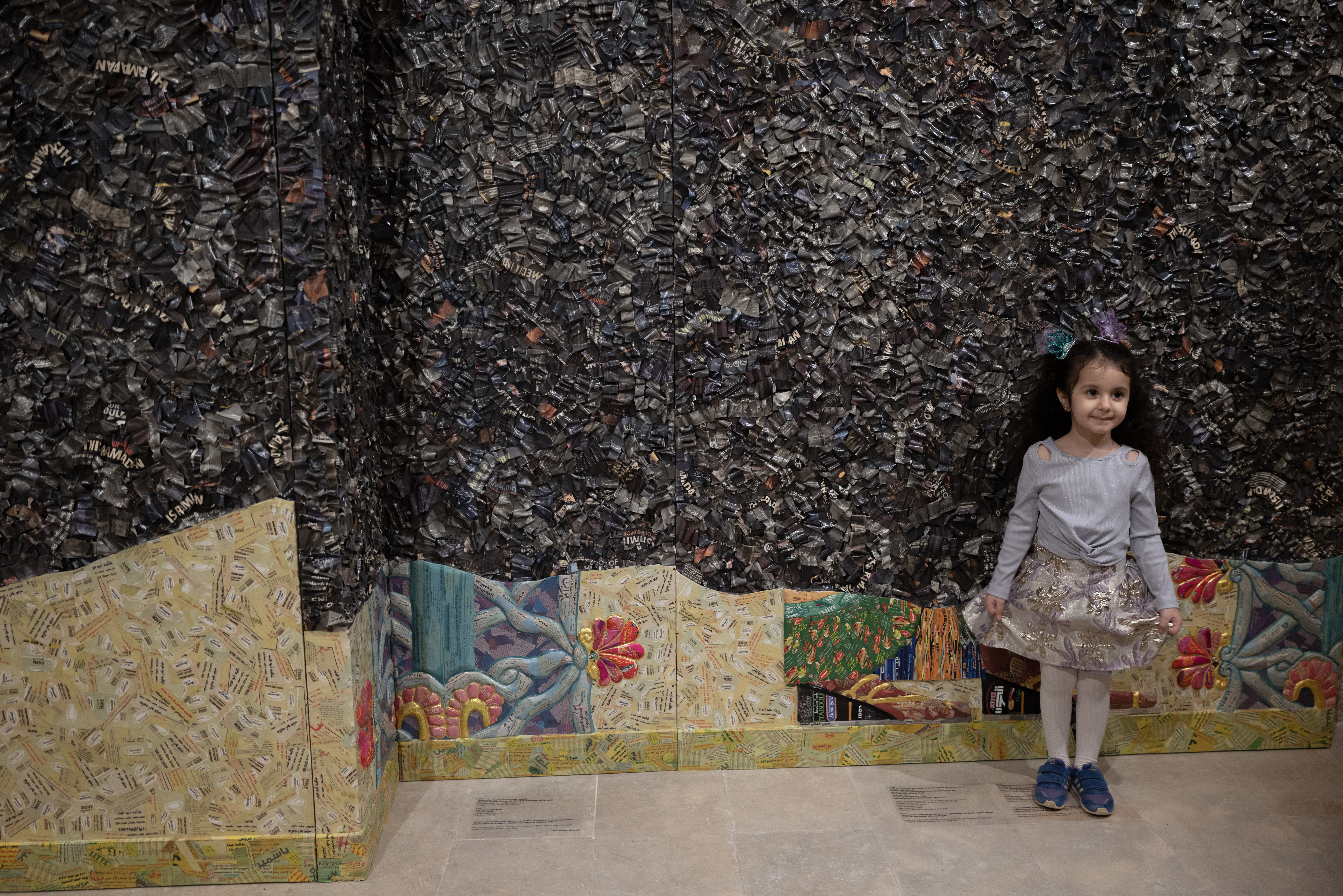
A visitor poses besides Rakowitz's papier-mâché surrogate of a relief from the 3,000-year-old palace of Nimrud, destroyed by the Islamic state in Iraq in 2015. It is part of the ongoing project The Invisible Enemy Should Not Exist that looks at what has been lost by war, exile and cultural theft.
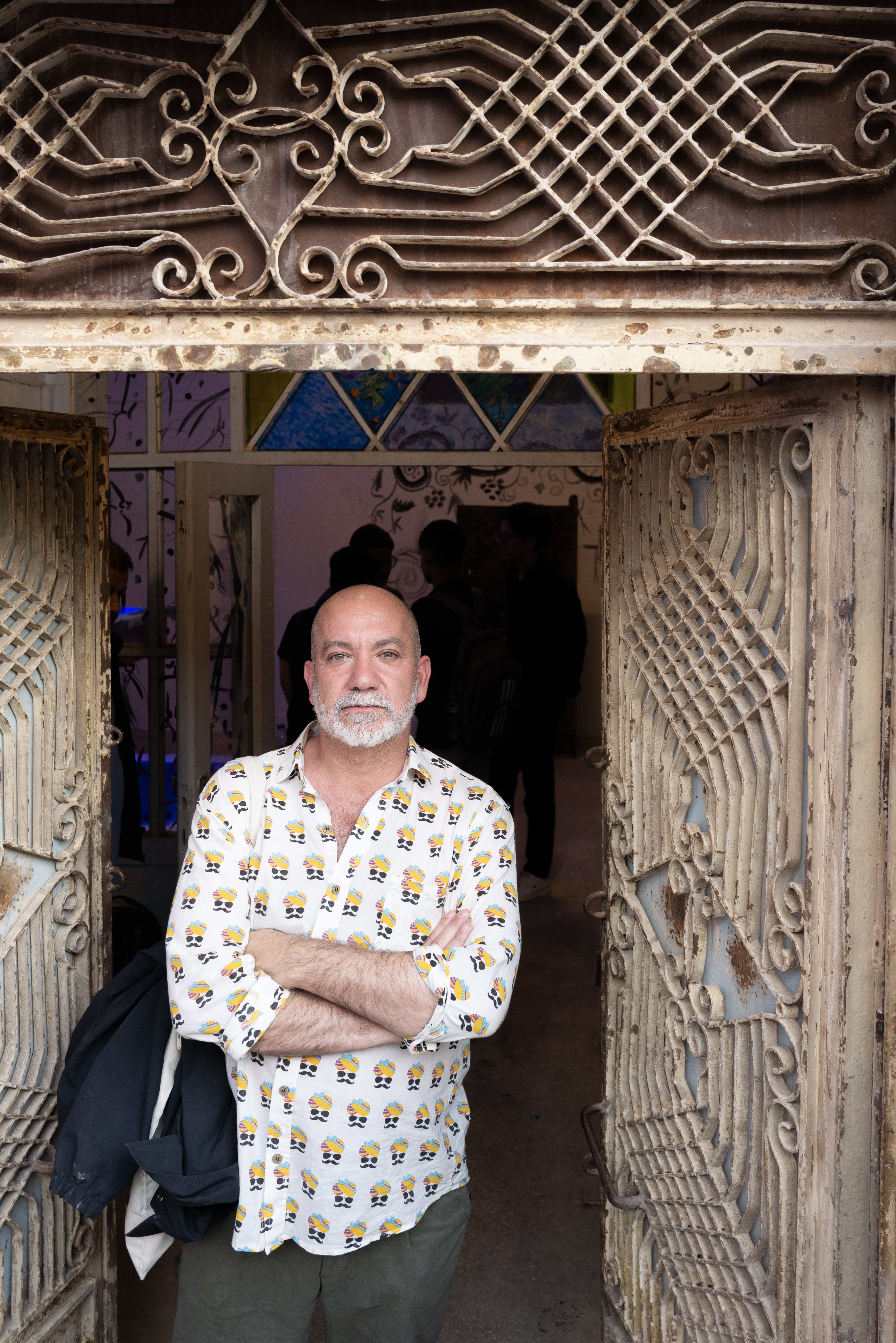
Carlos Aires stands before the Ateş Beyler Hamam, where his video Sweet Dreams Are Made of This shows riot police dancing a tango to a cover of the 1980s Eurythmics song. The 2016 video matches coercive power with choreographed performance and was made despite Spain’s “gag law” restricting the dissemination of police images.
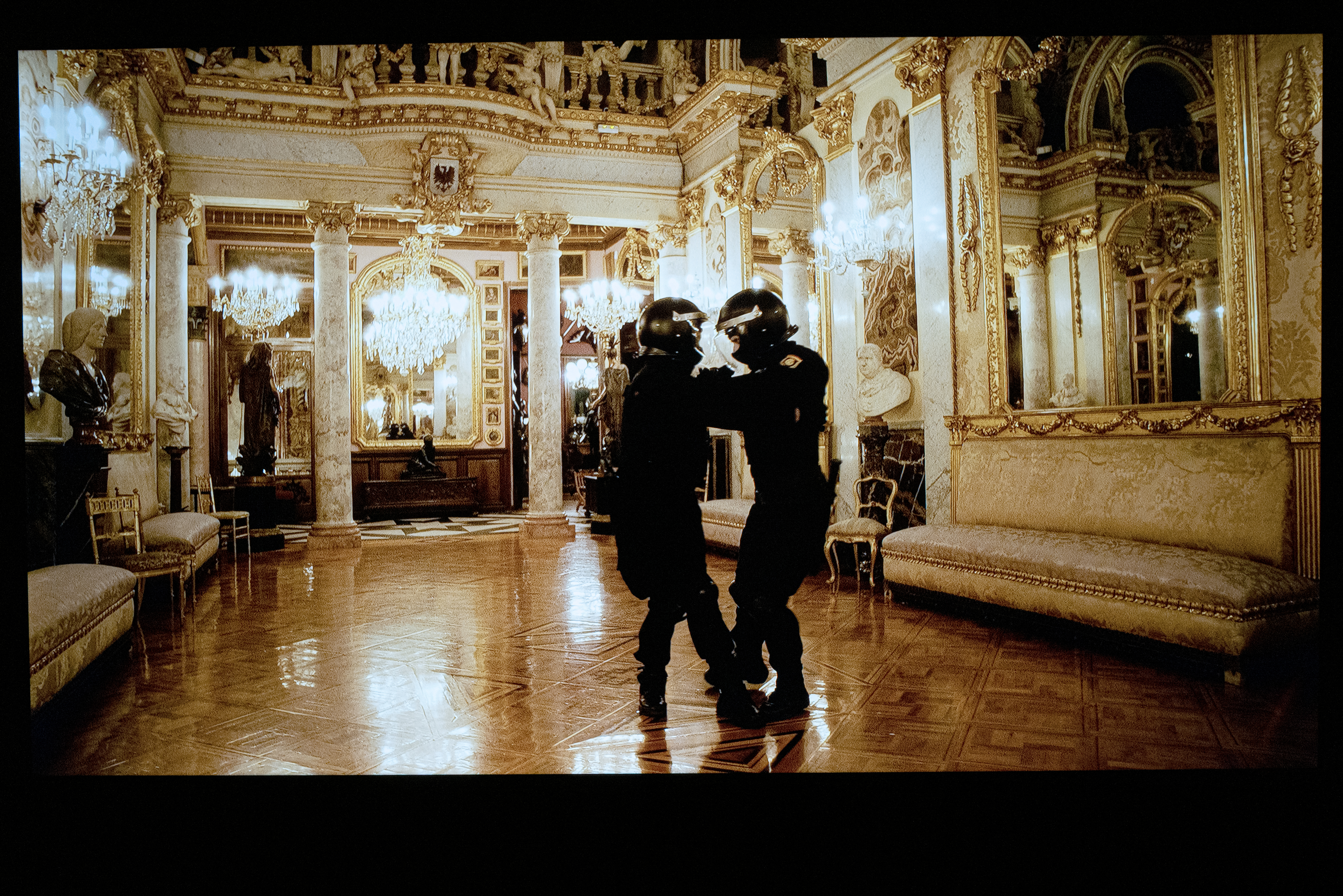
Presenting Sweet Dreams Are Made of This in a former bathhouse, a traditional space of male socialisation, echoes tango’s origins as a dance performed between men. At the opening in Kızıltepe, young viewers approached Aires to say the work resonated with them. “All art is political,” the artist says. “It is impossible not to be political while living in the reality of our time.”
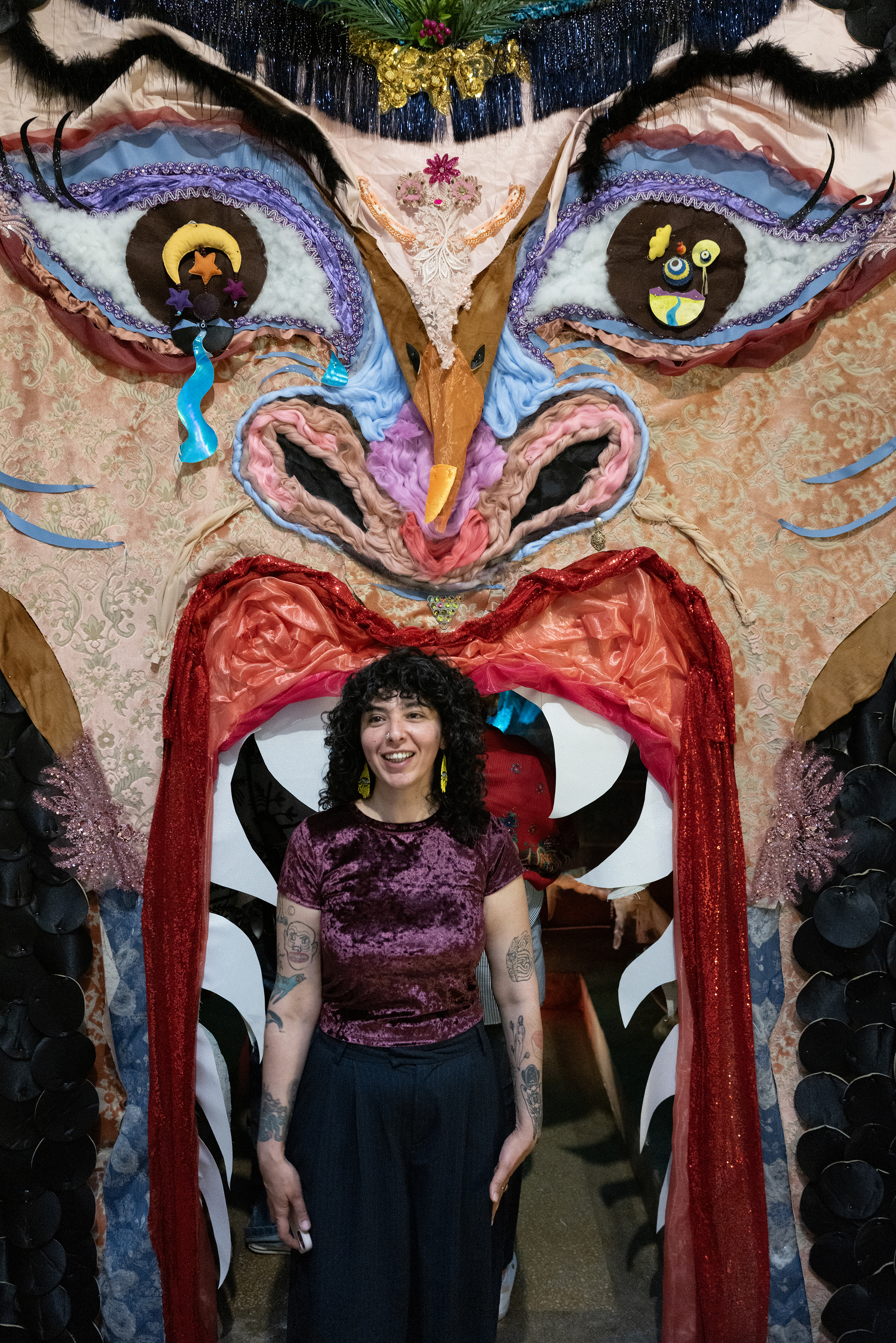
Hilal Can stands before Hilmeran, a mythical figure from her sprawling A Place for Those Who Look Within, which unfolds across the chambers of the former hammam. Commissioned for the biennale, the textile mural work reflects SKYground's attempt to bridge seemingly opposing worlds, proposing that the earthly and the cosmic coexist in each of us.
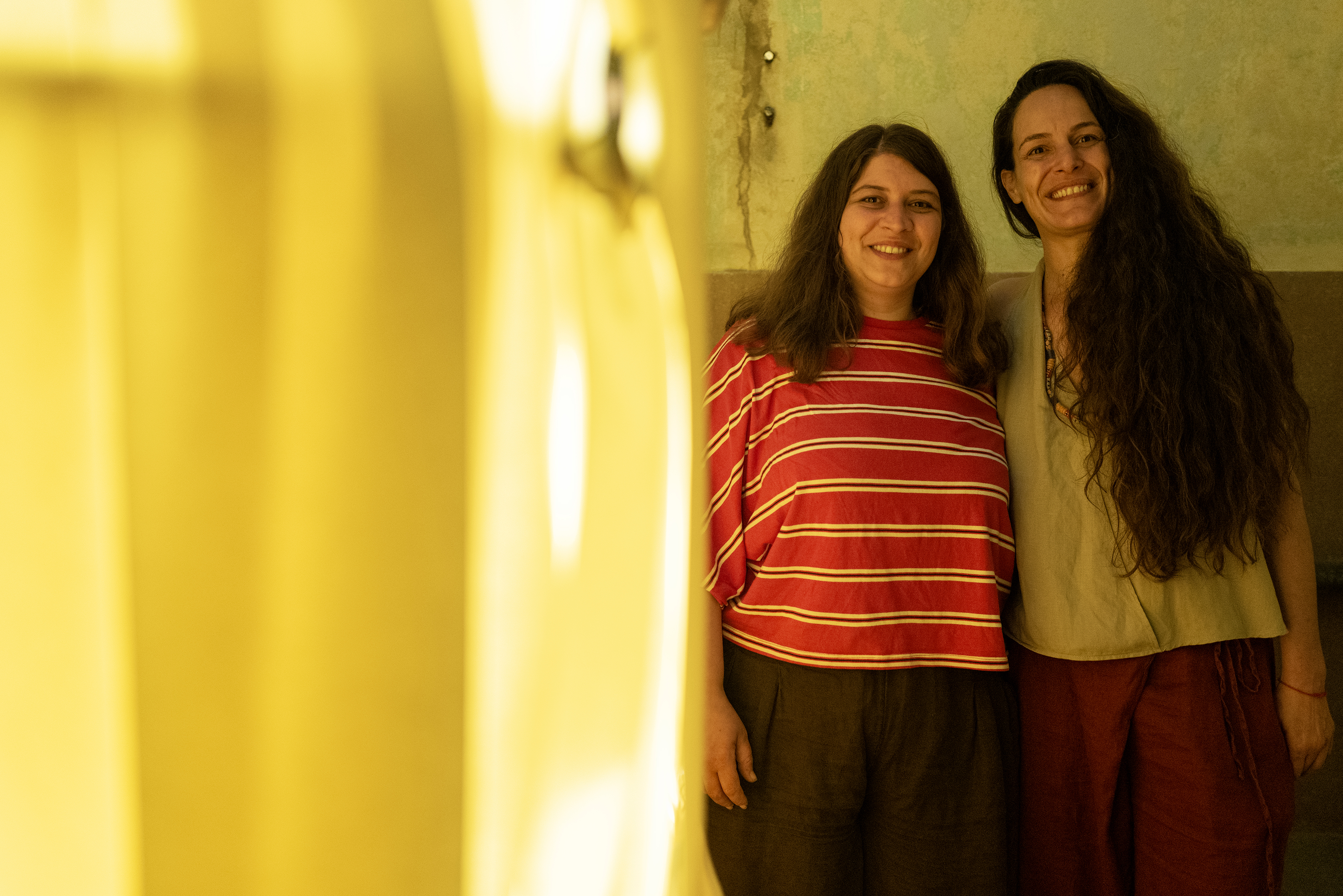
Fatma Alara Akgün and Senem Râbia Sekban of the artist collective Bi Acayip Hane stand by What You See in the Sky Are Not Stars; The Firmament Is Pierced Here and There.The seven-tiered sculpture’s thin layers draw on the Anatolian folk artist Aşık Veysel’s I’m on a Long and Narrow Road about the life-long quest for truth, while fragmentary scenes can be glimpsed within the object through small apertures.
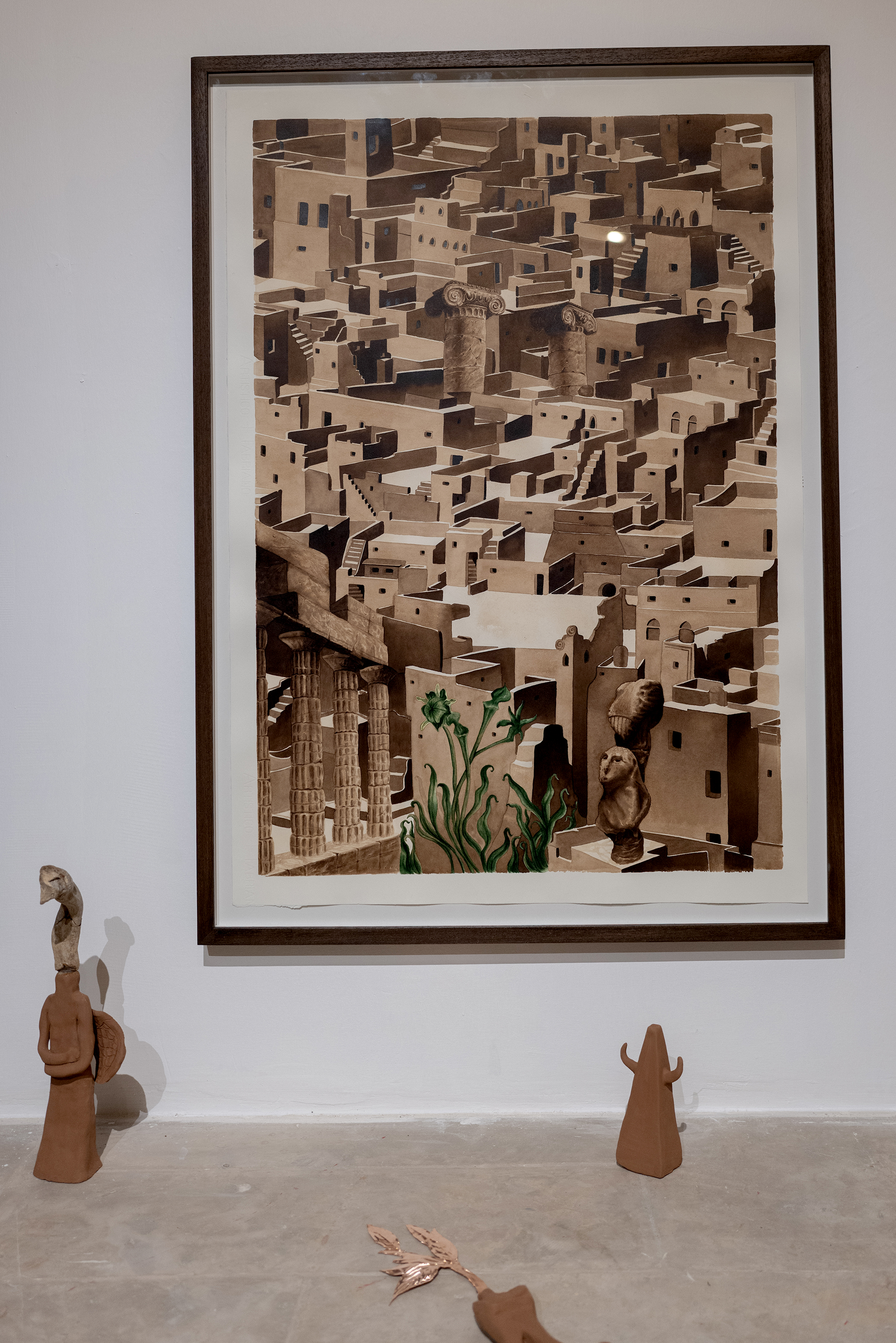
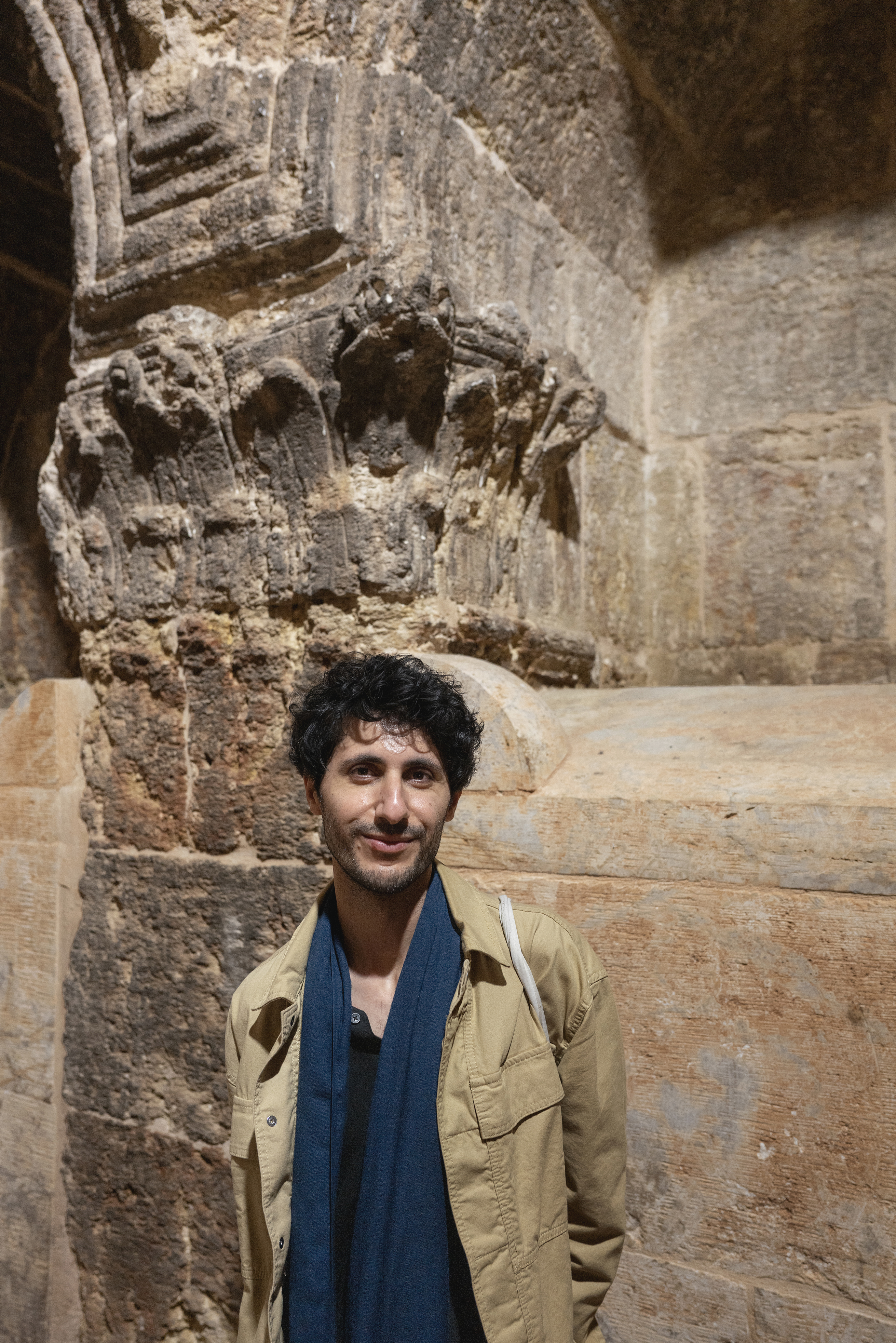
Hüseyin Aksoy, who is from Kızıltepe, builds an intricate, Escheresque world rooted in archaeology and mythology in A Review on a Creation of a Civilization (2026), rendered in walnut paint and watercolour.
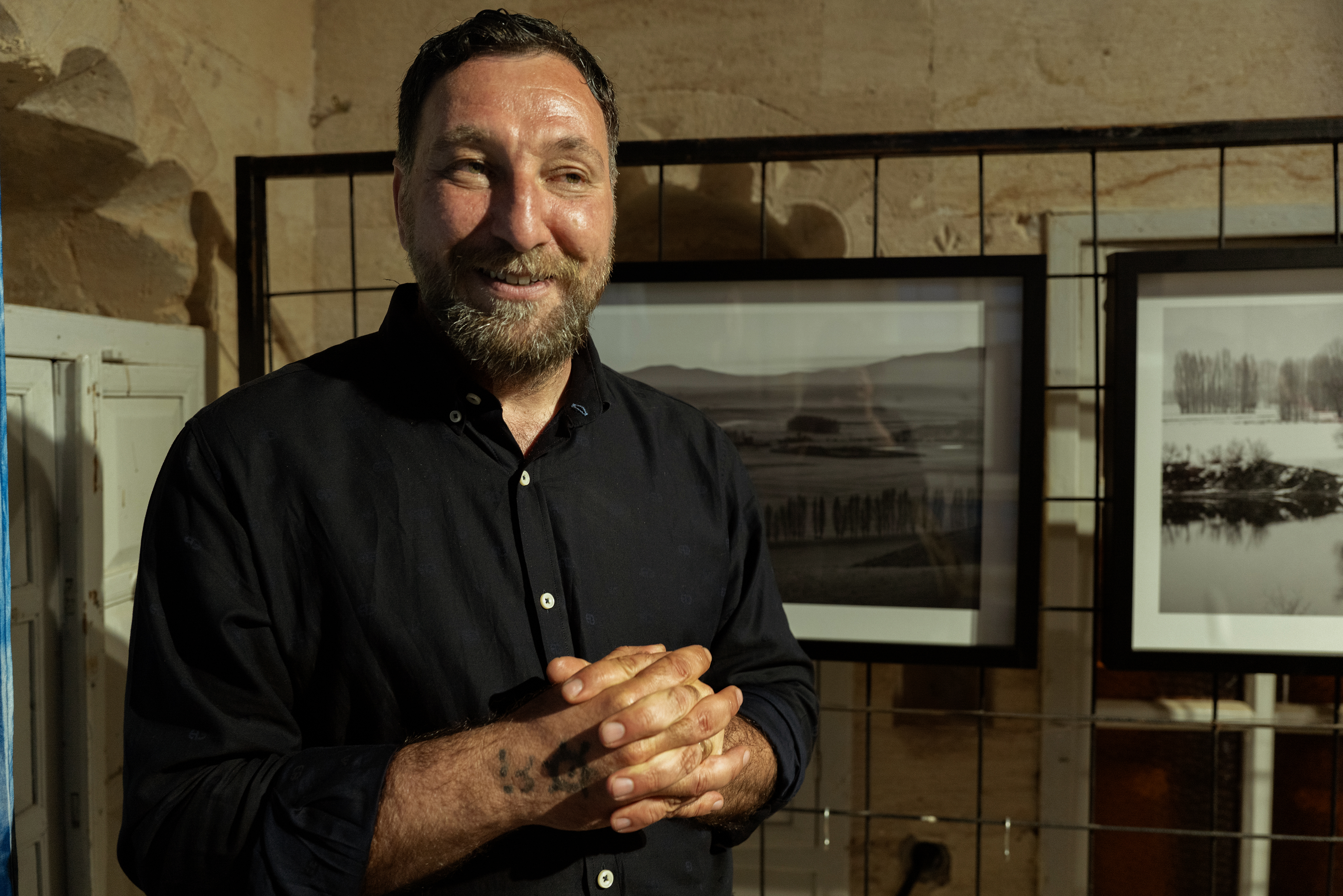
Among dozens of parallel events coinciding with the Mardin Biennial is an exhibition of photographer Amar Kılıç’s monochromatic landscapes from remote corners of southeastern Turkey, many long difficult to access for security reasons, alongside his delicate cyanotypes cast onto fabric.
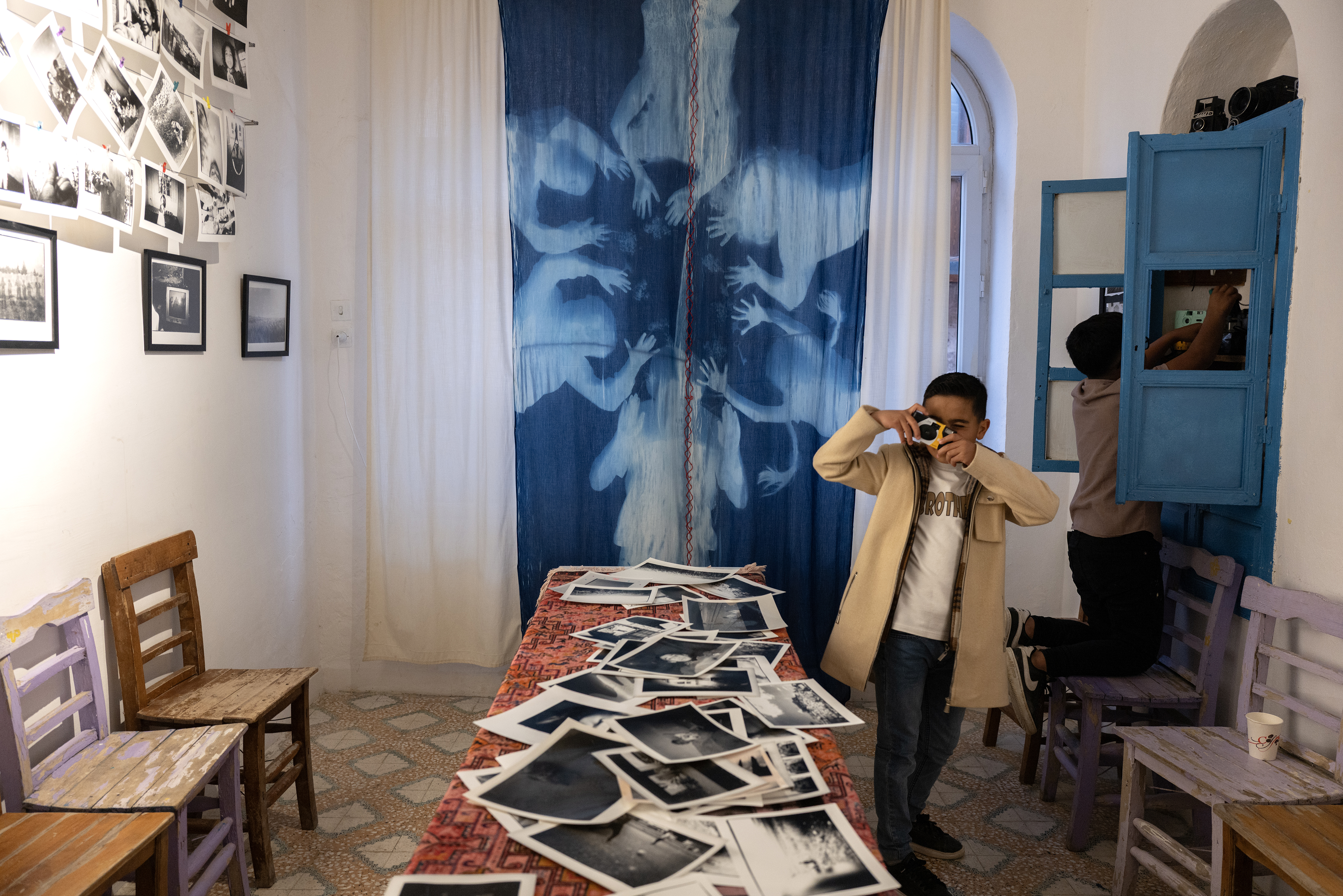
Work made by children participating in Fotohane Darkroom, a community photography programme run by Kılıç and Serbest Salih, are also on display at the studio situated in a historical Mardin stone house.
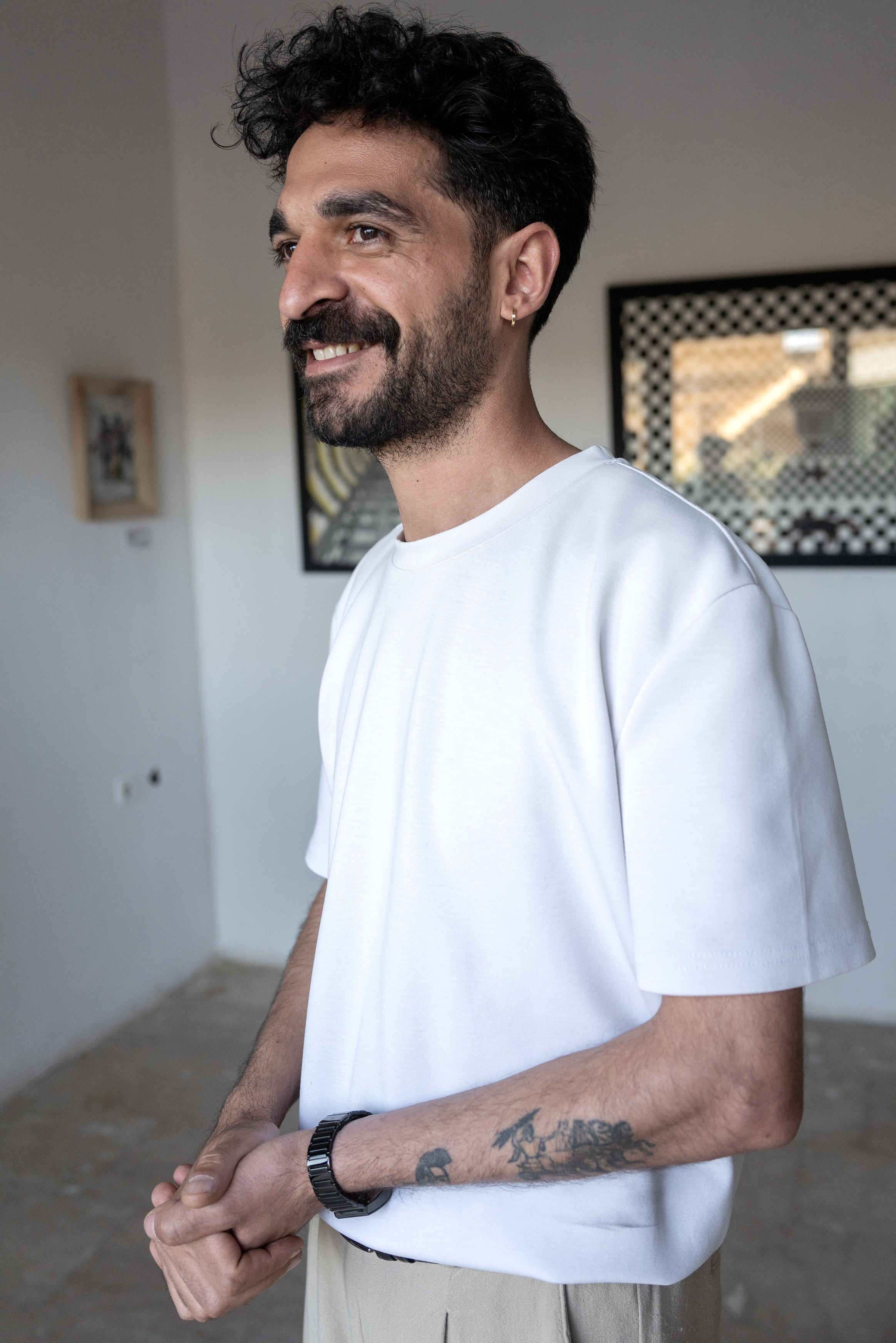
“I wanted to take a real piece of the plain and force people to look at it,” says Mahmut Akdemir of No Phoenixes Remain in the Plain to Rise From the Ashes, a charred patch of earth blanketed in styrofoam eggs atop a roof to show the harm of stubble fires on the grasslands below. The 31-year-old Mardin artist’s is also showing his pixelated mosaic glasswork at a parallel gallery event.
A balloon seller waits outside of Dara's ancient necropolis.
Mardin Biennial is on till 21 June. Several flights a day leave from Istanbul Airport and Sabiha Gokçen. https://en.mardinbienali.org/
Read 'Mardin: City of Labyrinths' in issue 68 by Barnaby Rogerson, photos by Monica Fritz.