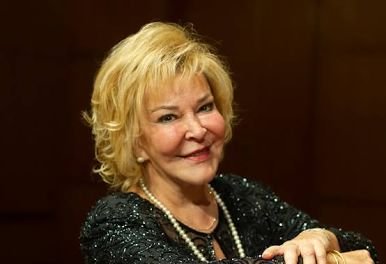
On March 13 I attended a concert at the Atatürk Cultural Centre that had been organised to celebrate Women’s Day (March 8th). The previous concert I had witnessed at this venue had taken place on Friday, February 13; that month being of an even length of four weeks, the pattern of weekdays repeated itself in March – and indeed, the second iteration of the jinx had the effect of bringing about cancellations and changes to the concert schedule. Nevertheless, the programmed performance of a Chopin piano concerto by the virtuoso pianist Gülsin Onay did go ahead, and was highly enjoyable.
The proceedings began with an announcement that the scheduled conductor – a lady from Columbia by the name of Lina Gonzáles-Granados – would be replaced by someone else. I did not catch the name of that ‘someone else’, but I can definitely say that it was a man, and that his name sounded Turkish. I hereby apologise to whoever it was for my failure to recognise and put a name to him.
The first item to be performed was Chopin’s Piano Concerto No 1 in E minor, Opus 11, a work that dates from 1830, when the composer was 20 years old. It was actually written immediately after the premiere of his Piano Concerto No 2, but was published before it – thus the wrong-way-round numbering. The opening of Chopin’s Piano Concerto No 1 was said by the music critic Harold C. Schonberg (1915-2003), author of The Great Pianists, to be ‘too close to be coincidental’ to the 1816 Piano Concerto No 2 in A minor by the Bratislava-born composer Johann Nepomuk Hummel (1778-1837), a man whose name I mistakenly took to be ‘Johann Neopunk Hummel’ when I first came across it. (Hummel, an important figure in the transition from the Classical era to the Romantic, was far more famous in his lifetime than he is now. A child prodigy, at the age of 8 he came to the attention of Mozart, who both taught and housed him free of charge for two years. Hummel later became a good friend of Beethoven, and in addition was a key figure in the fight against unethical music publishers and in the establishment of the principles of intellectual property and copyright law.)
The first performance of Chopin’s Piano Concerto No 1 took place on October 11, 1830 in Warsaw with the composer himself at the piano, and was received with thunderous applause. Seven weeks later, following the ‘November Uprising’ in Poland – an armed rebellion against the occupation of that country by the Russian Empire – he played it again in Paris, and once again it met with a highly enthusiastic reception. The next day François-Joseph Fétis, writing in La Revue musicale, said: ‘There is spirit in these melodies, there is fantasy in these passages, and everywhere there is originality’. More recent critics have criticised the concerto’s orchestration, which is admittedly nothing to write home about, but others have defended it on the grounds that the orchestral backing is knowingly made low key so as not to compete with the piano, and that the simplicity of the orchestral arrangement is in deliberate contrast with the complexity of the harmony.
This brief description of the concerto on the Rhode Island Philharmonic Orchestra and Music School website is by Dr. Michael Fink. It takes you through each of the three movements, giving you just enough – but not too much – technical detail.
Gülsin Onay appeared on stage wearing a long, trailing bluish-purple gown. Her rendition of the Chopin was exemplary – well up to the standard of all the previous performances of this composer’s works that I have heard from her. Her phrasing was, as always, a delight: she has the gift of making even the most insignificant passages sound meaningful and musically satisfying. It was very much to the orchestra’s credit that although the soloist allowed herself a certain amount of leeway in the rubato department, they invariably followed her with precision. During this movement, a white cat appeared briefly on the stage, but soon disappeared again. I took this as a sign that Bastet (the Egyptian goddess of home, domesticity, fertility, childbirth and cats) was giving her seal of approval to the performance, and – who knows – maybe to Women’s Day as well.
In the slow movement of the concerto, all the woodwind entries were clean and well co-ordinated. The piano, meanwhile, sank to a breathless hush, thus adding to the dramatic effect. In the finale, Ms. Onay initially played more loudly than she had done in the first movement (no doubt to create a contrast with the subdued slow movement), and later on impressed with some rapid scales and flourishes that were played pianissimo despite their technical difficulty. The orchestra was once again perfectly in time with the soloist, but the former horn-player in me did not fail to notice the foul note in one of the horn fanfares. This did not, however, detract from my enjoyment of what was overall an excellent performance. Gülsin Onay’s Pisces moon (in harmonious trine aspect to her Saturn in ‘still waters run deep’ Scorpio and in comfortable sextile to her well-disciplined Mars in Capricorn) always succeeds in casting a spell over the proceedings thanks to ‘master of illusions’ Neptune the sealord, ruler of Pisces and patron of all creative and ethereal arts.
The following rendition of Chopin’s Piano Concerto No 1 is by Martha Argerich with the Sinfonia Varsovia Orchestra, conducted by Jacek Kaspszyk.
The second half of the concert on March 13 was scheduled to consist of the Symphony No 2 by the Danish composer Carl Nielsen (1865-1931). In the event, however, the work that was actually played was the Symphony No 3 by the French lady composer Louise Farrenc, née Dumont (1804-75). The daughter of a sculptor who came from a long line of sculptors, Ms. Farrenc was brought up in a cultured environment, and thus began studying the piano at an early age, taking lessons from a student of Muzio Clementi. She soon showed great promise as a pianist, and as a result was taken on as a pupil by masters such as the Bohemian-Jewish virtuoso Ignaz Moscheles (a colleague and friend of both Beethoven and Mendelssohn who lived in London for twenty years – he persuaded the Philharmonic Society to send money to the impoverished Beethoven during his final illness) and Johann Nepomuk Hummel – interesting how he surfaces once again!
But although Ms. Farrenc wished to add composition to her musical portfolio, the doors of the Paris Conservatoire remained firmly closed to her owing to – yes, you guessed it! – their ponderously iron-clad glass ceiling: no women were allowed to enrol in the composition department (or in any other, for that matter). Undeterred, she took private lessons in counterpoint and fugue from Anton Reicha, a teacher at the institution, and – judging by the standard of her later works – must have learned well. During the 1820s and 1830s she wrote a number of pieces for the piano, some of which earned praise from none other than Robert Schumann. Later on, she turned to writing chamber music, and it was in this area that she produced some of her best pieces: her 1849 Nonet for Winds and Strings, Opus 38, is now regarded as her finest work (although the idea of combining a string quartet with a wind quintet had first occurred not to her, but to the German composer Louis Spohr, 1784-1859). When it received its first performance at the Salle Érard in March 1850, her Nonet made her a celebrity on the Paris music scene. In 1861, she published an influential book – Le Trésor des pianistes – about how to perform both earlier and more contemporary music; typically, it appeared under her husband’s name, not her own.
Louise Farrenc’s music displays a high level of technical competence, and – not having heard of her before – I was pleasantly surprised by its quality. However, although I admire the lady’s pluck in overcoming the obstacles placed in her way by the musical establishment and respect her for producing pieces that are professionally crafted, I would not go to a concert that consisted entirely of her works. I remained, I fear, less than riveted by her Symphony No 3, finding it agreeable, but very much shaped by the expectations of the time, and thus unrelievedly anodyne. There is such a thing as quality in music, and technical competence, while a prerequisite of quality, is not the end of the story. I want to be excited by what I hear, not just titillated by its novelty or impressed for any reason not directly connected with the music itself.
Anyway, rather than giving ear to the strictures of a carping critic, please judge for yourself. Firstly, here is the Wikipedia entry for Louise Farrenc. Secondly, here is a recording of her Symphony No 3 in G minor, Opus 36, by the Radio France Philharmonic Orchestra, conducted by Mikko Franck.
Thirdly and lastly, an audio podcast about her Symphony No 3 by two people who have a high regard for it.
But to return to this admirable lady’s life path: in 1821 she married Aristide Farrenc, a flautist who eventually became a music publisher of note. After giving birth to a daughter in 1826, she embarked on a successful career as a concert pianist. This led to her being appointed (in 1842) to a permanent position as Professor of Piano at the Paris Conservatoire, becoming the only woman to hold this post – one of the most prestigious in the musical world – during the whole of the 19th century. However, despite her reputation as an excellent teacher, for the first eight years of her time at the Conservatoire this crustily patriarchal body refused to pay her the same salary as her male colleagues. It was only in March 1850, after the triumphant first performance of her above-mentioned Nonet, in which the celebrated violin virtuoso Joseph Joachim took part, that her demands for equal pay with the male professors were heeded. Joachim subsequently championed the work on the concert platform, and it became famous throughout Europe.
I have, I fear, to end on a sorry note. Friday, March 13 was the day on which the distinguished historian, author and broadcaster Prof. İlber Ortaylı passed away. Gülsin Onay gave us the news before her performance, and dedicated her encore – the first movement of Beethoven’s Moonlight Sonata – to his memory. I had seen Prof. Ortaylı in the audience at several concerts I attended, and once had lunch with him (not one-to-one, but as one of a party of people) at Topkapı Palace. So I will conclude by paying my respects to this major icon of Turkish culture. He will be sorely missed. Allah rahmet eylesin.


_140_88_80.jpg)