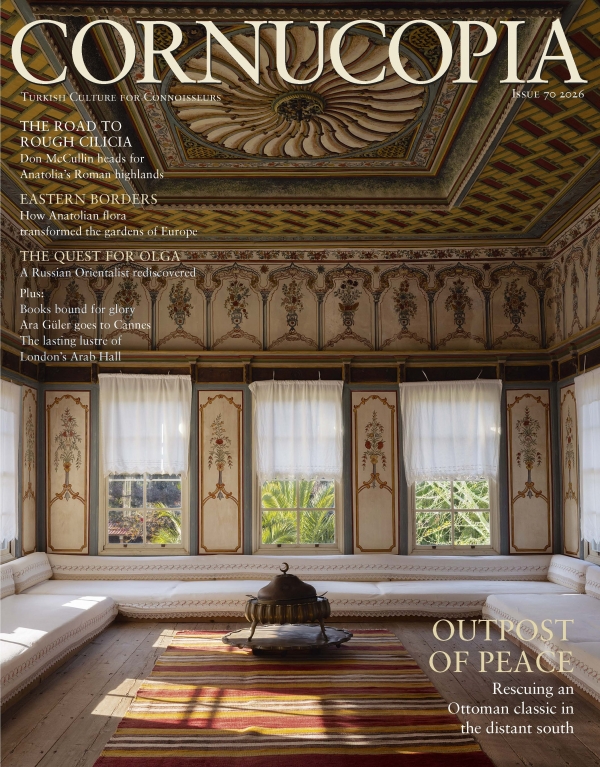
Buy or gift a digital subscription and get access to the complete digital archive of every issue for just £18.99 / $23.99 / €21.99 a year.
Buy/gift a digital subscription Login to the Digital EditionForest fires have taken a horrific toll in Turkey. In this extract from her new book, The Genius of Trees, Harriet Rix reveals why pines will always win the day in their life-struggle with firs, unless man intervenes
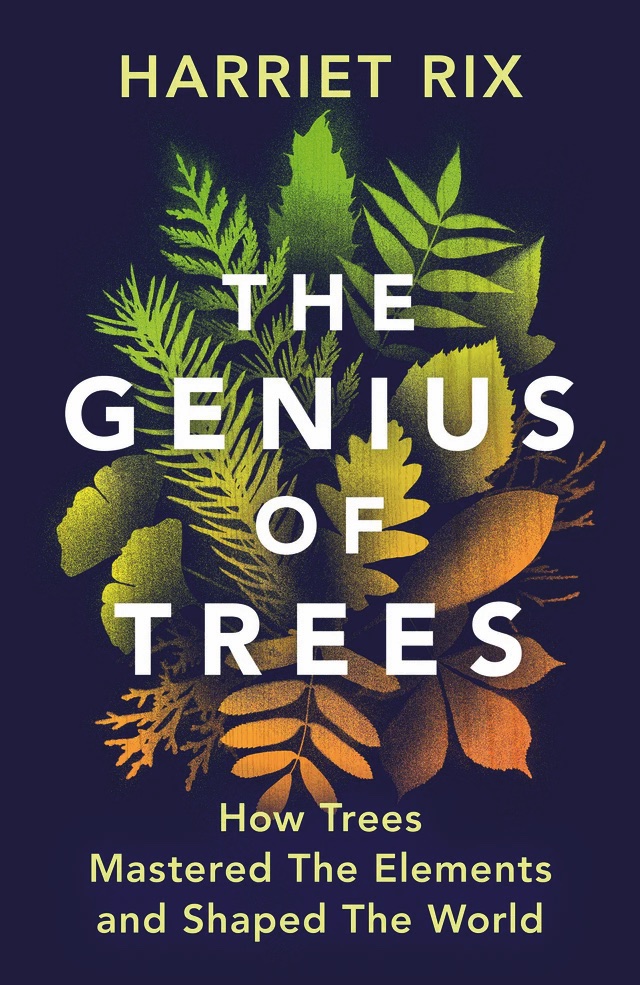
Abies equi-trojani, the Trojan horse fir, grows above the plain of Troy on a mountain known as Kaz Dağı, literally Mount Ida, or Goose Mountain, after the shamanistic Tahtacı Türkmen clans who live there and venerate geese. The clans also venerate trees, and were originally settled on the mountain in the 15th century by Mehmed the Conqueror to cut down the firs for the timber needed to expand the Ottoman fleet. The trees grow slowly, making hard, strong wood, but for the six centuries they were managed by the Tahtacı their numbers were stable
In the past 30 years, though, despite valiant conservation efforts, Abies equi-trojani has been on the decline. It seems a textbook symptom of global warming – driven off the top of the mountain as its former habitats get too hot – until you map the movements of the trees across the region. Scientists from the university nearby suggest that firs are becoming rarer because they are being burnt off the mountain by the trees they live with, black pines, Pinus nigra. Recently the researchers found that there have been many small forest fires on Kaz Dağı, some caused by humans and others by lightning, after which the pines have been outcompeting the firs, re-greening or growing back so quickly that they completely shade out any fir saplings, and driving them to extinction.
This seems an unfortunate coincidence, but the contrasting biochemistries of pines and firs make it clear it is not. When pines experience water shortage the first thing they do is to close their stomata – effectively stop breathing – in order to retain water in their cells. As a result, biochemical pathways that would normally be producing sugars spin off to produce naturally flammable substances, terpenoids, hiking the chances that the pine will catch fire. If the drought continues, and the lack of carbon dioxide drives photosynthesis itself to a halt, the trees start to produce shikimic acid, the forerunner to even more volatile alcohols. This alcoholic haze will ignite at low temperatures, massively increasing the chance of fire, but reducing the chances of pine seeds being annihilated by heat. Walking across Kaz Dağı I’ve seen pine trees that have been struck and killed by lightning but remain standing, hollow, taller than all the trees around them, retaining their resins and acting like a match in the next storm. Fir trees do the opposite. Their response to drought is to produce what is essentially a fire retardant, a thick gooey oleoresin that is very hard to ignite. The ecologist Oliver Rackham put it best: “Trees and other plants,” he said, “are not flammable by misfortune but by adaptation.”

Berrin Torolsan on the wonder bulb

Doyenne of curators, Nazan Ölçer, by Andrew Finkel
Barnaby Rogerson and the photographer Don McCullin set out from Turkey’s capital for Rough Cilicia

Around the World
Martyn and Alison Rix chronicle Turkey’s extraordinary botanical legacy


This grand mansion, an Ottoman outpost on the remote southern peninsula of Datça, was rotting away when it was rescued by an enterprising new owner. It has now regained every inch of its early-19th-century charm. By Rupert Scott. Photographs by Monica Fritz

Frederick Leighton’s abiding love of the East permeates his entire mansion-cum-studio in Holland Park

A new exhibition turns the limelight on Halil Pasha, pioneer of Turkish impressionism. By Ayla Jean Yackley
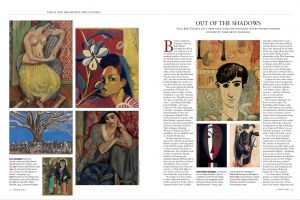
A show that turns the spotlight on two women painters eclipsed by their artist husbands
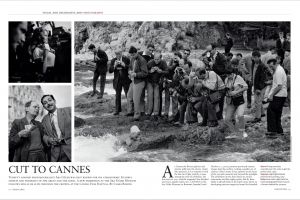
A new exhibition at the Ara Güler Museum follows Turkey’s adored photojournalist to the French Riviera

The beauty of bindings



Cornucopia works in partnership with the digital publishing platform Exact Editions to offer individual and institutional subscribers unlimited access to a searchable archive of fascinating back issues and every newly published issue. The digital edition of Cornucopia is available cross-platform on web, iOS and Android and offers a comprehensive search function, allowing the title’s cultural content to be delved into at the touch of a button.
Digital Subscription: £18.99 / $23.99 (1 year)
Subscribe now