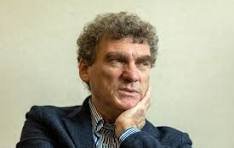
On August 1st I attended the Turkish Youth Philharmonic Orchestra’s annual Istanbul concert, which this year took place in the Lütfi Kırdar International Convention and Exhibition Centre in Harbiye, Istanbul. This orchestra, whose performance is one of the highlights of the musical year, is the brainchild of conductor Cem Mansur, who founded it in 2007 with the help of the Sabancı Foundation, its main sponsor; it now operates under the auspices of the Sevda-Cenap And Music Foundation.
This year, the orchestra’s concert tour began with performances in Ayvalık, Izmir, Bursa and Istanbul; they then played at the Young Artists Festival in Bayreuth, the Young Euro Classic Festival in Berlin, the Sinaia Festival (held at a mountain resort in Romania where King Carol I built his summer ‘home’ – actually a somewhat over-the-top Neo-Renaissance palace), and finally the Romanian Athenaeum in Bucharest. It goes without saying that performing at some of Europe’s leading concert venues provides would-be professional musicians with invaluable experience.
The theme of this year’s programme was ‘The Magic of Music’, and all the works played had a connection of some kind with the world of magic and fantasy. This being said, I found the Lütfi Kırdar Centre’s Anadolu Auditorium a rather less-than-magical venue: there was no-one to show audience members to their seats, and the lights in the concert hall were not turned off during the performance. However, the playing we heard soon made up for any niggles.
First up was the 1893 Hansel and Gretel Overture by the German composer Engelbert Humperdinck (1854-1921), whose name was later hijacked by a pop singer. (This person, whose real name was Arnold George Dorsey, sang the British entry in the 2012 Eurovision Song Contest; he came 25th out of 26.) Let this unfortunate episode not prejudice our judgement of the real Humperdinck, however: this man was a distinguished professor of composition in Berlin. Here is a performance (with the score) of his Hansel and Gretel Overture by the Vienna Philharmonic Orchestra, conducted by Georg Solti.
The Turkish Youth Philharmonic Orchestra played this richly-orchestrated piece with absolute confidence: the brass department was well in tune right from the start, as were the woodwinds, and the change of tempo near the end came off without a hitch. The next item, Tchaikovsky’s Piano Concerto No 1, featured pianist Özgür Ünaldı, who was trained at the Moscow Conservatoire and is also a composer. In the first movement, soloist and orchestra initially got a little ahead of one another, but everyone came back into sync in time for the climax. A gradually slowing-down pizzicato passage for the violins is never easy to manage, but these young players brought theirs off without any co-ordination issues whatsoever – a good deal better, in fact, than some professional orchestras I have heard. Meanwhile, the pianist played his fast-moving passages with impressive lightness of touch.
After the interval, we heard a piece entitled Je ne sais quoi by the 25-year-old Turkish composer Emre Şen. It certainly had originality: there were some weird percussion effects, and some discords that, while resulting in a somewhat muddy texture, were nevertheless highly unusual. The whole thing ended in a bird whistle. This work had no form that I could discern, but the orchestra seemed to enjoy playing it, and the audience responded well.
The last two items on the programme were both by French composers. First, we heard the Mother Goose Suite by Maurice Ravel (1875-1937), a piece in which he exhibited his renowned skills as an orchestrator. And indeed, every member of the orchestra performed superbly: the violins’ pianissimo entry in the high register was perfectly in tune, the percussionists’ timing was flawless, the woodwinds (especially the clarinets) excelled themselves, and there was a lovely solo by the girl konzertmeister. In this performance, we hear the Berlin Philharmonic Orchestra, conducted by Simon Rattle.
Lastly, we heard The Sorcerer’s Apprentice by Paul Dukas (1865-1935) – a teacher, and later friend, of Debussy. The music gradually speeds up, mirroring the antics of a broom that gets out of control thanks to an incompetently-cast spell; this is, of course, a recipe for co-ordination problems – but not for this orchestra, who overcame them effortlessly. I particularly relished the brass-players’ verve in the fanfares, and the perfectly-timed entries from the strings and woodwinds. In this recording, The Sorcerer’s Apprentice is played by the London Philharmonic Orchestra under the baton of Edward Gardner.
The Turkish Youth Philharmonic Orchestra seems to get better and better every time I hear it – something that is most encouraging from the point of view of the future of Western classical music in Turkey. So I congratulate Cem Mansur on his praiseworthy initiative, and have special thanks and appreciation for everyone – both the institutional and the individual sponsors – who allow it to continue, and thrive.