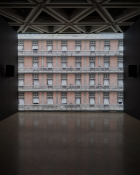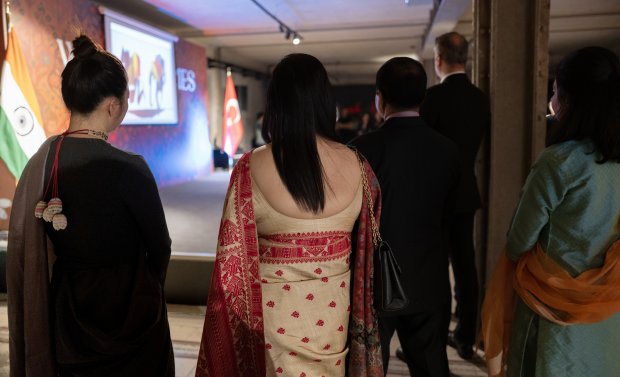
The Woven Legacies Exhibition, held for the first time in Istanbul from 27-29 November 2025 at Metrohan, celebrated India’s rich textile heritage. Hosted in collaboration with the Consulate General of India, this gathering brought together collectors, textile enthusiasts, experts, designers and artists for conversations on India’s textile tradition and their evolving role in contemporary design and culture. The most beautiful aspect of organizing such events is meeting new people and witnessing the new perspectives that emerge from the interaction of different ideas. The support Consul General Mijito Vinito has shown for this project—and the inspiring story of Princess Esra, have been among the most precious parts of this journey.
Throughout history, Türkiye and India have exhibited various parallels in weaving techniques, design traditions and materials, largely because both countries lie on two significant cultural and commercial hubs of the Silk Road. These similarities are far from coincidental; they often represent a cultural flow born from the interactions between the two regions.
When we speak of heritage, India and Türkiye are both very rich and diverse. Heritage is about the stories of that society and designing this event in Istanbul was a promise to visitors to engage in a dynamic cross cultural exchange. At the heart of the event is a shared commitment to craft sustainability- not simply preserving heritage but reimagining within today’s creative frameworks.
My collaboration with India, however, carried a deeply personal meaning. As the fourth-generation representative of an entrepreneurial family, I started my career deeply influenced by a trip to India I took with my grandfather. That journey became the starting point of the mission I carry today. It helped me understand that carpets and textiles are not merely objects but integral parts of a society’s deep cultural heritage, ultimately steering me toward academic research in this field. Curating an exhibition on Indian craftsmanship in Istanbul became both a professional and emotional milestone. Telling a country’s story by tracing the marks of its culture and bringing audiences into contact with this heritage gives me great joy each time.
Through curated displays and panel discussions, the event highlighted how traditional Indian weaving practices continue to inspire innovation- serving as a living medium through which cultural narratives are told, identities are shaped and international collaborations are formed. As the curator, I wanted to show that heritage is not an ancient memory but a living presence. And when modern vision is born through the hands of craft, the result is nothing short of mesmerizing. Each piece becomes a thread connecting person to person and generation to generation.
On one side, rare pieces are exhibited, including a collection from the last Nizam of Hyderabad at Chowmahalla Palace, presented to the public for the very first time. I am deeply grateful to Esra Birgen for her unwavering support. Esra Birgen- later known as Esra Jah- married to the eighth Nizam of Hyderabad, Mukarram Jah. Through her projects, she has played a vital role in bridging Turkish and Hyderabadi Heritage, using her dual cultural background to enrich both traditions. She led the remarkable restoration of Chowmahalla Palace- considered the largest restoration project undertaken since 1947- and was honored with the UNESCO Merit Award. She also helped renovate Falaknuma Palace, later leased to Taj Group and turned into a luxury hotel. The collection she brought from Chowmahalla Palace — being presented to an audience for the very first time — and her presence with us during the event marks her as the symbol of keeping heritage alive.
Hyderabad and Türkiye became politically connected through marriages that took place after the collapse of the Ottoman Empire. At that time, under the Nizam’s vision, Hyderabad was experiencing its most glorious days, with the Nizam being one of the richest men in the world. During our panel discussion on November 28th, Princess Esra shared her memories from the past and we had a chance to revisit the threads of stories.
“Hyderabad had an infrastructure far ahead of its time, even serving as an example for England. When we compare clothing and the place of women in social life to today, they were in a much more favorable position. I remember being astonished by the fact that jewelry was designed for men and that men wore more elaborate clothes than women, adorning themselves with jewelry. Perhaps this helps us understand a bit of the splendor of life back then. Today, these traditions no longer continue with their former enthusiasm. I don’t think it’s right that some ways of life and habits disappear under the pressure of modernization.”
Along with the Chowmahalla Palace collection, Şeref Özen, showcased an invaluable collection of kaftans and shawls. Şeref, being a textile enthusiast for more than two decades, traces the memory of each textile he collects.
Kashweave, born from the timeless artistry of Kashmir, is a contemporary brand dedicated to preserving the region's age-old weaving traditions. Two antique shawls- both dated to the 19th Century- from Kashmere region along with rugs and modern shawls displayed to show his passion on continuity of the heritage.
Kashmirloom, Tarun Tahiliani and Injiri - who carry that tradition into the future showed the beauty of their collection within their own design language. The techniques are traditional but garments are modern- it can easily become your everyday style.
Kashmir Loom has infused a modern soul into the woven and embroidered shawls from the beautiful lake capital of Kashmir Valley. Their endeavor has been to preserve heritage while fostering its progress. Their great inspiration is Kashmir, ranging from the valley’s unique location to weavers' talented hands.
Tarun Tahiliani constructs his way of modern woman silhouettes with his guiding philosophy “all that we were and more”. It is a brand rooted in India’s heritage of draped form and tradition of artistry.
Injiri, meaning “real India”, historically stands for real Madras checkered textiles exported to West Africa in the 18th century. Not dictated by trends and fashion shows, Injiri’s design language is derived from learning and studying ethnic traditions in the world.
In my view, cultural diplomacy is one of the most effective fields in building bridges between Türkiye and India. I see such events as complementary elements that help sustain the centuries-old relationship between our countries and strengthen the common language reflected in our emotional narratives.
Today, culture has become the most powerful form of communication in the world we live in. The Islamic Arts Biennale held in Jeddah last year, Egypt’s Grand Egyptian Museum—described as the “fourth pyramid”—and the first-ever Bukhara Biennale are concrete examples of this shift. At the Bukhara Biennale, curator Diana Campbell encouraged participating artists to collaborate with local master craftsmen. The inclusion of these artisans’ names on the labels of exhibited works signals the beginning of a new era in cultural policy. Art and culture function like a locomotive, carrying everything a country produces onto the world stage. Countries promoting their cultural heritage on the global stage, creating spaces for cultural exchange and circulating their unique symbols internationally form the foundation of what we call “soft power.”
Just as in the past, today we can initiate new global dialogues to sustain and enrich this exchange. A story can become a future inspiration. Hopefully more designers and collectors will be part of these stories. The excitement among the audience was already a motivation for the next edition of events. Having a cultural element take form in any branch of art and revealing the connections between past and present is my greatest passion. What began as a journey to uncover cultural stories now continues through strong collaborations that allow me to pass this heritage on.