Ian Nagoski + The Family Elan
‘To What Strange Place,’ The Music of the Ottoman-American Diaspora
February 11, 2012 8 p.m.
Tickets: £7 advance (buy here) / £8 on the door
Cafe OTO
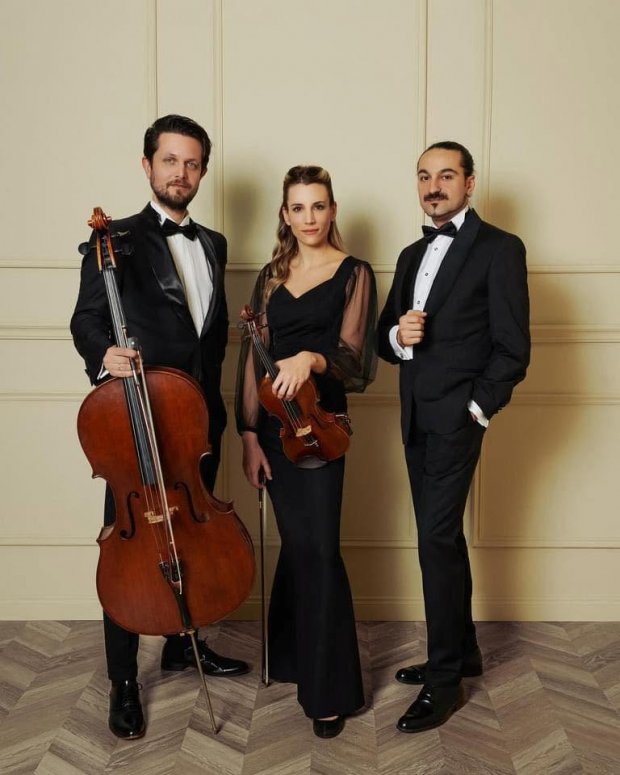
18 – 22 Ashwin Street Dalston, London E8 3DLFor those of you in London, we advise you not to miss this talk on Ottoman Diaspora Music by self-educated ethnomusicologist Ian Nagoski, part of his speaking tour that will take place throughout the UK and Europe. Nagoski is the producer of the 3-disc compilation album “To what strange place: The Music of the Ottoman-American Diaspora, 1916-1929.” The lecture will be followed by a concert by the bouzouki/bass/percussion trio, The Family Elan.

15 years ago in Baltimore, Nagoski started collecting old 78s from record stores and resolved to adhere to one personal rule: “anything that isn’t in English, buy it.” And so he did. His records included music from Turkish, Greek, Armenian, Jewish, Assyrian and many other origins. Even though at the beginning he couldn’t quite understand what he was coming across, in time he came to realize that this wide range of old recordings in different languages came from one only source, immigrants from the Ottoman Empire in its final stages of collapse. This moment of illumination changed everything for Nagoski. As he continued his research more thoroughly, he found out the musicians were extremely accomplished, some of them having played for royalty.
The melodies that he found are at times powerful, fierce and dashing, and sometimes they are nostalgic, sombre and mellow. After all, these were the people who had left their homeland for a new but hazy future in the New World. On the album you can listen to the bitter-sweet voice of the long-forgotten Marika Papagika singing songs about Smyrna, or Ahilleas Pulo’s regretful words- “Why did I come to America? I’m bewildered, I became a tramp, Now I regret it a thousand times, but what’s passed is passed, there is no way (back).”
You also hear folk recordings that inspired famous American hits –such as the soundtrack to Quentin Tarantino’s film Pulp Fiction, ‘Misirlou’, which was also recorded in Greece and in Turkey. (You may know the famous Zeki Müren version of the song in Turkish, with the title Yaralı Gönül (Wounded Heart))
Nagoski comes to the conclusion that this music from the Ottoman Empire is part of American folk music history. In his short documentary film about the project (watch trailer), he says: “Country, blues, jazz, gospel, all the stuff that we built our identities on as Americans, started being recorded between 1920 and 1925. But by 1912, there were already recordings made in New York City in Turkish.”
During his lectures, Nagoski will talk about his musical-historical adventure. He will play some of the tracks from his collection and relate stories of migration, the record industry and the cultural circulation of music.
Other U.K. Dates & Venues:
February 12, The Prince Albert, Brighton
February 13, Hastings Museum and Art Gallery, Hastings
February 14, Kraak, Manchester
February 15, 13th Note, Glasgow
February 17, Cabaret Bar, Edinburgh


The exhibition begins with Kavalalı Mehmed Pasha – an army officer with modest ancestors from Konya, but who was keen to get ahead in life. Skillfully making use of his achievements in the army, particularly against Napoleon Bonaparte’s forces, Kavalalı managed to overpower Egypt’s leading pashas and become the first Ottoman governor in Egypt. As Kavalalı attained more political and military power, he rebelled against the sultan, sweeping away tradition and allowing his family to gain a privileged status within the Ottoman State of the 19th Century.
The exhibition mainly consists of paintings and photographs from this era, as well as personal belongings and documents. There are family photos which show an ostentatious life style – princesses in their effulgent clothes and costumes displaying their affinity to Europe. One of the most striking is of Princess İffet in pharaonic headdress, reflecting both the Western fashion for égyptomanie and the origins of the dynasty’s wealth. They are proof of the family’s extravagant lifestyle, yet they also make it clear why some conservative writers of the 19th century such as Ahmet Cevdet Pasha would describe the family as “Egyptian Riff-Raff.”


A 3-day symposium begins at the Pera Museum tomorrow (Wednesday 18 January). Its subject? Caves.


2011 sees the 250th anniversary of the birth of Selim III (1761-1808), a reformist Sultan, great romantic personality and one of the most ingenious composers in the history of Ottoman Classical Music. Selim III’s contribution is regarded as a milestone in the cultural and musical history of the Turkish people and two concerts this winter are honoring that legacy.
Lovers of Turkish ceramics should not miss a symposium at the Pera Museum on Saturday. “From Kutahya to the World: the Story of Tiles and Ceramics,” will bring together experts on Kutahya pottery to talk on subjects including the production of tiles and ceramics in Kütahya, the specific attributes and periods they belong to, regional comparisons, production of Kütahya ceramics from archaeological excavations and ceramics collections in foreign museums.


RSVP to Julie Witford +44(0)1450 379933


Visitors tour the galleries on the first floor of Contemporary Istanbul

A painting by Selma Gürbüz is taken off the market at the