LA VIE EN ROSE

Home Page

Cornucopia 23

Subscribe

Issue 23

The Turkish rose harvest by Martyn Rix

Published in
Cornucopia 23

Photographs
©Berrin Torolsan
and @ Martyn Rix

See below for travel and shopping notes

Turkey's lake district, just a 90-minute drive over the Taurus Mountains from Antalya, is one of the most beautiful areas to explore. It features regularly in Cornucopia. We recommend:
Cornucopia 11: Lake Shore Drive, by John Ash (Beysehir and the remains of the Palace of Kubadabad)
Cornucopia 17: Silence of the Lammergeiers, by Kate Clow (walking in the mountains above Egridir, Isparta and Beysehir)
Cornucopia 34: Walking the Taurus, by Caroline Finkel
Also order your copy of Cornucopia 35 (out early 2006) for a new series of archaeological drives by Patricia Daunt and receive back issues post-free
(subscriptions)

Articles in Cornucopia by Martyn Rix:
Cornucopia 26: Mt Ida: wild flowers about the plain of Troy
Cornucopia 31:Along the Rocky Road: Spring flowers of the Taurus

Books

St Paul Way: by Kate Clow

The Best Small Hotels of Turkey


LA VIE EN ROSE

The intoxicating scent of attar of roses, the oil distilled from the petals of damask roses, has worked its magic on men and women for centuries. Martyn Rix traces the history of the damask rose from its roots in Neolithic times and travels to Isparta in southwest Anatolia to see how these precious petals yield up a liquid worth its weight in gold.
Photographs by Berrin Torolsan and Martyn Rix


--------------------------

So popular did roses become in Roman times that Horace worried the craze would cause farmers to neglect their olive groves. The Romans were prolific producers and consumers of roses. They used the petals in cooking, in flavouring wine, puddings and sherberts, as well as at family festivals; rose-scented oils were used instead of soap. Two thousand years earlier, the Egyptians had been enthralled by the rose. Two thousand years later, we are equally under its spell. Attar of roses is literally worth its weight in gold.

A few years ago I was preparing a television programme on roses with Roger Phillips. We planned to trace the ancient history of roses and, if possible, to find the white-flowered climber Rosa phoenicia, a rather mysterious plant not cultivated in England, which has always been assumed to be a parent of the summer damasks. I remembered an inspiring article by Berrin Torolsan, in an early issue of Cornucopia, which described the damask roses of Burdur and Isparta and the manufacture of attar of roses ­ of which Turkey is the world’s largest producer ­ and gave delicious-sounding recipes using rose petals.

In late March the director and I flew to Antalya and drove north towards Isparta to recce the site. Though spring in Antalya, it was still winter in Anatolia, the hills bare, brown and dry, snow covering the mountains. Only among the ruins of Sagalossus, a short diversion from the main road, did we find the earliest spring flowers ­ small cyclamen, crocuses and dwarf colchicums ­ growing between the seats of the theatre. The mountains around Isparta are mostly treeless, with powdery volcanic soil. On the lower slopes, the terraced fields are planted with roses, like low thorn hedges, following the contours. Poplars and fruit trees are concentrated on the lower, richer ground.

We talked to the caretaker of one of the distilleries, empty and silent except during the rose harvest, and arranged to come again when roses would be flowering. After inquiries in Isparta, we decided to return in early June with a whole crew.

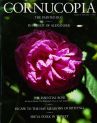
By then the countryside was transformed, the cornfields with sheets of purple larkspur, clumps of vetch and an exciting Venus’s looking-glass (Legousia pentagonia). Young leaves covered poplars in the valley, and rose hedges were a soft green, with masses of pale pink buds. The roses grown around Isparta and Burdur are summer damasks, the variety called trigintipetala or ‘Kazanlik’.

Kazanlik is a town in central Bulgaria, which was the centre of production of attar of roses from the seventeenth century. Roses were taken there by Ottoman merchants, and cuttings were brought back to Anatolia during the movements of population following the war between Russia and Turkey in 1878. They were planted in various places, such as the Göksu valley on the Bosphorus, but thrived best in the deep, sandy soils around Isparta and Burdur, and it is here that Turkish rose production is now concentrated.

The parentage of the summer damask rose such as ‘Kazanlik’ is thought to be Rosa gallica ‘Officinalis’ crossed with Rosa phoenicia. Wild Rosa gallica is a dwarf suckering shrub with richly scented pink or red flowers, solitary or a few together, and few thorns. It is found around Istanbul, in many parts of northern Anatolia ­ for instance, I have seen it in the hills east of Ankara ­ and as far as the Caucasus. It is also scattered across central Europe as far west as the south of France, usually growing in limy clay soil.

Rosa phoenicia, the other object of our visit, is less well known but has been recorded all around the southern and western coasts of Turkey and inland as far as Adiyaman and Siirt. It also occurs in Lebanon and northern Iraq. This conspicuous white-flowered climber threads its way through hedges and reaches up into trees. We found it at Side, where the sand has blown over the ruins of the old city, and near the coast around Phaselis. The flowers are numerous, in a dense head, and have a rich, musk-like scent. The leaflets are hairy and rounded, with unusual short, blunt teeth. It is a combination of the characters of these two roses that has made the ‘Kazanlik’ damask and similar hybrids so floriferous and well-scented and therefore suitable for scent production.

--------------------------

Rosa phoenicia belongs to a large group of wild roses found from western Europe to the Himalayas and into China, mostly climbers with numerous white flowers in loose heads. In the same group is the Persian musk rose, Rosa moschata, whose origin, though much studied, is still a mystery. It flowers in late summer and autumn. Nowhere is it truly wild, though it is found in or near gardens across Asia, as far as Afghanistan and India, so it must be a cultivated plant of great antiquity, chosen for its late blooming. This Persian musk rose is thought to be the parent of the twice-flowering autumn damask, the ‘Quatre Saisons’. Its spring flowering comes from its gallica parent, its early autumn flowers from moschata.

The summer damask is most likely to have originated, as far back as Neolithic times, in southern Anatolia, from a cross between a double-cultivated Rosa gallica ‘Officinalis’ and a wild Rosa phoenicia growing in a nearby hedge. If this seems far-fetched, the first Bourbon roses are known to have arisen on the island of Réunion in the Indian Ocean, around 1817, from the crossing in a hedge of the pink china rose with the autumn damask, cleverly spotted by a French botanist, a M Bréon.

As well as being cultivated in profusion by the Romans, damasks were grown in Egypt for export to Rome in winter. Chaplets of roses found on mummies have been identified as Rosa richardii (or Rosa sancta, the holy rose), a pink, single-flowered, damask-like rose which survives around old churches in Ethiopia.

Recent studies of rose scents have identified the chemicals which make up the perfume of damasks and their parent roses. The major constituents of Rosa gallica’s scent are geraniol, citronellol, nerol and phenyethyl alcohol, carried on the petals. These scents are very stable and, combined with the dark red colour, make Rosa gallica especially useful for cooking and for drying. In low-growing shrubs, they attract bees flying near the ground. In the phoenicia type, eugenol, hexanol and phenyethyl alcohol are found on the stamens. Being more mobile, these scents carry on the air for some distance and draw bees to flowers many feet above the ground.

Damasks have a combination of both types, giving them an exceptional richness and large numbers of flowers. In the semi-double ‘Kazanlik’, more than 400 additional constituents have been identified in smaller or minute quantities. These old rose scents are very different from those of modern roses, with a partly Chinese parentage, derived from the tea-scented Rosa gigantea.

--------------------------

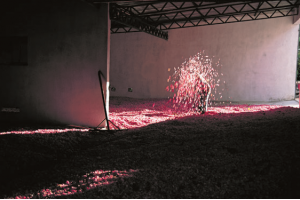
Rose oil is produced by distilling the petals in a copper vat by passing hot steam over them. They must be picked in early morning, before the sun has reached them, while the flowers are still half open and the scent is at its strongest. Families gather in the fields and fill huge sacks which are loaded into cars and onto donkeys and carried to shady collection points by the roadside. Each contribution is weighed before being taken to the factory, where the petals are kept cool before being packed tightly into the vats, stamped in and sealed.

The steam from the vats is condensed into large bottles, producing mainly rosewater, but a thin layer of yellowish oil, the gül yagi, or attar of roses, floats on the surface. This most valuable oil is then carefully bottled. Most of it is exported to Grasse, in France, a town of perfumeries and blending factories.

In spite of diligent enquiries, we were unable to buy any attar of roses in Isparta, but were given tiny glass phials to take home. Even after many years and much sniffing, the powerful scent remains, and simply opening the bottle reminds me of early morning in the hills near Isparta, and the warm steam of the factory.

©Martyn Rix / Cornucopia Magazine 2001

Subscribe to Cornucopia for post-free delivery of this issue

Order Cornucopia 23 now

See other Cornucopia 23 highlights

TRAVEL NOTES

Go in May-June. Take a car. The western shore of Lake Burdur is a good place to start, but be warned the fields are quire invisible from the distance. The roses are harvested early in the morning. Isparta has a modest 3-star "town" hotel with pictures of Hawai on the wall and stuffy rooms. Egirdir has a choice of pensyons. Antalya is about 90 mins drive.

SHOPPING;
Where to buy rose oil and rose water:
During the harvest it is usually possible to buy rose oil and rose water direct from distilleries such as Robertet (tel 90-246 553 2029, fax /553 2492) and Sebat (tel 90-246 553 3076, fax /553 2423.
www.unitedroseoil.com). Another good provider is Erçetin (Isparta-Egirdir road: tel 90-246 224 1245/6, fax /6793) A reliable brand in Isparta shops is Gülbirlik. To buy in quantity, visit the Gülbirlik offices at No 101, 115. cad. Isparta (tel 90-246 218 1280). Prices vary from year to year. Gülbirlik's 400ml rosewater is around 60 cents (40p). Rose oil is sold in 1g phials at $3.60 each. In Istanbul you might chance on Gülbirlik rosewater in pharmacists and the spice market. The best supplier is Konurlar, whose fine kumkuma vessels are illustrated above. Mr Konur no longer produces rose oil, but he founded Robertet's distillery in Senir and knows where to buy the besxt quality (tel 90-212 266 3463, fax 275 7513)