|
 |
With eighteen pack ponies to carry their supplies, Sir Percy and his sister set off across the fast-flowing Gez river up to Lake Bulangul and the country of the Kirghiz nomads, who welcomed them into their felt ak-oys (ak ev, or white houses), which were much warmer and more comfortable than their own camping tents. As they climbed, they changed their pack ponies for yaks and reached the 16,000-foot crest of the Katta Dawan Pass, with its spectacular view of the Great Karakul (Black Lake) on the Russian side. They visited Pamirski Post, the Russian military outpost at the head of the Murghab valley, which forms one of the headwaters of the Oxus. Even the bottoms of the valleys were 12,000 feet high – higher than most of the Alps. This was the home of the Ovis poli, the Marco Polo sheep, with its huge spreading horns, the most coveted trophy of English sporting soldiers in India.
Crossing back into Chinese territory at Tagharma, with its astounding view of Muztagh Ata (Father of Ice Mountains), the Sykeses were treated to a display of olak tartush, the Kirghiz equivalent of the Afghan buzkashi, a form of mounted rugby with a goat carcass for a ball. The players compete in a free-for-all to pick up the carcass and carry it off round a post in the distance and back to the starting point.
The Sykeses made a detour on the Russian side to the Sarikol valley, populated by Ismaili Muslims, followers of the Aga Khan, who spoke Sogdian, a very ancient form of Persian. The Aga Khan, who lived in India, was a British subject and, by extension, the Sarikol Ismailis considered themselves similarly tied.
They continued up to the foot of the glacier of Muztagh Ata by yak, led by their Kirghiz guide in his long red leather riding boots, fur cap and padded coat of many colours. Further than this he refused to go, for the Kirghiz believed Muztagh Ata to be haunted by fairies, camels of supernatural whiteness and mysterious drummers (probably the sound of rocks splitting in the cold). The Gez river was by now flooded with snow melt, so they had to return by way of the difficult Ulutagh (Great Mountain) Pass, which was open only in summer and was always dangerous for animals. Hanging on to their astoundingly sure-footed yaks for dear life, they slithered over the ice and scree down to the other side. Once on level ground they exchanged their yaks for camels and rode the last thirty miles into the stifling July heat of Kashgar.
In September they set off once more, this time along the southern edge of the Taklamakan Desert to the oasis cities of Yarkand (present-day Sache) and Khotan. They hired high-wheeled wagons to carry their baggage over the heavily rutted roads and, although highway robbery was almost unknown in Eastern Turkestan, various characters attached themselves to their party to enjoy reflected consular glory. Among them were the master of the horse of the Rajah of Punyal and his groom, on a mission to buy Badakhshani horses; the chief falconer to the Mehtar of Chitral, in search of a pair of extremely rare white hawks found only in the district of Sarikol; and a Hindu trader with a wooden leg who saluted Sykes in military fashion whenever occasion offered. There were many British subjects in the southwestern part of Chinese Turkestan, mostly Indian merchants bringing goods over the Himalayas. They brought in English and Indian printed cottons and muslins, spices and Lipton’s tea, and exported raw silk and high-quality cannabis. The visit of their consul was welcome and, as Sykes’s caravan proceeded, its tail grew longer and longer.
Yarkand they found to be the most fertile and prosperous of the southern oases. The Yarkandis, who did not boil their drinking water, suffered famously from goitre. At each town the Sykeses received the respects of the British ak sakal (white beard), usually the senior Indian merchant. There was a network of ak sakals across Eastern Turkestan. As well as representing their own little community, they passed news of local goings-on back to the British consulate in Kashgar. There was nothing underhand about this arrangement, of which the Chinese were perfectly well aware. Under Chinese capitulations the Indians were subject to British law and it was the consul’s duty to settle their disputes with the Chinese authorities.
To reach Khotan the Sykeses had to ferry the horses across the wide Yarkand river, which carried melting summer snow-water northwards to disappear in the desert. Khotan was famous for its jade and silk. It was from here that in 550ad silkworm eggs had been stolen and taken to Byzantium to break the Chinese monopoly on the trade. In each of these towns Sykes had to visit the local governor and, with the British ak sakal, settle all the Indians’ disputes, some of which had been outstanding for years, before he and Ella could return to Kashgar.
In November 1915 the Macartneys returned from leave and Ella and her brother set off on the long journey home through Russia to England and back to the Great War. Four months later Sykes was to land at Bandar Abbas on the Persian Gulf with a handful of British army officers and Indian warrant officers to raise the regiment of South Persia Rifles to deal with the German infiltration of southern Persia.
Antony Wynn’s biography, Persia in the Great Game – Sir Percy Sykes: Explorer, Consul, Soldier, Spy (John Murray, 2003), is currently out of print.
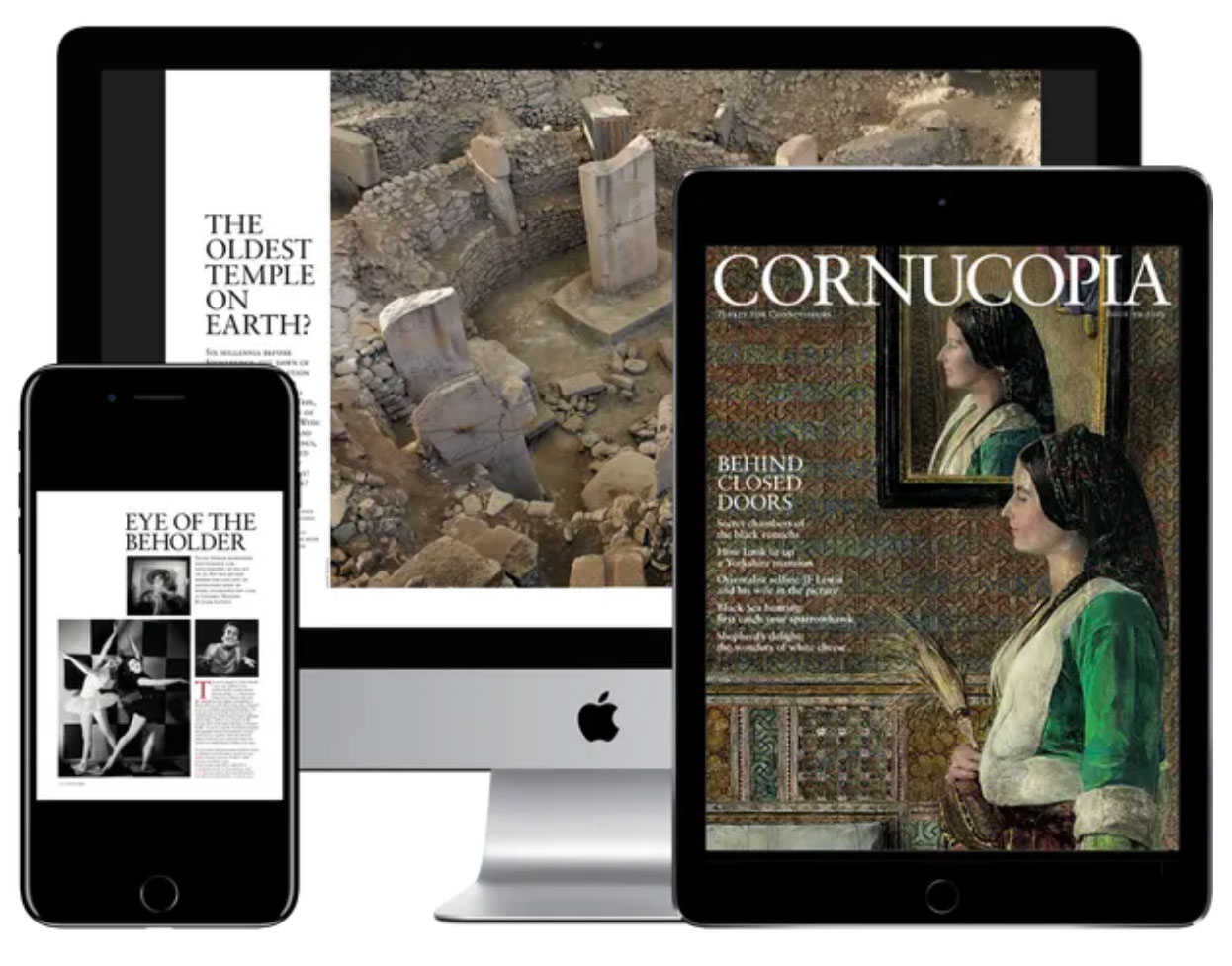
Also recommended: Through Deserts and Oases of Central Asia by PM Sykes and Ella Sykes (London, 1920); The Great Game by Peter Hopkirk Wild West China by Christian Tyler (both available online from Cornucopia). Cornucopia 31 featured a 36-page article on the Uighurs.
Two Turkish memoirs, not translated into English, offer first-hand accounts of the adventures of Turkish agents in Eastern Turkestan: Ahmet Kemal Ilkkul’s Çin Türkestan Hatırları (Ötüken, Istanbul, 1997), and Adil Hikmet Bey’s Asya’da Bes Türk (Ötüken, Istanbul, 1998)
Return to Issue 36 Highlights
|
Views from the Edge of Beyond The Temporary Consul by Antony Wynn Cornucopia Issue 36
The city of Kashgar in Eastern Turkestan, at the foot of the Chinese side of the Pamirs, lies at the centre of a triangle, with Russia to the west, China to the east and India to the south. In the late nineteenth century it was at the centre of the Great Game. Peopled largely by Muslim Turkic-speaking Uighurs, this was the westernmost part of the Chinese empire, but internal communications were so bad that Peking had only a very loose hold over the province. To reach Kashgar, Chinese goods had to be shipped by sea through the Bosphorus to Batumi on the Black Sea, then overland to Baku, then by ferry across the Caspian to Krasnovodsk, to join the Russian railway via Samarkand to Andijan. From there it was a matter of carts, pack ponies, yaks and camels to Kashgar. It was far easier for Kashgari merchants to trade with Russia.
At the end of 1890 the British government of India became concerned by Russian penetration of the area and sent George Macartney out to establish a British consulate at Kashgar and keep an eye on Russian activity. By 1915 he had been there for twenty-four years and had been granted only two home leaves. The authorities felt that, twelve years after his previous leave, Macartney might deserve a short break.
The person sent to relieve him was Sir Percy Sykes. Sykes had been a consul in eastern Persia since 1894 and was a noted explorer. His wife felt it beyond the call of duty to accompany him to this remotest of British outposts with their six small children, so Sykes took his unmarried sister Ella to keep house for him. She was a tough and fearless traveller, who had ridden from one end of Persia to the other with her brother fifteen years earlier. They took a series of trains through Russia to Tashkent and Andijan, and then a springless carriage to Osh, the last town in Russia before the pass over to Kashgar. The final part of the journey was by horse and yak, staying in very primitive accommodation on the way.
Kashgar was the most isolated of British consulates at that time. Despatches to India took three weeks to get there by runner, and social life was limited. Aside from a dozen rather boisterous Russians at the consulate, there were some dour teetotal Swedish medical missionaries, who disapproved of the Russians and would have nothing to do with them. The Russians were good company, but their idea of a decent dinner party was one that ended at dawn, which was a little trying for Ella. Another problem for her was the consulate cook, who tried but failed to make his rock cakes rise by inadvertently using, instead of baking powder, the arsenic powder kept for curing the skins of animals and birds that Sykes had shot.
In 1877 China had regained control of Eastern Turkestan from the local Uighur beys. At the end of 1911 the republican Sun Yat-Sen revolted against the corrupt Manchu emperors, throwing the country into a state of turmoil. Chinese Turkestan was split between the republicans and the supporters of the Manchus. Stray packs of unpaid disbanded soldiers added to the violence of the upheavals and, on top of that, there was a local nationalist movement to secede altogether from China. The Russians, on the usual pretext of protecting foreign subjects in danger, had sent in a thousand Cossacks and four hundred riflemen, whom the Chinese were unable to resist. The Russians were one step closer to India.
As the Great War spread, the Turkic-speaking province of Eastern Turkestan became of interest to the Germans and their Turkish allies, who, in the view of the British in India, were dreaming of “setting the East ablaze” with an Islamic revolt that would sweep all the way to India and destroy the British Empire. Turkish agents began to use Eastern Turkestan as a base from which to stir up the tribes on the borders of India and in Russian Turkestan. In February 1915 a party of five Turks appeared in Kashgar. Macartney learned that in the spring they intended to travel to Afghanistan and attempt to incite the Afghans to join the fight against the British. He asked the Chinese to send them back, but was told that China was neutral and had no reason to exclude them.
Shortly after his arrival, Sykes was watching another party of Turks heading for Afghanistan. Sykes and the Russian consul, acting together, arranged for the taoyin, the local governor, to detain them. In May yet another party of Turks appeared; they were arrested by the Russian Cossacks on the border. Two months later the Turks tried again. This time a number of them came to open a school, but the Kashgar merchants were opposed to the introduction of any new ideas that they could not control and, encouraged by the Russians °© or so the Turkish agents claimed °© paid the mullahs to denounce the Turks from their pulpits. The points that the mullahs insisted on were that: Ottoman Turkish was not to be taught in the schools; the only subjects to be taught were Arabic and religion; nationalist and ethnic poems were to be deleted from the syllabus; handwriting was not to be taught in the Ottoman but in the Kashgari style; students were to wear turbans and long coats, not European dress; greeting was to be in the form of a loud Es-selaamun aleykum and not a salute; history and geography were not to be taught, and schoolbooks should carry no illustrations.
Life in the Kashgar oasis revolved around the peaceable cultivation of raisins and watermelons. Seeking relief from the tedium of life in irrigated country, where it was flat and there was nothing in the way of game for Sykes to shoot or open cultivated space where they could ride out on horses, Sykes and Ella left the oppressive heat of June on an expedition to the Pamir Mountains, the great natural barrier between the eastern part of the Russian empire and British India. Up in those mountains were little-known passes that needed to be mapped for British military intelligence. During his years as consul in Persia, Sykes had seen much of Russian perfidy and disregard for treaties. Russia was allied to Britain now, since both were at war with Germany, but Sykes was not convinced that the Russians had abandoned their project to annex India to their eastward-spreading empire.
|
 |