The magazine for Connoisseurs of
  Home
Cornucopia 42 restaurant reviews


Sahan Vega

Sahan Sirehan

Ispartalılar Konagi

Germiyan Konagi

Sunset Grill and Bar

Kantin


If you want to know the meaning of the word “earnest” try discussing the right way to cook purslane soup over dinner in the southeastern Turkish city of Gaziantep. Or the perfect texture for the tiny rice dumplings in the festive dish of yuvarlama. There might be another spot on the globe that takes its food more seriously, that is more relentless in its search for the absolutely authentic, but it is on no map I’ve ever owned.

A walk through the kaleidoscope of colours and tastes of the downtown Elmacı market, past pulses and pepper pastes, nougats and bright green pistachios, is a dizzy-making excuse to sit down for another meal. People from Gaziantep refer to their home as Antep. The title “Gazi” was awarded to the city in 1921, but like a best suit, they keep it uncreased in the cupboard at home. It’s only outsiders who wear it in public – a bit like the way New York’s Sixth Avenuers never say “Avenue of the Americas”. So, in Antep it’s not politics that drives families apart but arguments over where to buy the best baklava. Foodie values are inculcated from birth. I wouldn’t be surprised if babies there did blind tastings of mothers’ milk.

Which makes it all the more surprising that there is not a well-defined culture of dining out. There are, of course, the famous kebab restaurants, many of which have established elegant outlets in Istanbul. In Antep itself these are on the whole places for lunch or an early dinner rather than somewhere to linger over an evening meal. For a start, most don’t serve alcohol. This is all a bit frustrating for people from outside who still say “Gazi-antep”. Though there are wonderful things to sample in the city’s eateries, you always have the nagging suspicion your waiter is dreaming of a special dish he can only get back home.

And that is where Tahir Tekin Öztan stepped in to shake things up. Or rather stepped back in. Mr Öztan is an Antepian in exile who has returned home in style. His story is an interesting one. He went with his family to Istanbul as a lad, worked in the family restaurant after school and defied everyone’s advice by opening up a hole-in-the-wall on a spot where restaurant after restaurant had previously failed. Mr Öztan now rules a catering empire on the Asian side of Istanbul. The largest of his Sahan chain would not seem small in Las Vegas (it is at the entrance to the vast Ataflehir housing complex, which would not seem out of place on Mars). And while Sahan is mass-catering Gaziantep-style, and of course they serve kebabs, the important thing is that they offer a variety of other dishes as well. Particularly addictive are the cigarette-size chard dolma, stuffed with bulgur before being steamed.

Sahan is a big step in turning Antep’s obsession with the authentic into a recognisable brand. “Just because it comes from Antep doesn’t mean it has to be smothered in pomegranate molasses,” is the motto – and in case you are wondering about the sour undertone to that purslane soup, it comes from the juice of koruk, unripe grapes. Sahan serves a mighty Sunday brunch as well, and there are katmer instead of pancakes – a sort of hot baklava crêpe filled with pistachio and clotted cream. There are supervised play-cum-dining rooms to give children a break from their parents, and alcohol on the menu for adults who need a break from their children. And it is all reasonably priced.

Sahan’s owner is now carrying coals to Newcastle – or, as they say across the Iranian border, “cumin to Kerman” – in this case re-importing Antep cuisine to his home town. Sahan Sirehan, in the heart of the old city, occupies an extraordinary complex of buildings including the business hans and warehouses that were used by merchants trading in dried fruits, nuts, fruit molasses and gelatinous “fruit leather”. The scale and beauty of the complex suggests this was a highly lucrative trade.

Tahir Tekin Öztan is currently converting what could well be the largest caravansary in Anatolia into a luxury hotel. It is a wonderful late-19th-century building designed around a courtyard with an upper storey of arcades. Across the street is a another stone han that serves as a restaurant attached to a modern annex. There are olive-wood tables inlaid with tinned-copper motifs and the space is separated by the cloistered arches, so it seems far more intimate than the square meterage might suggest. I sat with a cold beer beside an elongated fountain, with the intense dry heat of the day replaced by the pleasant night air, picking at a cold dish of almonds mixed with chard and an ice-cooled salad close to a gazpacho. Antep or Gaziantep, whatever you call it, now has a place in which to linger.

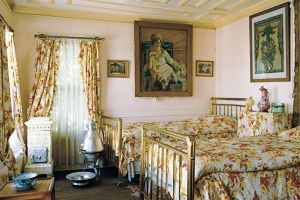
The west of Anatolia may not be famous for gastronomic zing, but local chefs are doing their homework, re-inventing tradition and creating the ambiance for a pleasant evening out. Kütahya is the home of Turkey’s porcelain industry and an interesting pitstop on the way to the southern coast. It is now a destination in its own right, thanks to the Ispartalılar Konagi hotel, an intelligently restored, half-timbered and stucco mansion (konak) in the historic centre. The rooms are period, uncluttered and enormous. Across the way is the Germiyan Konagi, a similarly elegant building divided into old-fashioned dining rooms serving regional dishes. These include tirit, chicken in a shallow broth covered with crunchy croutons made from fresh-rolled yufka pastry dough. If you want a drink with your meal, however, best to nip back to the garden of the decent restaurant in the hotel across the street.

Back to Istanbul and the unashamedly eclectic. Unagi (eel) sushi with a coating of melted brie accompanied by a 2006 Corvus Teneia (a buttery white wine made on Bozcaada from the çavus grape) is a bit of post-modern gastronomy that is served with a prime Bosphorus view. The Sunset Grill & Bar started, as the name suggests, as an American-style joint serving wings and potato skins some 15 years ago but quickly found a more secure niche as the evening out for the city’s high and mighty. The crowds on a weekday night suggest its fortunes are recession-proof. This is in part the result of a canny strategy of trying to please everyone. Locals can choose from the Italian-biased side of the menu, while their guests from abroad can opt for more Turkish dishes. There is also a sushi bar. The owner, Barıs Tansever, has gone one step further by securing Hiroki Takemura, of Nobu London fame, as chef in residence. Memorable, apart from the outré sushi, and the fig tempura that was a creamy porridge of black cod. The wakamame sauce sounds Japanese, and there was a citric taste of yuzo, but the dish would not have been out of place in Madame Prunier’s.

SG&B prides itself on an intelligent selection of out-of-the way Turkish wines.
It also has an impressive list of great vintages acquired from the bankruptcy auctions of a banker who might well have been a customer. Mr Tansever admits some of the bottles would bankrupt the average punter, largely due to a senseless government consumption tax. This multiplies the price of a similar bottle in Europe so many times and is so swingeing that it raises almost no money for the treasury. Instead,
Mr Tansever complains, it shackles Turkey’s efforts to become a high-end tourist destination. This has not prevented him from assembling an extremely rare collection of spirits, including 19th-century brandies and pre-Prohibition bourbons. These are consumed by even the best-heeled diners in eye-dropper-sized proportions.

Every Istanbul neighbourhood has its favourite lunchtime spot, full when places nearby struggle with empty tables, and where the food just has the edge. Nisantası being Nisantası and way upscale, you would rightly expect the local hotspot to be seriously good. And that is pretty much all you need to know about Kantin, where the owner Semsa Denizsel chalks up the day’s specials from an Aegean-influenced kitchen and oversees an airy, old-fashioned dining room and garden terrace with breezy competence. There are fast-food favourites such as çitir, a wafer-thin pastry filled with a choice of tasty things including aubergine. More sophisticated dishes include fish en papillote and fresh anchovies cooked in vine leaves. The casseroles are always reliable, and the squid I had once, simmered in onions and served cold, bordered on the remarkable. If you need to keep a clear head in the afternoon there is homemade lemonade or traditional sherbets, such as a cold infusion of tamarind. The breads are good, as are the sweets, and there is now a shop selling condiments and prepared dishes. No reservations, but Kantin stays open for an early supper.

Sahan Vega
Atasehir, Kadıköy, Istanbul
+90 216 315 3636 or /3737

Sahan fiirehan
Ismetpasa Mah, Eski Belediye Cad, Sirehan 1, Gaziantep.
+90 342 220 46 46;
sirehan.com

Ispartalılar Konagi
Germiyan Sok 58, Pirler Mah, Kütahya
+90 274 216 1975
ispartalilarkonagi.com.tr

Germiyan Konagi
Meydan Kavsagi Germiyan Sok, Kütahya
+90 274 224 5552;
germiyankonagi.com

Sunset Grill and Bar
Adnan Saygun Cad, Ulus Parkı, Istanbul
Tel/fax +90 212 287 0357/58;
sunsetgrillbar.com

Kantin
Akkavak Sok 16/2, Nisantası, Istanbul
+90 (212) 219 3114;
www.kantin.biz

All Cornucopia restaurant reviews

Istanbul Arts Diary/food