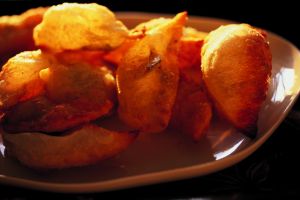
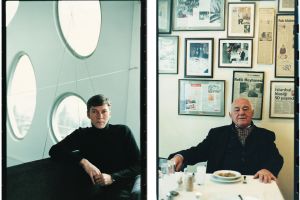
Istanbul is a city which worships good food, but where there is no real pantheon of celebrity chefs. In part, this is because its chomping classes see their next meal as the result of effortless craft rather than tortured inspiration. They seek not so much the unique, but the familiar executed that little bit better than anyone else. If this makes Istanbul sound conservative, it is not. It is less resistant to innovation than able to absorb it so quickly that what seemed novel on Monday is humdrum by the end of the week. The restaurant gurus are not the chefs but the proprietors who set the trends. They break in new styles, open establishments, then shut them again with the ruthless drive of a post-rider. Just occasionally Istanbul produces not so much a kitchen celebrity as an anti-hero like Refik Arslan, who has nursed a glass of raki and a bit of white cheese at the establishment that has borne his name for the some fifty years. His gravel voice and grumpy temperament are as much a feature of the Beyoglu back streets as the leaning tower is of Pisa. Paunchy intellectuals go there to smoke and drink and harangue their friends; followers of fashion go there on a night off just to be themselves; a new generation comes to re-invent their own tradition of cosmopolitan life; and the odd New York Times correspondent turns up to report on what is truly authentic about a Turkish evening out. No one, I suspect, goes there for the food, any more than anyone goes to the Pig and Whistle because their draught lager is more luxuriously carbonated than the Dog and Ducks. Refik is a meyhane culturally related to a pub, since it is hard to imagine sitting there without drinking, but, as it is equally unthinkable to drink without food, a restaurant as well. Main courses are perfunctory and often you dont get that far. Mezes are the heart of the meal. In the old days, Refik explains, he would serve a raki platter a small bottle with a tray of seven different types of starters. Now you pick and choose the hors doeuvres yourself. And there is no need to reach out to sample the sauce on your partners plate, since the whole point is to share dishes. Everyone is an expert: the talk Try some of this aubergine or The liver is not as good as next door means that the standard of meyhane cuisine never dips far below the norm. Not everyone holds Refik to be the primus inter pares of Istanbul meyhane. Everyone has their favourite, chosen for a particular dish or, more likely, because they expect to bump into their friends. If there is a similarity about the fare, it is not just because news travels fast through the narrow streets but because most of the meyhanes are related: Yakup of Yakup 2 fame is Refiks brother; the proprietor of Saki used to be the head waiter at Asir; while the owner of Asir used to be the head waiter of his own establishment before the old Greek proprietor died. It is one long culinary soap opera. As for Refik himself, he started off working at the age of fourteen for Papa Fischer, opposite the British embassy, and is still proud of his rarely tested skill in producing the perfect, very un-meyhane-like Schnitzel. There were appreciative oohs and ahs as the food circulated the other night at Akbaba a new establishment in the attractive open-aired passageway directly across from Tünel. The vulture referred to in the name of the restaurant was the title of Turkeys most famous humour magazine, founded even before Refik. To up sales in its final years, the magazine resorted to risqué caricatures on the cover, and these adorn the walls, providing all the sauce the restaurant needs. The tastes are sharp and fresh and include good topik a chickpea paté with a tahin and onion centre and crisp gül böregi a pastry rosette. Akbaba is decorated in a pleasing Thonet-chaired retro style, with only the bright halogen lighting to remind you of the actual year. This is probably better than having the whole room antiqued and the entirely acceptable converse of leaving a corner of a restored historical building in its original state. The lighting is suitably dingy at Despina, an authentically hoary meyhane away from Beyoglu in the old Greek district of Kurtulus. Time and the meze tray stand still here, but a pair of sharp eyes at our table, with vision heightened by drink, noted that that the rough-textured stucco walls were probably an innovative attempt to look old. Despina is now famous not for the food but for an argument between three middle-aged men which resulted in the one whose manhood was in question drawing a revolver and shooting dead the other two. He then wanted to kill himself but was talked out of it by the police all live on national television. Having seen the gore of Tarantino films, it did occur to me that the incident, now some time ago, may have been the reason for redecorating the walls. There was nothing life-threatening about our dinner there, with the possible exception of a small band of musicians who circulate from table to table, strumming mournfully and encouraging you to break into song. I would recommend the sautéed meat for main course, but the fried anchovies were flavourful as, of course, was the mood. So where does that leave 360 a newcomer to Beyoglu and very much not a meyhane, but not what I expected either? It is the work of Mike Norman, a former executive chef at the Çiragan and a partner in the now defunct Chefs a restaurant which tried to get its clientele to focus on the food on their plate rather than who was sitting at the table on the far side of the room. | Chefs helped raise the bar on what a well-run kitchen was all about, but the sorry truth is that the top end of the Istanbul scene is still ruled by fashion, not by loyalty. Restaurants draw from a relatively small client base the locusts who swarm to the latest spot and strip it bare before moving on. Normans 360 takes its name from the extraordinary roof-top birds-eye view from one Beyoglus most elegant apartment blocks. The restaurant is a glass cage from which you can see every corner of the city. It had not officially opened the night we had dinner there, and it may be unfair to compare the uncertainty of the service to the drill of the meyhanes at street level below, rehearsed over decades. The menu, too, was a little bit indecisive. There was sea bass in a potato crust, peppery wok-seared ostrich breast, lamb with an over-floury begendi (aubergine purée) and even beef with Chinese noodles. Those who cherish the memory of Chefs for its puddings may be disappointed. The unlikely-sounding cappuccino tira mi su was tasty, with an element of surprise, but on the whole the desserts were indelicate and too sweet. After trying to build a gastronomic edifice at Chefs, Norman has leaned the other way. He has created a wonderful space, but it is something of a marquee, where everything can change. The interesting thing about 360 is that it has, at the front of the menu, a notion of modern mezes. They are not designed to astonish: a bit of fried Cypriot helim cheese with a sweetish sauce, falafel and the squid with a hard, almost chicken-nugget-type crust was a little bit bland. Celeriac, braised with olive oil and brightened up with orange, deserves praise. They are there as a tribute to a style of eating. Despite its provenance, 360 is not overly expensive for a formal evening out. We paid a similar sort of bill (YTL6080) at Dilaras Abra Cadabra twee-sounding but not the most twee on ultra-twee Fransiz Sokagi, or French Street. This is a set of steps running down from Beyoglu to Cukurcuma that has become a sort of restaurant alley. As a tribute to the French embassy, which helped pay for its restoration, the establishments have names like Gitane, Point Virgule and even Ooh La La. The food at Dilaras is not twee, however, and not even French. The owner did not buy into French Street but converted her own house into a restaurant. Her card gives the address defiantly as the original name of the street the anti-imperial Cezayir (or Algeria) Street. The meal had the attractive quality of good dinner-party food. What regional influences it has are Black Sea, but the menu is a reflection of whats on sale at the market that day. I had a pheasant braised in wine then baked intricately garnished with pickled wild mushrooms and a sort of chipped potato. The pork ribs were not Southern-style but marinated in apple and prune and charcoal-smoked. Dessert arrived unbidden, a thin sheet of white chocolate mixed with poppy seed, to be dipped in a fruit and chilli sauce. There was good bread and of course mezes to begin with. Raw clams, spiced with ginger and balanced on a bed of salt, were memorable, and not something you will ever find at Refik. Refik: Sofyali Sok 1012, Tünel, Beyoglu; +90-212 243 2834 Saki: Kameriye Sok 11/A, Balikpazari, Beyoglu; +90-212 244 1683 or /240 4027 Asőr: Kalyoncu Kullugu Cad 94/1, Beyoglu (off Tarlabasi Caddesi, next to the police station); +90-212 250 0557 or /256 3438 Akbaba: Tünel Geçidi, BeyoGlu; +90 212 251 4338 Yakup 2: Asmali Mescit Sok 35-37, Tünel, Beyoglu; +90-212 249 2925 Despina: Açőkyol Sok 9, Kurtulus; +90-0212 247 3357 360: Misir Apt K8, Istiklâl Cad 32/33, Beyoglu; +90-212 251 1042 or /251 1043; fax /251 1048 Dilaras Abra Cadabra: Cezayir Sok 6, Beyo€gu; +90-212 244 4745; dilara.erbay@mailcity.com | Smoothies By Hettie Judah The Istanbul restaurant scenes passionate embrace of the modern is for the most part as prone to cliché as any other love affair. Rudely exposed brickwork walls, ceilings crisscrossed with giant silver ventilation pipes and the whole 1980s New York arty-loft vibe has recently crept across the city like impetigo. Menus are crippled by aimless omnivorousness, endless pages of pastas and pad thais and steaks and schnitzels, as if modernity inevitably brings a credo-free democratic blandness. But hidden often literally away from the Perspex chairs and ruthless door policies of their peers are some extraordinary places. Changa A seriously experimental fusion restaurant, Changa is now at the height of its powers after a few rocky years spent negotiating the fit between novelty and deliciousness. The design is sleek, but not aggressively so, matching the classic proportions and plasterwork of the existing interior with contemporary art and stealable tableware. There is a Turkish base helim cheese, vineleaves, liver, chestnuts and celeriac are regular features but from there things go into the wild and fabulous, as in the unexpected gummy texture of a cuttlefish roe starter with coconut shavings. Siraselviler Cad 87/1, Taksim; +90-212 249 1348 Safran Safran has survived four changes of venue in as many years, yet remains a beloved institution. The latest move is from an establishment with cruise-ship dimensions into a caressingly elegant first-floor apartment in Curkucuma with lustrous mid-nineteenth-century tilework and the intimate atmosphere of a private club. The menu has shrunk, likewise, to a scant twenty or so dishes characterised by an informed and playful take on local ingredients chard soufflé, or octopus salad with pomegranate syrup. It is almost impossible to find; there is no frontage to the restaurant save for a very discreet sign above eye level; once there, customers tend to make a night of it, and after a certain hour the atmosphere switches from discreet dining to wild party. Hanif Han, G. Erol Dernek Sok 11/1, Beyoglu; +90-212 251 2624 or /2696 Lokanta There are style crimes here this is Istanbuls ur-loft-style restaurant after all but there is no escaping the fact that the food is terrific. Chef Mehmet Gurs cooks with a passion for his ingredients; he cares about the little fishies and the tender springy lamblets, and such an engaged approach pays off in the end results. Octopus carpaccio, shrimps with spinach and chili, classic Turkish dishes like lamb shanks all evoke moans of pleasure. Mesrutiyet Cad 149/1, Tepebasi, Beyoglu; +90-212 245 6070 |